Russell 2000 Outperforms Nasdaq by More Than 10%
Unlike the past several years, when technology stocks led the U.S. stock market, investors this year have been increasing their allocations to non-tech names. Investment targets are being diversified into supermarkets, energy, manufacturing, and other sectors.
The Financial Times (FT), citing Deutsche Bank, reported on the 10th (local time) that over the past five weeks, 62 billion dollars (about 90.2224 trillion won) has flowed into U.S. equity funds that invest in stocks other than technology. Investors put 50 billion dollars into such funds over the whole of last year, and that amount has already been surpassed in just five weeks.
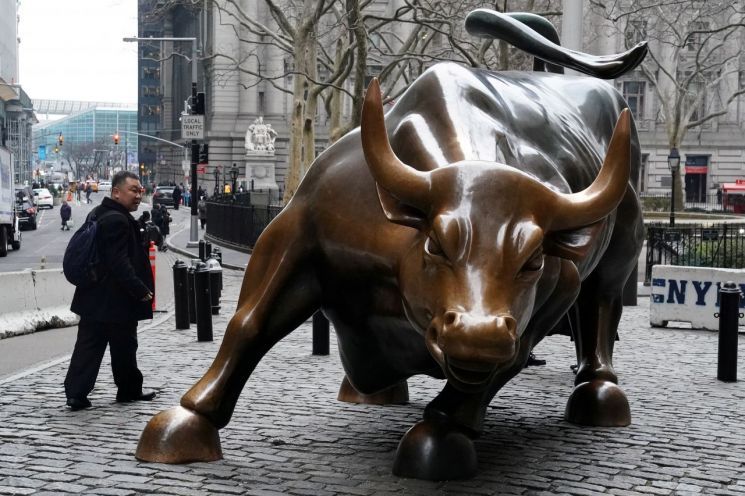
This inflow of funds is invigorating a number of industries that had been neglected. In contrast, the artificial intelligence (AI) boom that had been heating up the market appears to be losing steam. In particular, after concerns emerged that AI tools such as "Claude CoWork," recently launched by AI startup Anthropic, could replace existing software, selling pressure has appeared, especially in software companies.
Since early January, 8 of the 11 sectors in the S&P 500 have risen, while only technology, financials, and consumer discretionary have declined. The small-cap-focused Russell 2000 Index has delivered a return more than 10% higher than the tech-heavy Nasdaq over the past three months.
According to a recent report from Goldman Sachs' prime brokerage division, hedge funds sold software stocks over the past month and rotated capital into cyclical and industrial stocks.
Looking at individual names, Walmart surpassed a market capitalization of 1 trillion dollars on the 3rd, joining the "1 Trillion Club" that had long been considered the domain of technology stocks. Shares of tractor manufacturer Deere, construction company TopBuild, and mechanical and electrical systems company Comfort Systems USA have each risen more than 20% since early January, hitting all-time highs. By contrast, Amazon, Google, and Microsoft saw their share prices plunge after announcing plans to invest hundreds of billions of dollars this year in building AI infrastructure.
Experts say this sector rotation began in the fourth quarter of last year and that the base of earnings growth is widening beyond large-cap tech stocks. According to Deutsche Bank, the median earnings growth rate of S&P 500 companies that have reported so far is about 10%, the highest level in four years.
The Federal Reserve Bank of Atlanta estimates that the U.S. economy grew at an annualized rate of 3.7% in the fourth quarter of last year. Max Kettner, chief multi-asset strategist at HSBC, analyzed that this rapid pace of growth has increased the appeal of transportation, metals, and mining stocks, which typically perform well during economic expansions. He added that expectations for interest rate cuts this year have also reinforced investor optimism about the U.S. economic outlook.
However, despite this broad-based strength, the overall S&P index has failed to extend its gains since technology stocks peaked in late October last year. This is because technology has a large weighting in the S&P 500 Index. Kevin Gordon, chief investment strategist for macroeconomics at Charles Schwab, said, "As market performance has become more dispersed over the past few months, the magnitude of gains at the index level has diminished."
© The Asia Business Daily(www.asiae.co.kr). All rights reserved.
![Clutching a Stolen Dior Bag, Saying "I Hate Being Poor but Real"... The Grotesque Con of a "Human Knockoff" [Slate]](https://cwcontent.asiae.co.kr/asiaresize/183/2026021902243444107_1771435474.jpg)
















