Answering during parliamentary questioning
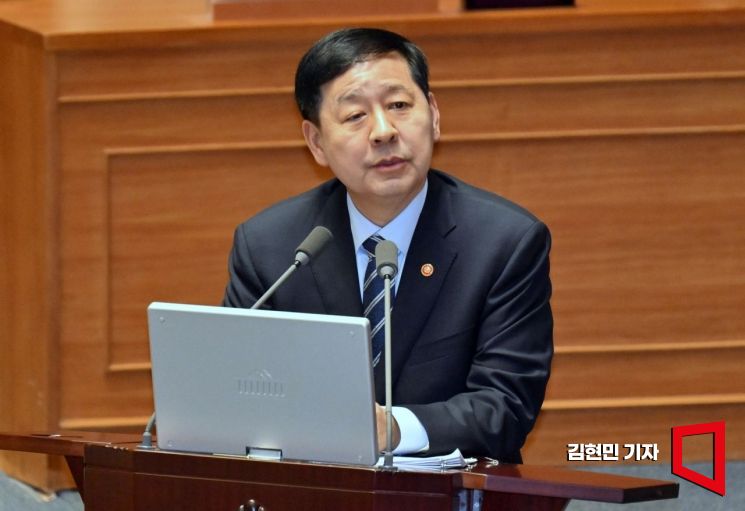 Koo Yoonchul, Deputy Prime Minister and Minister of Economy and Finance, is answering a question from People Power Party lawmaker Yoon Youngseok during government questioning on economic affairs at the plenary session of the National Assembly on Feb. 10, 2026. Photo by Kim Hyunmin
Deputy Prime Minister and Minister of Economy and Finance Koo Yooncheol said on Feb. 10, "We will make every policy effort to stabilize the exchange rate as much as possible so that import prices can remain stable."
Responding to a comment that price trends are showing worrying signs during a parliamentary question session on economic affairs held at the National Assembly in the afternoon, Deputy Prime Minister Koo said, "In the case of some imported goods, there are such (upward) factors as the exchange rate has depreciated," and made these remarks.
He then cited as an example the so-called "Seohak Ants," Korean retail investors who invest in overseas stocks, and the "Return to Domestic Market Account (RIA)," under which capital gains from selling overseas stocks are converted into won and reinvested in the domestic market tax-free, explaining, "The government is making every effort to stabilize the exchange rate as much as possible." He added that the schedule for Korea to be included in the World Government Bond Index (WGBI) in April will also help stabilize the exchange rate.
In response to criticism that prices are not being contained ahead of the Lunar New Year holiday, he replied, "Overall, the consumer price index is being maintained at around 2%."
He went on to say, "We are doing various things, such as releasing as much of the government-held stock as possible, providing fiscal support from the government to lower prices when they are high, and applying tariff quotas to reduce tariffs and thereby bring down prices."
Regarding concerns that anxiety over housing prices has increased, he answered, "We have made housing price stability our top policy objective," and added, "Restructuring the market to focus on actual residence helps stabilize housing, so we are concentrating our policy efforts in that direction."
On the side effects arising from abuse of the small-value duty-free system for goods priced at 150 dollars or less, he offered a principled answer, saying, "If tariffs are imposed on small-value goods of around 150 dollars, prices will go up, so there are difficulties for such people as well."
In response to concerns that the expiration of the value-added tax exemption on simply processed foods such as fermented sauces and the resulting taxation starting this year could put upward pressure on prices, he said, "We will monitor market conditions and make a policy decision if necessary."
© The Asia Business Daily(www.asiae.co.kr). All rights reserved.
![Clutching a Stolen Dior Bag, Saying "I Hate Being Poor but Real"... The Grotesque Con of a "Human Knockoff" [Slate]](https://cwcontent.asiae.co.kr/asiaresize/183/2026021902243444107_1771435474.jpg)















