CNBC Interview: "We Should Expect Weaker Employment Data"
Surging Productivity Growth Highlighted
Emphasis That Economic Fundamentals Remain Sound
January Jobs Report on the 11th Expected to Show 69,000 New Jobs
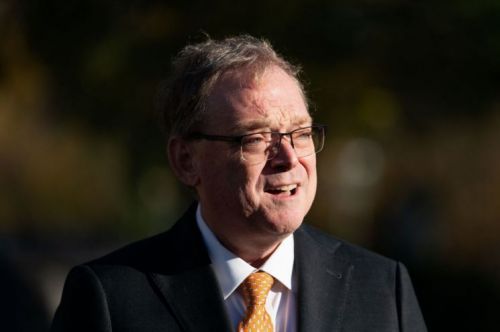
Kevin Hassett, Chair of the White House National Economic Council (NEC), stressed on the 9th (local time) that even if U.S. employment figures (the pace of job gains) come in somewhat lower over the next few months as population growth slows, there is no need to worry about the fundamentals of the U.S. economy when the productivity gains from artificial intelligence (AI) are taken into account.
In an interview with CNBC that day, Chair Hassett said, "We should expect employment figures that are somewhat lower than in the past, in a way that is consistent with the current strong gross domestic product (GDP) growth."
He went on to say, "There is no need to panic even if a series of numbers come in lower than we have been used to in the past," emphasizing that "this is because population growth is slowing, while productivity growth is surging."
Hassett also added that the "breakeven rate" of employment is now "considerably lower" than it was during former President Joe Biden's term. The breakeven rate refers to the minimum number of jobs that need to be added to absorb the increase in the labor force so that the unemployment rate does not rise.
His remarks mean that, because population growth has slowed, the unemployment rate can remain stable even if job creation does not increase as much as it did under the Biden administration.
There is a reason Hassett is commenting on the employment indicators. According to projections for the January employment report to be released on the 11th, nonfarm payrolls are expected to increase by 69,000, and the unemployment rate is forecast to come in at 4.4%. The unemployment rate would be slightly lower than the 4.5% recorded in November last year, which was the highest level in four years.
This release will also include revisions to past data, and employment figures for the one-year period through March 2025 are expected to be revised down quite substantially. Bloomberg reported that the employment numbers for the past year could be revised down by as many as 911,000 jobs. It is expected that even in these finalized figures, the pace of job growth will be significantly marked down.
Scott Anderson, chief U.S. economist at BMO Capital Markets, said, "This year's annual benchmark revision will carry far more significance than in a typical year," adding, "The current labor market appears to be walking a knife's edge at a crossroads between net employment growth and outright job losses."
Last year, the labor market was understood to have entered a gradual slowdown, in an environment economists often describe as "low-hire, low-fire." However, Bloomberg reported that the upcoming statistical revisions could suggest that the slowdown in hiring has been proceeding much more sharply than previously expected.
This could alter how the Federal Reserve views the labor market. Fed Chair Jerome Powell recently assessed that the labor market is showing "signs of stabilizing." While acknowledging that job growth figures may have been somewhat overstated, Powell said the U.S. economy is currently strong enough for Fed officials to keep interest rates on hold for the time being.
Fed Governor Christopher Waller, by contrast, has taken the opposite view. In a statement, Waller said, "Growth is zero. There's really nothing... nada," adding, "This is by no means what a healthy labor market looks like." In effect, he was saying there was virtually no job growth last year.
Data released last week also support Governor Waller's view. According to the Job Openings and Labor Turnover Survey (JOLTS) for December last year, the number of job openings came in at 6.542 million. This was a decrease of 386,000 from 6.928 million in November.
© The Asia Business Daily(www.asiae.co.kr). All rights reserved.

















