Productivity Gains Expected from Expanded AI Adoption
Average Tax Refund per Person This Year Seen $800 Higher than in 2024
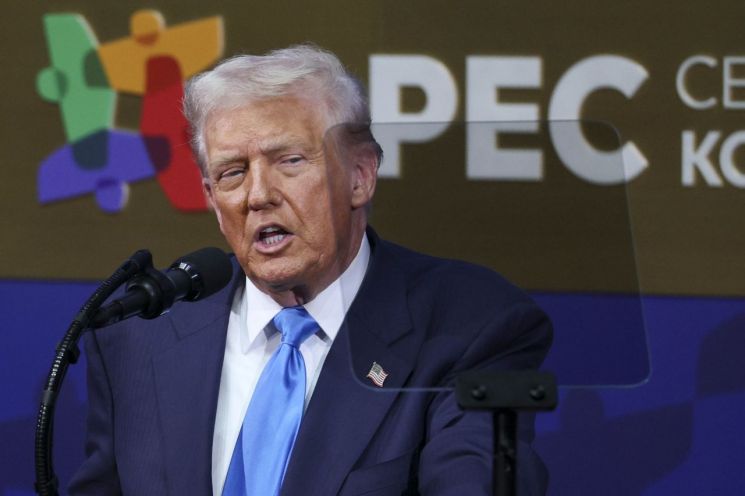
U.S. President Donald Trump is reportedly planning to boost the economy as much as possible to persuade voters ahead of the midterm elections in November. As various opinion polls show his approval rating trending downward and anxiety grows that the Republican Party could lose the House of Representatives to the Democrats, this move is being interpreted as an attempt to engineer a turnaround through economic stimulus.
According to the Washington Post (WP) on the 8th (local time), officials in the Trump administration expect that, as the U.S. economy enters a boom phase, the Republican Party's prospects in the federal House and Senate elections to be held in November will improve.
The administration is optimistic about the economic outlook because of tax refunds and investment incentives, interest rate cuts and deregulation by the Federal Reserve (Fed), and productivity gains driven by the expanded adoption of artificial intelligence (AI).
In July of last year, President Trump pushed through Congress his key legislative initiative, the "one big, beautiful bill," extending the income and corporate tax cuts implemented during his first term. As a result, the White House estimated that the average tax refund Americans receive this year will be nearly 800 dollars higher than in 2024.
President Trump has recently strengthened his grip on the Fed by nominating Kevin Warsh as the next Fed chair, and he is urging cuts to the benchmark interest rate while also counting on the growth effects of various deregulation measures.
Stimulating the economy in this way carries the risk of further fueling the inflation that voters are already worried about. However, the Trump administration views that risk as low. Administration officials argue that if productivity improves through wider adoption of AI, the economy can grow without sharp wage increases and without a steep rise in prices.
Pierre Yared, acting chair of the White House Council of Economic Advisers (CEA), said, "We are not heating up the economy by boosting demand like the previous administration did. We are boosting supply to deliver growth that lasts longer and eases inflation."
The private sector also generally expects solid growth this year and rates the risk of a recession as low. Some analysts on Wall Street are upgrading their growth forecasts as they watch for the possibility that the administration will roll out additional election-season stimulus measures.
As one example of its stimulus policies, President Trump has said he would use tariff revenues to fund a 2,000-dollar dividend payment for every American.
However, the WP reported that many experts in the private sector believe the stimulus effects of government policies may not be as large as the administration expects, and that the negative impact of the administration's immigration and tariff policies is likely to offset much of the stimulus.
There are also projections that voters already view the economy and inflation in a negative light, and that the stimulus will not be strong enough to reverse this sentiment before the midterm elections.
Claudia Sahm, chief economist at the investment firm New Century Advisors, said, "We might actually get growth closer to 3% instead of 2%," adding, "Frankly, for people to really feel positive about the economy, President Trump would need numbers like 5% to 7%."
© The Asia Business Daily(www.asiae.co.kr). All rights reserved.
![Clutching a Stolen Dior Bag, Saying "I Hate Being Poor but Real"... The Grotesque Con of a "Human Knockoff" [Slate]](https://cwcontent.asiae.co.kr/asiaresize/183/2026021902243444107_1771435474.jpg)















