A Visit to Samgong Siktak, a Keopbap Delivery-Only Shop
Helping Self-Support Through Cooking and Delivery Jobs
Supporting Meals for the Vulnerable by Linking with Welfare Services
At 9:00 a.m. on February 6, inside a first-floor commercial unit on a side street near Singil Samgeori in Yeongdeungpo District, Seoul, five self-support workers were moving busily around the kitchen and dining area. The cooking had long been finished. Although it was still early in the morning, one person was tidying up the kitchen while the others were packing hot stir-fried spicy chicken and side dishes into Keopbap containers.
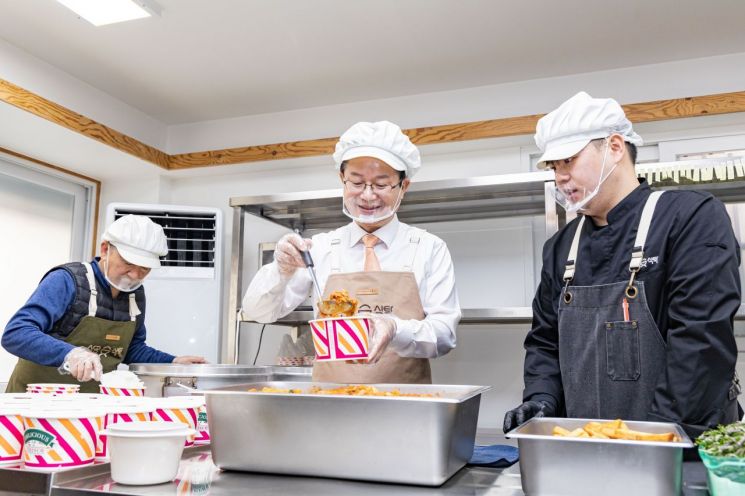 Choi Hogwon, mayor of Yeongdeungpo District (center), and self-support workers are packing food into Keopbap to be delivered for lunch. Provided by Yeongdeungpo District.
Lee Youngman (61), who is in charge of packing and delivering the Keopbap lunchboxes, was getting ready to write the customers' names on stickers and attach them to the boxes. He said, "Marking them like this makes delivery easier and allows us to plan our routes more efficiently," adding, "Orders have nearly doubled recently, so we have become much busier."
Another staff member in charge of cooking said, "Many people are surprised that the price is 3,900 won," and added, "I feel rewarded because we carefully prepare the meals with fresh ingredients."
Daily Keopbap orders, which averaged fewer than 100 per day last month, increased to an average of 160 per day in the first week of this month. Word spread quickly after a local YouTuber uploaded a video introducing the Keopbap.
Samgong Siktak, a Keopbap delivery shop with 3,900-won meals
On this day, Choi Hogwon, mayor of Yeongdeungpo District, visited Samgong Siktak (30 Siktak). He wanted to see whether this district-led project was settling in well and whether there was anything that needed to be supplemented or supported further. While he was there, he lent a hand with the work and listened to the difficulties faced by the self-support workers.
Mayor Choi said, "We started this project because we thought that providing restaurant work experience to people who had mainly been doing simple labor at the local self-sufficiency center would help them find jobs or start businesses," and added, "True welfare is providing vulnerable groups with opportunities to become self-reliant."
Samgong Siktak, which opened on September 3 of last year, is the first lunchbox delivery service under Seoul's self-sufficiency program. The "30" in its name reflects both the 3,000-won price range and the idea of providing a tasty meal every day for 30 days. It offers two menu options per day (10 types per week), such as pork bulgogi rice bowls and beef bulgogi rice bowls. For subscribers, the monthly delivery fee is 5,900 won (3,000 won per delivery if paid per order). The reason customers can have Keopbap delivered at about half the usual market price is due to partnership agreements and financial support.
CJ Freshway, a food distribution company, supplies fresh ingredients, and supports training on recipes and hygiene inspections as part of its social contribution activities. The Seoul Metropolitan Self-Sufficiency Center provides operational know-how, while the One-Bowl Lunchbox Project Group under the Seoul Yeongdeungpo Local Self-Sufficiency Center handles on-the-ground operations. The project is funded through matching support from the city and district budgets.
Many users are single-person households and seniors
The most popular menu items are the beef bulgogi rice bowl and the pork rice bowl. In particular, orders are highest on Tuesdays for the chicken mayo rice bowl and the beef bulgogi rice bowl. Most orders come from small facilities and households without in-house cafeterias, and about half of all orders are placed by households. Young adults living alone and seniors with limited mobility are also regular customers. Some people order several meals at once and eat them over time.
Samgong Siktak plans to launch a "set meal lunchbox" in the first half of the year. The aim is to increase the project group's sales so that it can eventually launch as an independent self-sufficiency enterprise. The district is also considering ways to link Samgong Siktak with welfare services to provide nutritious and affordable lunchboxes to vulnerable local residents such as seniors living alone and people with disabilities.
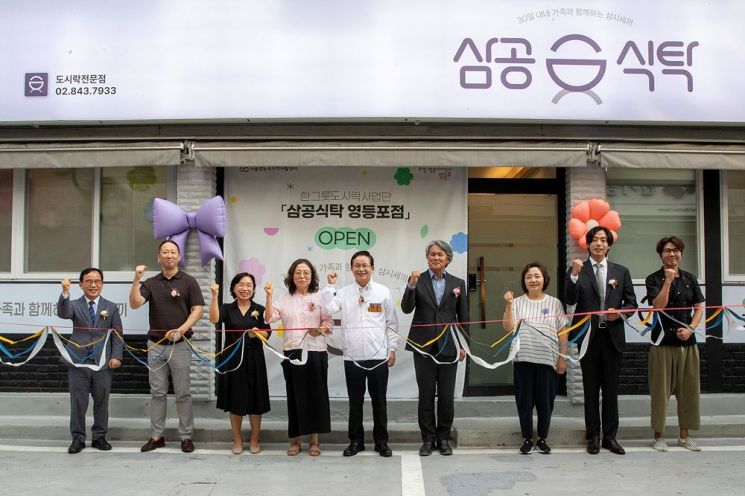 Samgong Siktak opened in September of last year as Seoul's first lunchbox delivery service under the city's self-sufficiency program. Provided by Yeongdeungpo District.
Self-support workers are mainly Basic Livelihood Security recipients who are willing to work but find it difficult to obtain regular employment due to career breaks or health problems. They receive wages under the self-sufficiency program designated by the Ministry of Health and Welfare, and, depending on sales, they also receive incentives and performance bonuses to support their path to self-reliance. The purpose of the project is to help them acquire skills such as cooking and store management so they can build a foundation for independence.
Kim Dongeun, an official in charge at the district's Livelihood Security Division, said, "We also provide linked support for the self-support workers' housing welfare and psychological counseling," and added, "The ultimate goal of this project is to help them completely free themselves from the status of benefit recipients and become fully self-reliant."
*Samgong Siktak only accepts orders of two or more meals at a time, and orders must be placed by 11:59 p.m. the previous day. Orders can be placed through the KakaoTalk channel "30 Siktak (Yeongdeungpo Branch)" or by phone at 010-5527-7933.
© The Asia Business Daily(www.asiae.co.kr). All rights reserved.
![Clutching a Stolen Dior Bag, Saying "I Hate Being Poor but Real"... The Grotesque Con of a "Human Knockoff" [Slate]](https://cwcontent.asiae.co.kr/asiaresize/183/2026021902243444107_1771435474.jpg)
















