Three Woodblocks Sold to the United States in the 1970s Repatriated
Collected-Works Printing Blocks of Militia Leader Kim Dohwa and Confucian Scholar Song Siyol
To Be Preserved and Managed by the Korea Studies Advancement Center
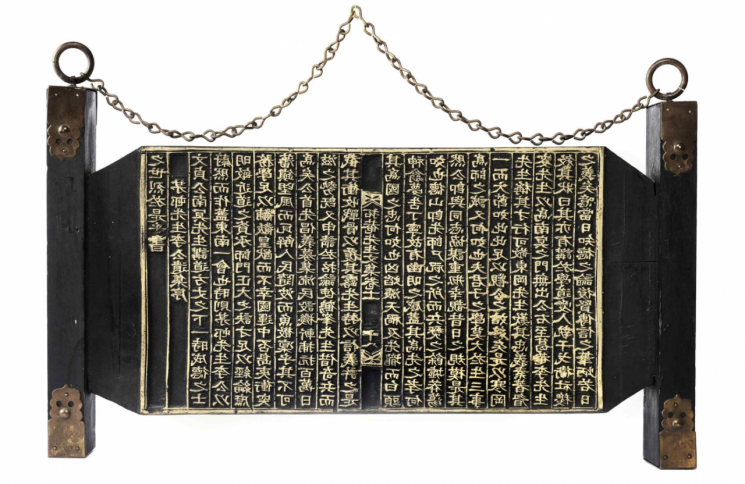
Old Korean woodblocks that had been sold as souvenirs to foreigners at antique shops in Seoul in the 1970s have returned to their homeland after more than 50 years. These wooden plates, which had been stolen or lost and then handed over for a pittance, are in fact the very essence of "record culture," precious enough to be inscribed on UNESCO's Memory of the World Register.
On February 8, local time, the Korea Heritage Service and the Overseas Korean Cultural Heritage Foundation received a donation of three sets of late Joseon dynasty collected-works woodblocks at the former Legation of the Korean Empire in Washington, D.C. They are the woodblock of Cheokam Seonsaeng Munjip (1917), the Songja Daejeon printing block (1926), and the Beonamjip printing blocks (1824).
The woodblock of Cheokam Seonsaeng Munjip and the Songja Daejeon printing block were purchased at an antique shop and taken to the United States by Aaron Gordon, who worked in the early 1970s at the Korea office of the United States Agency for International Development (USAID), a U.S. federal agency. After his death, his wife and younger sister kept them until they decided to donate them this time. The Beonamjip printing blocks were bought by an American who worked in Korea around the same period and given as a gift to the family of Korean American Kim Eunhye. Kim readily accepted the foundation's proposal for a donation, making the return possible.
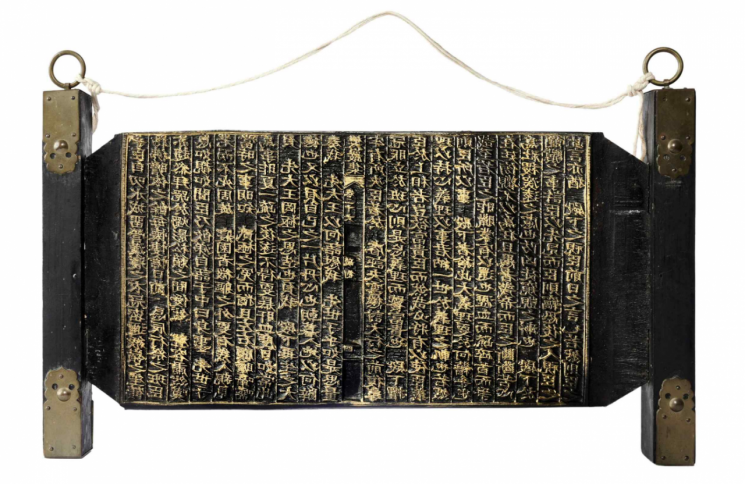
The returned woodblocks are more than simple printing tools. They are rare artifacts that share the same lineage as the "Confucian Printing Woodblocks of Korea," which were inscribed on UNESCO's Memory of the World Register in 2015. At the time, UNESCO evaluated them as "a symbol of a 'moral community' that was produced through the public discourse of intellectual circles and preserved and transmitted for more than 500 years."
The woodblock of Cheokam Seonsaeng Munjip contains volume 11 and pages 17 to 18 of the collected works of Cheokam Kim Dohwa (1825-1912), who served as a militia leader in the Andong region during the Eulmi Righteous Army uprising in 1895. Originally, more than 1,000 plates were carved, but most were lost, and only 19 were included at the time of the UNESCO inscription. Its rarity is so great that in 2019, when one plate appeared at an auction in Germany, it was only with sponsorship from Riot Games that it could be purchased with great difficulty.
The Songja Daejeon printing block, which was also brought back, bears a painful history. It is the collected works of the late Joseon Confucian scholar Song Siyol (1607-1689), first published in 1787, but in 1907 the entire set was destroyed by the Japanese military. The artifact that has now returned is a version carved anew in 1926 by his descendants and members of the Confucian community. It embodies the intense determination of ancestors who sought to carry on their scholarship even in the face of the risk of total loss.
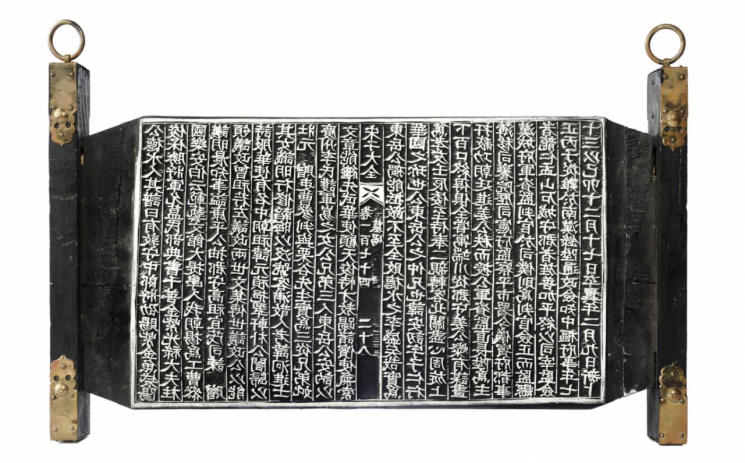
The Beonamjip printing blocks are volume 26, pages 3 to 4, of the collected works of Beonam Chae Jegong (1720-1799), a statesman who led the reigns of Kings Yeongjo and Jeongjo. The original set consisted of 1,159 plates, but only 358, about 30%, remain in Korea today.
An official from the Korea Heritage Service stated, "They will be deposited with the Korea Studies Advancement Center and systematically preserved and managed together with the existing holdings of the Jangpangak woodblock archive," adding, "We will continue to track down documentary heritage scattered overseas to fill in the blank pages of our history."
© The Asia Business Daily(www.asiae.co.kr). All rights reserved.



















