Purchasing 630 Tons of Nonsan Lettuce and an Additional 1,000 Tons of Rice
Developing New Menus Using Jeju Camellia Oil and Carrots
Adding More Items This Year, Including Rice from Jincheon, Chungcheongbuk-do and Strawberries from Nonsan
Samsung Welstory is expanding its purchases of local agricultural products to help secure stable sales channels for domestic produce and increase farm income.
Samsung Welstory announced on February 5 that it will expand its "Local Co-Prosperity Project," under which it purchases local agricultural products and supports their distribution channels. This year, the company plans to fully roll out the project by newly discovering high-quality local agricultural and specialty products from across the country and increasing usage volumes through the development of new menus that utilize local ingredients.
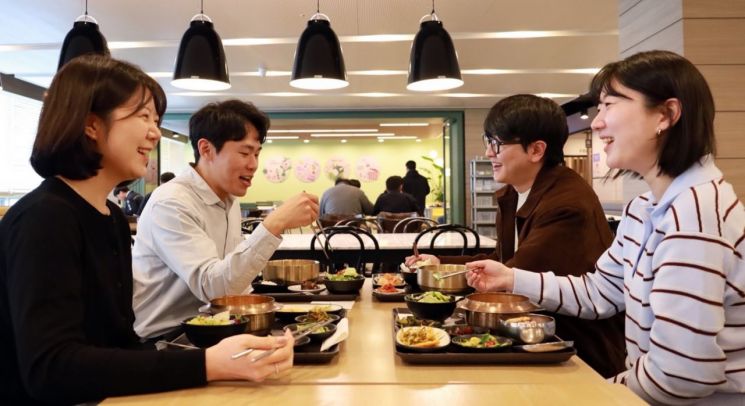
To this end, the company is taking part in regional purchasing consultation fairs hosted by the Korea Agro-Fisheries & Food Trade Corporation (aT), and is building a structure that enables local agricultural products to be distributed nationwide through Samsung Welstory's logistics infrastructure. These efforts are already bearing fruit. Following the "Chungcheongbuk-do Excellent Agricultural Products Direct Transaction Purchasing Consultation Fair" held in July last year, Samsung Welstory concluded a deal with the Jincheon and Jeungpyeong branches of the National Agricultural Cooperative Federation, and has been regularly purchasing more than 100 tons of rice from Jincheon-gun every month starting this year.
The company is also expanding collaboration with local governments. Samsung Welstory plans to develop new menus and dessert items using strawberries from Nonsan, the largest strawberry-producing region in Korea, and to introduce them at company cafeterias nationwide starting next month.
Strawberries are difficult to distribute due to their short shelf life, and they face intense price competition because of the recent influx of imported frozen strawberries. Samsung Welstory plans to expand procurement focusing on small-sized strawberries, whose production share increases after next month, in order to ease the burden on farms that struggle with distributing fresh strawberries and to help stabilize supply and demand.
Previously, in 2024, Samsung Welstory signed a business agreement with Nonsan City and has since been increasing its purchases of leafy vegetables and grains produced in the Nonsan area. Representative items include lettuce and rice.
Nonsan lettuce is produced under contract farming at an annual scale of about 630 tons and is supplied to foodservice sites and ingredient clients nationwide. It is used as an ingredient for salads and sandwiches, securing stable demand. Nonsan rice has also seen steady purchases, with 1,200 tons bought over the past two years, and the company plans to purchase an additional 1,000 tons or more this year on top of the existing volume.
The company is also simultaneously developing menus that utilize local specialties. Last year, Samsung Welstory collaborated with the Jeju Tourism Organization to run a company cafeteria promotion using local specialty products from Jeju. It developed unique menu items such as bracken pasta and buckwheat noodles using camellia oil from Dongbaek Village in Jeju, and served them to about 50,000 people at 270 group foodservice sites nationwide. It also introduced bibimbap made with 55,000 carrots produced in Gujwa-eup, Jeju, the largest carrot-producing region in the country.
A Samsung Welstory official said, "Through cooperation with various local governments, we have been able to provide stable sales channels for local farms and supply customers with fresh, high-quality domestic ingredients," adding, "Going forward, we will expand the development of unique menus that use local agricultural products not only for meal offerings but also for desserts and beverages, and build a co-prosperity model in which the active use of local produce becomes a competitive edge in foodservice."
© The Asia Business Daily(www.asiae.co.kr). All rights reserved.
![Clutching a Stolen Dior Bag, Saying "I Hate Being Poor but Real"... The Grotesque Con of a "Human Knockoff" [Slate]](https://cwcontent.asiae.co.kr/asiaresize/183/2026021902243444107_1771435474.jpg)
















