Immediate Reflection of Residents' Suggestions... Allocation of a Budget of Just Over 1 Trillion Won
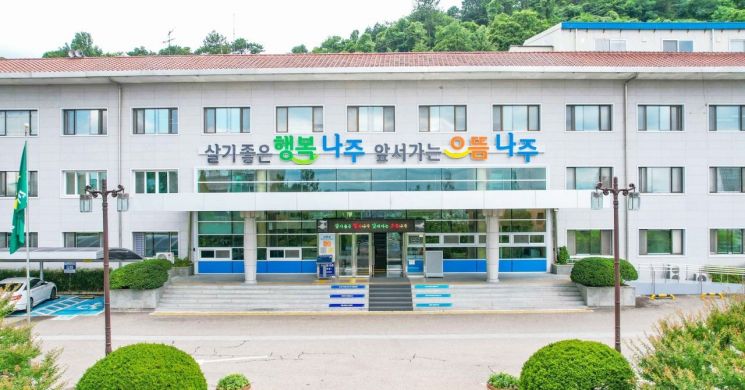
With the goal of resolving inconveniences in residents' daily lives, restoring the livelihood economy, and strengthening the foundation for future growth, Naju City has drawn up its first supplementary budget proposal for 2026 and will concentrate fiscal resources on areas that citizens can most tangibly feel.
Naju City announced on the 4th that on the 30th of last month it had prepared the first supplementary budget proposal for 2026 in the amount of 1.1422 trillion won (1.0617 trillion won in the general account and 80.5 billion won in the special accounts) and submitted it to the city council.
This represents an increase of 75.4 billion won (7.1%) compared with the original budget, placing emphasis on resolving pending issues directly connected to citizens' daily lives despite the economic slowdown and inflationary pressures.
The most notable feature of this supplementary budget is that it gives priority to urgent tasks among the suggestions collected through the "Conversations with Residents" held in January. A total of 174 everyday life-focused projects worth 7.6 billion won have been included in the supplementary budget to swiftly resolve inconveniences in towns, townships, and neighborhoods, while medium- to long-term tasks will be pursued in stages.
To strengthen citizen safety, the city has allocated 800 million won to improve school routes in three child protection zones, and 650 million won for improvement projects at six locations with frequent traffic accidents, thereby substantially reinforcing the everyday safety budget aimed at reducing blind spots in daily life.
In addition, to help revive the livelihood economy, the city has allocated 1.68 billion won for the issuance and operation of the Naju Love Gift Certificates, expanding the issuance volume from the existing 70 billion won to 80 billion won.
As the expansion of Naju Love Gift Certificates and their discounted operation have already proven effective in boosting consumption around holiday periods, this is expected to provide tangible support to local commercial districts.
The city has also allocated 360 million won for the Jeonnam Youth Retention Incentive and 320 million won (for 20 people) for the Administrative Experience Youth Internship Program, and it has earmarked 120 million won for the Jeonnam Root Industry Leading Enterprise Fostering Project, thereby supporting local manufacturing competitiveness while simultaneously strengthening support for young people and local businesses.
Alongside this, 30 million won has been set aside for the "My Own Special Wedding" project to support six newlywed couples.
This Naju-style special policy utilizes historical, cultural, and scenic resources such as Geumseonggwan and Bitgaram Lake Park owned by Naju City to cheer on young people's new beginnings and enhance their attachment to the region. By using local public resources to make a once-in-a-lifetime wedding even more special, the program also received a very positive response last year.
In the agriculture and livestock sectors, the city has focused on projects with a high level of impact at the field level. To reflect the increase in the Farmers and Fishers Public Benefit Allowance (from 600,000 won to 700,000 won), 1.5 billion won has been allocated, and 1 billion won has been earmarked for the creation of return-to-farming and return-to-rural villages.
In particular, in consideration of livestock farms that suffered severe difficulties due to last year's heat wave, the city is also putting effort into preemptive disaster prevention by allocating 280 million won for livestock heat stress relievers.
For the Yeongsanpo Cattle Market Modernization Project, the city has allocated 1.44 billion won from its own budget and, together with 360 million won in self-financing from the livestock cooperative, will push forward with renovations totaling 1.8 billion won. As this project has long been requested due to aging facilities, the city plans to improve hygiene, safety, and work efficiency through facility upgrades, thereby contributing to greater transaction convenience and income stability for livestock farmers.
In the medical and welfare sectors, the city has allocated 80 million won for emergency patient transportation cost support for the southern area (Seji, Wanggok, Bannam, Gongsan, Donggang, Yeonggang, Yeongsan, and Ichang), which lacks an emergency medical institution, thereby further reinforcing a practical on-site medical safety net.
In the culture and tourism sectors, the city has allocated 900 million won from its own budget for the construction of the Naju Christian History and Culture Center. This project received new national funding during the National Assembly's budget deliberations and is highly significant in terms of the systematic utilization of historical and cultural resources.
The city has also allocated 200 million won for academic research to systematically organize the value of the Mahan relics and historical resources that Naju possesses, in order to secure the grounds and rationale for designating the area as the "Ancient Capital of Mahan," thereby working to establish its historical status.
In the future growth engine sector, 1.9 billion won has been allocated to carry out preliminary procedures such as changes to the urban management plan and a strategic environmental impact assessment in connection with the national artificial sun project. In relation to the Gwangju Songjeong-Suncheon Electrification Project, the city has also allocated 260 million won to verify the feasibility of installing a connecting line (triangular line) at Naju Station, with the aim of establishing a base for rail and logistics hubs.
The first supplementary budget proposal for 2026 submitted by the city is scheduled to be finalized on the 13th after deliberation by the Naju City Council.
An official from Naju City stated, "Even under difficult fiscal conditions, we focused this supplementary budget on essential items, giving top priority to resolving inconveniences directly related to citizens' daily lives," adding, "After the council's approval, we will do our utmost to execute the budget swiftly so that citizens can truly feel the changes."
© The Asia Business Daily(www.asiae.co.kr). All rights reserved.
![Clutching a Stolen Dior Bag, Saying "I Hate Being Poor but Real"... The Grotesque Con of a "Human Knockoff" [Slate]](https://cwcontent.asiae.co.kr/asiaresize/183/2026021902243444107_1771435474.jpg)















