On February 2, the KOSPI index plunged below the 5,000 mark during the session, triggering a sell-sidecar (a temporary suspension of program trading sell orders) on the Korea Exchange.
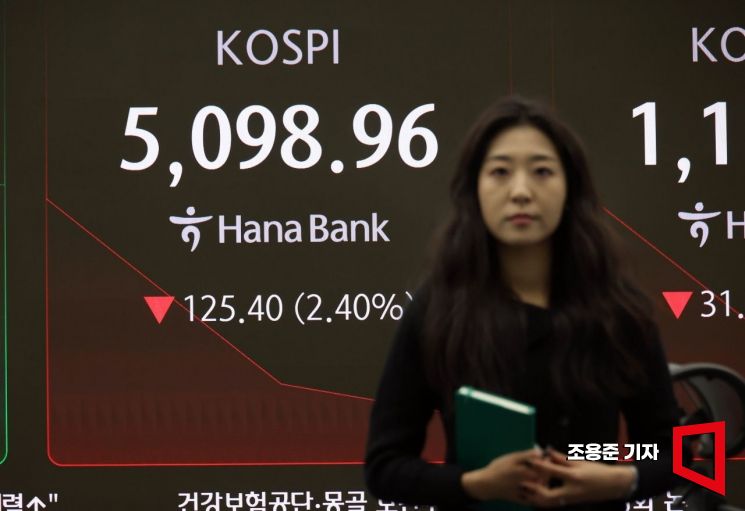 On the 2nd, KOSPI opened with a decline of over 2% in the early session. An employee is monitoring the stock market and exchange rates in the dealing room at the Hana Bank headquarters in Jung-gu, Seoul. Photo by Jo Yongjun
As of 12:50 p.m. on the same day, the KOSPI index had dropped by 4.74% from the previous trading day, falling to 4,976.86.
The Korea Exchange announced that it triggered a sell-sidecar on the main board at 12:31 p.m. on the same day.
The sell-sidecar is a system in which, if the KOSPI200 futures remain in a downward trend for one minute, the effectiveness of program trading sell orders is suspended for five minutes.
This is the first time a sell-sidecar has been triggered on the KOSPI since November 5 of last year, about three months ago. The sell-sidecar has since been lifted.
At the same time, the KOSDAQ was also trading at 1,100.77, down 4.23% from the previous day.
On this day, the domestic stock market experienced increased volatility following the nomination of Kevin Warsh as the next Federal Reserve (Fed) Chair.
Lee Jaewon, a researcher at Shinhan Securities, said, "The Korean stock market is declining due to the nomination of Warsh as Fed Chair and the resulting increase in market volatility," adding, "Expectations for aggressive rate cuts have diminished as Warsh's past criticism of quantitative easing has come into focus."
© The Asia Business Daily(www.asiae.co.kr). All rights reserved.
![Clutching a Stolen Dior Bag, Saying "I Hate Being Poor but Real"... The Grotesque Con of a "Human Knockoff" [Slate]](https://cwcontent.asiae.co.kr/asiaresize/183/2026021902243444107_1771435474.jpg)















