January 2026 Export and Import Trends
Semiconductor Exports Surpass 20 Billion Dollars for Two Consecutive Months
Exports in January recorded a growth rate of over 33%, marking the eighth consecutive month of export expansion. Semiconductor exports more than doubled compared to the same period last year, driving the overall growth in exports.
According to the "January 2026 Export and Import Trends" announced by the Ministry of Trade, Industry and Energy on February 1, exports reached 65.85 billion dollars, up 33.9% from the same month last year.
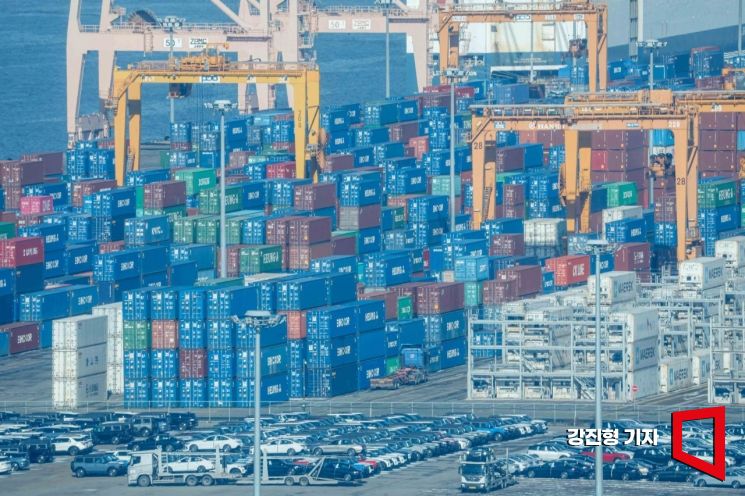
An official from the Ministry explained, "For the first time ever, January exports surpassed 60 billion dollars, setting a new record for the month. The daily average export value, adjusted for the number of working days, also reached a record high for January at 2.8 billion dollars, an increase of 14.0% year-on-year."
In January, exports increased for 13 out of the 15 major export items. Semiconductor exports (20.54 billion dollars, up 102.7%) achieved the second-highest monthly performance on record and set a new all-time high for ten consecutive months, thanks to continued strong demand for AI servers and rising memory prices since last year.
Wireless communication devices (2.03 billion dollars, up 66.9%) saw growth for three consecutive months, led by mobile phones (860 million dollars, up 412%). Computer exports (1.55 billion dollars, up 89.2%) recorded four straight months of growth, driven by strong SSD exports due to increased demand for AI infrastructure. Display exports (1.38 billion dollars, up 26.1%) grew for two consecutive months on the back of increased IT and TV demand, resulting in positive export growth across all IT items.
Automobile exports rose by 21.7% to 6.07 billion dollars, achieving the second-highest January performance ever. This was attributed to an increase in the number of working days, as the Lunar New Year holiday shifted from January last year to February this year, as well as robust sales of eco-friendly vehicles such as hybrids and electric cars.
Petroleum product exports increased by 8.5% to 3.74 billion dollars, as higher refinery operating rates-driven by improved refining margins-offset the continued decline in export prices due to falling oil prices. Bio-health exports (1.35 billion dollars, up 18.3%) maintained positive growth for three consecutive months, supported by stable order volumes from large-scale contracts.
On the other hand, petrochemical exports (3.52 billion dollars, down 1.5%) declined due to lower export prices caused by global oversupply. Ship exports, despite maintaining high export prices, fell by 0.4% to 2.47 billion dollars due to reduced delivery volumes.
Last month, exports increased in seven out of the nine major export regions. Exports to China (13.51 billion dollars, up 46.7%) saw a significant rise due to an increase in the number of working days, as the Lunar New Year and Spring Festival shifted from January last year to February this year, as well as expanded import demand from China. Items such as semiconductors, general machinery, and steel all showed robust growth.
Exports to the United States (12.02 billion dollars, up 29.5%) set a new January record, as semiconductor exports posted triple-digit growth despite weak performance in automobiles, auto parts, and general machinery due to tariff impacts.
Exports to ASEAN (12.11 billion dollars, up 40.7%) recorded the third-highest monthly performance on record, as manufacturing and trade in ASEAN countries recovered and major items such as semiconductors, displays, and ships all increased evenly. Exports to the European Union (EU) rose by 6.9% to 5.39 billion dollars, as indicators for domestic consumption and manufacturing improved and exports of steel, computers, and wireless communication devices remained strong.
January imports rose by 11.7% to 57.11 billion dollars. While energy imports (10.03 billion dollars, down 11.9%) decreased, non-energy imports (47.08 billion dollars) increased by 18.4%. Energy imports continued to decline due to falling prices, with crude oil (6.19 billion dollars, down 12.7%), gas (2.72 billion dollars, down 11.8%), and coal (1.12 billion dollars, down 8.0%) all decreasing. In contrast, non-energy imports saw significant increases in intermediate goods such as semiconductors (7.34 billion dollars, up 22.1%), semiconductor equipment (2.42 billion dollars, up 74.6%), and auto parts (610 million dollars, up 19.1%).
Last month, the trade balance posted a surplus of 8.74 billion dollars, up 10.71 billion dollars from the previous year, setting a new record for January. The trade surplus has continued for 12 consecutive months since February last year.
Kim Jeonggwan, Minister of Trade, Industry and Energy, stated, "It is positive that both major export items such as semiconductors and automobiles, as well as promising consumer goods, are showing balanced growth. However, with growing uncertainty in the trade environment due to recent U.S. tariff policies and the spread of protectionism, the government will continue consultations with the United States, prioritizing national interests. At the same time, we will utilize all available resources to support the establishment of a resilient trade structure that can withstand external changes by diversifying items, markets, and stakeholders."
© The Asia Business Daily(www.asiae.co.kr). All rights reserved.














![The Special Connection Between the Statue of Martyr Lee Jun in Jangchungdan Park and Mayor Oh Sehoon ③ [Current Affairs Show]](https://cwcontent.asiae.co.kr/asiaresize/319/2026012110001599450_1768957215.jpg)
