Reorganization of Land Reserves Used Free of Charge by Public Institutions Through Exchanges and Transfers
"Ensuring Fiscal Soundness and Stable Facility Operations"
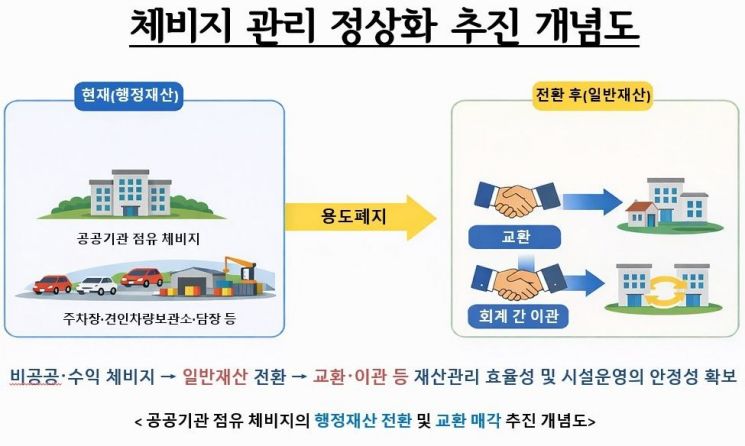
The Seoul Metropolitan Government announced on February 1 that land reserves (chebiji) previously occupied by public institutions such as police stations and fire stations will be reorganized through processes such as exchanges and disposals in accordance with their original purpose.
The city plans to normalize the management system for a total of 121 parcels of land reserves (approximately 160,000 square meters) previously occupied by public institutions through proactive abolition of use, exchanges, and transfers. This initiative aims to enhance fiscal efficiency.
Land reserves refer to land that can be disposed of to cover the costs of land readjustment projects carried out by the city from 1937 to 1991. In principle, these parcels were created with the intention of being sold. Under the Local Autonomy Act, they are classified as administrative property (for business use). There have been ongoing calls for the conversion of land reserves that do not generate revenue or are not used for public purposes into general property.
The city expects that reorganizing land reserves that have been used free of charge will improve the efficiency of asset management by reducing unnecessary management costs and ensuring the stable operation of facilities.
Depending on the intended use and whether revenue is generated, the city will adopt different approaches: land reserves with low public utility or those generating revenue will be converted from administrative property to general property and put up for sale after abolishing their designated use. Land reserves used for public purposes will be reorganized through exchanges or transfers in consultation with the occupying institutions.
Eight parcels of land reserves not used for public purposes or generating revenue, such as parking lots, tow truck storage facilities, ventilation shafts, and fences, will be converted from administrative property to general property and put up for sale. However, land reserves designated as urban planning facilities are excluded from this initiative.
Including the eight parcels converted to general property, a total of 121 parcels of land reserves currently used for public purposes by agencies such as the National Police Agency, fire stations, and education offices will be reorganized according to the circumstances of each occupying institution, either through 'negotiated exchanges' or 'paid transfers between accounts.' Of these, 67 parcels occupied by the National Police Agency and district offices will be exchanged for other land, while 54 parcels used by the Seoul Metropolitan Government, fire stations, and education offices will be transferred between accounts for a fee.
Kim Changgyu, Director General for Balanced Development at the Seoul Metropolitan Government, stated, "By correcting the practice of free use of land reserves managed as administrative property and reorganizing them in line with their original purpose, we will normalize the management system for shared assets, ensuring both fiscal soundness and the stable operation of facilities."
© The Asia Business Daily(www.asiae.co.kr). All rights reserved.












![The Special Connection Between the Statue of Martyr Lee Jun in Jangchungdan Park and Mayor Oh Sehoon ③ [Current Affairs Show]](https://cwcontent.asiae.co.kr/asiaresize/319/2026012110001599450_1768957215.jpg)
