European Nations Near Greenland Seek to Reduce Security Dependence on the U.S.
Some Countries Consider Additional Purchases of K9 Howitzers and Other Korean Defense Products
The popularity of Korean defense products is rising across Europe. This trend has gained momentum as former U.S. President Donald Trump emphasized the necessity of securing Greenland. Even far-right voters in Europe, who were previously supportive of "Trump-style nationalism," are now calling for a reduction in security dependence on the United States. The European Union is preparing to invest heavily in rebuilding its defense industry. The EU estimates that approximately 1 trillion dollars (about 1,400 trillion won) will be needed to establish its own defense system.
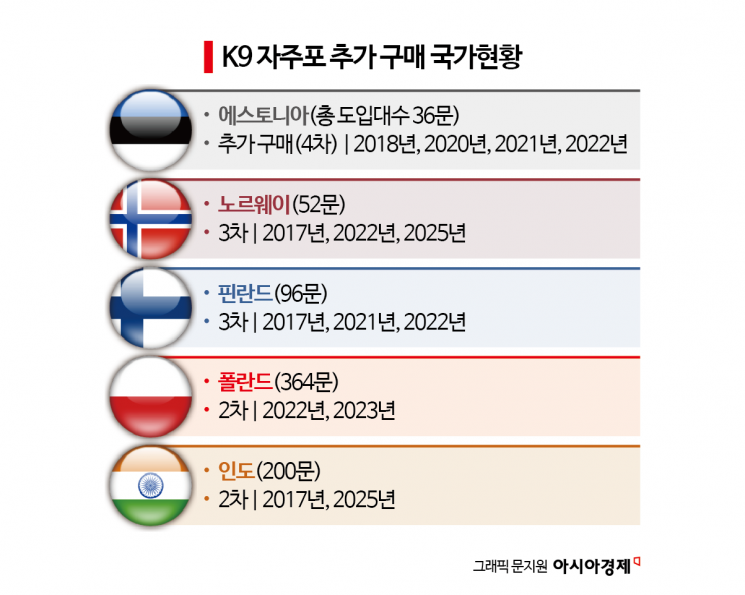
Orders continue to pour in for Hanwha Aerospace, a leading player in the Korean defense industry. On January 30, Hanwha Aerospace was selected for the Norwegian Army's next-generation Long Range Precision Fire System (LRPFS) project. The package includes 16 Cheonmu launchers, ammunition, and training and logistics support, with the contract expected to be signed on January 31. The total project value is 19 billion kroner (approximately 2.85 trillion won). About 1 trillion won will be used for the purchase of the Cheonmu system, with additional funds allocated for infrastructure development.
Norway is NATO's northernmost key member state, sharing a border with Russia. It is known for its harsh climate and rugged terrain. The Norwegian military already operates K9 self-propelled howitzers and K10 armored ammunition resupply vehicles, leading to high confidence in Korean defense products.
The move to reduce security dependence on the United States is becoming increasingly evident. Until now, the dominant player in the European multiple launch guided missile market was the U.S. company Lockheed Martin with its HIMARS system, which was considered the NATO standard. Norway also hesitated between the Cheonmu and HIMARS systems, but ultimately chose Cheonmu. The landscape in Europe has already shifted, particularly since the outbreak of the war in Ukraine. Poland began introducing a large-scale order of 290 Cheonmu units (worth 12 trillion won). Subsequently, Estonia decided to procure six Cheonmu units (worth 520 billion won).
The popularity of the K9 self-propelled howitzer has also surged alongside Cheonmu. The starting point was, again, Poland. The goal is to finalize the third implementation contract for K9 self-propelled howitzers with Poland, the largest market in Europe, within this year. Once the contract is signed, 308 K9 units will be delivered to Poland under the third contract, following 212 units in the first contract and 152 units in the second. The third contract is estimated to be worth up to 8 trillion won.
Additional contracts are also possible. Further K9 purchases by Finland and Estonia are being discussed. There is also speculation about a potential contract with Spain for K9 self-propelled howitzers worth around 7 trillion won, and with Romania for Redback armored vehicles worth around 4 trillion won. Hanwha Aerospace has already established a local joint venture with the WB Group in Poland for the production of Cheonmu guided missiles. In Romania, the company is building a factory to produce K9 self-propelled howitzers and K10 armored ammunition resupply vehicles. Hanwha Aerospace plans to begin operating the Romanian plant in 2027.
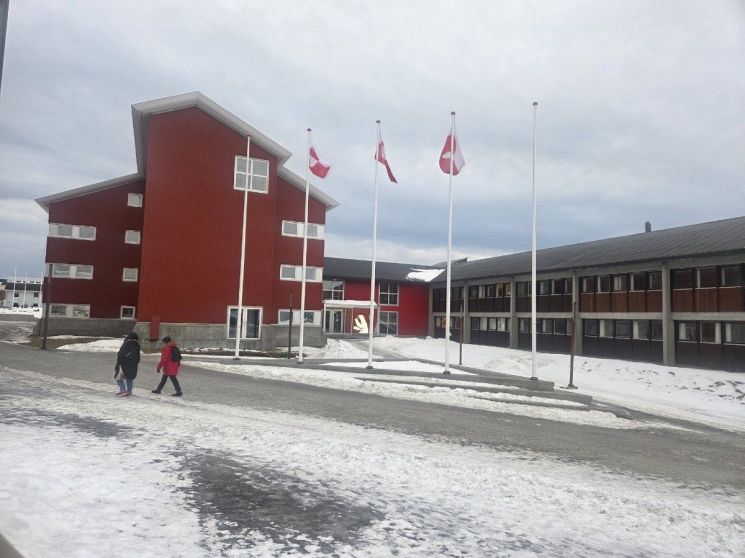
This year, Hanwha Aerospace plans to host the "K9 User Club" in Estonia for countries that have purchased K9 self-propelled howitzers. This gathering of operators of a specific weapon system provides an opportunity to share information and expertise, and may also lead to additional opportunities for Korean arms exports. Since the first contract in 2018, Estonia has gradually introduced K9 self-propelled howitzers. In 2021, Hanwha signed a contract with Estonia worth 4.6 million euros (about 7.7 billion won) to upgrade the performance of 24 K9 units. Hanwha is one of the top three defense companies supplying equipment within Estonia.
The K9 is the leading export item of the Korean defense industry, holding the number one global market share among self-propelled howitzers. One of its main attractions is its cost-effectiveness. It boasts powerful firepower, with the ability to sustain up to 180 rounds of continuous fire per hour, and can operate in temperatures ranging from minus 30 to plus 50 degrees Celsius. Despite these capabilities, it is 2 to 4 billion won cheaper than competing German models. Furthermore, Hanwha does not insist on exporting only the original product but makes modifications upon request from purchasing countries. The AS9, which was modified for the Australian Army with additional equipment for internal vehicle cooling at the rear, is a representative example. According to a 2023 report by the Korea Institute for Defense Analyses (KIDA), the K9 self-propelled howitzer holds a 36% market share-ranking first-among 16 types of medium-caliber (152mm and 155mm) self-propelled howitzers in operation worldwide.
© The Asia Business Daily(www.asiae.co.kr). All rights reserved.












![The Special Connection Between the Statue of Martyr Lee Jun in Jangchungdan Park and Mayor Oh Sehoon ③ [Current Affairs Show]](https://cwcontent.asiae.co.kr/asiaresize/319/2026012110001599450_1768957215.jpg)

