Wonju Achieves a Virtuous Cycle of Jobs, Transportation, and Housing
Continued Upward Growth Despite Nationwide Population Decline
"From Advanced Industries to GTX"
The Keys to Population Growth Success
Despite the nationwide decline in population and the looming crisis of regional extinction, Wonju City continues its steady growth by incorporating the key success factors found in other cities experiencing population increases.
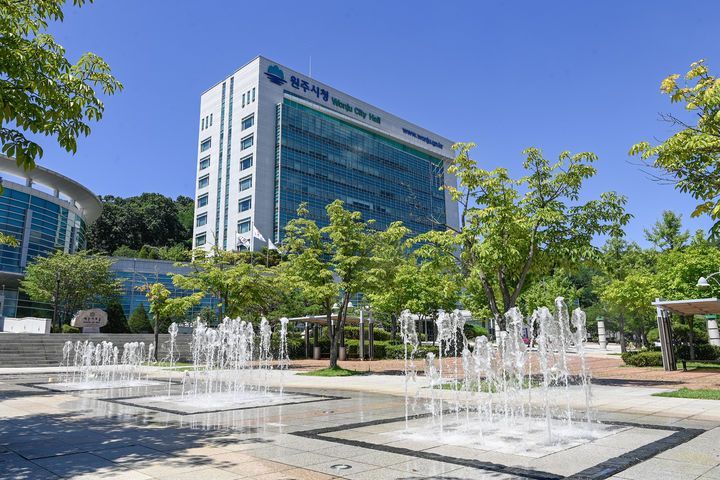
According to the "Population Status of Major Cities Nationwide" analyzed by Wonju City on January 30, most metropolitan cities, including Seoul, have seen their populations decrease every year due to low birth rates, the outflow of young people, and the high cost of housing.
In contrast, cities such as Asan, Cheonan, Cheongju, Paju, and Pyeongtaek have experienced steady population growth, driven by high-quality jobs centered around large corporations, comprehensive metropolitan transportation networks, and stable supply of new residential sites. Additionally, Gwangju, a city similar in size to Wonju, absorbed the housing demand of workers in areas such as Pangyo thanks to improved accessibility to the Seoul metropolitan area following the opening of the Gyeonggang Line. Hanam has also achieved continuous population growth through large-scale residential development projects.
Wonju City is pursuing strategic core projects to secure all these success factors of population growth cities. To create high-quality jobs, the city is expanding four industrial complexes: Buron General Industrial Complex, Sinpyeong Agro-Industrial Complex, Taebong General Industrial Complex, and the Mega Data City Advanced Industrial Complex. At the same time, Wonju is accelerating the formation of a semiconductor cluster by establishing a semiconductor consumables demonstration center, a reliability verification center for future vehicle electronic components, a future clean industry challenge center, an Nvidia training center, the Korea Semiconductor Education Center, and a medical AI semiconductor specialist training center.
The city is also actively fostering advanced industries based on artificial intelligence (AI). Initiatives include the creation of an AI convergence innovation education hub based on digital healthcare, the establishment of the Gangwon Medical AX Transformation Master Plan, the development of an eco-friendly digital healthcare industry support center, a future aviation technology center, a digital convergence automotive parts innovation support center, and a platform to support the global expansion of the K-Medical industry. Building on this industrial foundation, Wonju has attracted 35 medium- and large-scale leading companies, resulting in the creation of 1,879 new jobs.
The construction of an extensive metropolitan transportation network is another strength of Wonju City. The city is promoting the construction of the Yeoju-Wonju double-track railway and the extension of the GTX-D line. In addition, with three expressways, two KTX routes, and the Wonju (Hoengseong) Airport, Wonju is enhancing accessibility to the Seoul metropolitan area and major cities nationwide. The city is also improving transportation convenience by simultaneously developing the Buron Interchange (IC) on the Yeongdong Expressway and installing a Hi-Pass IC in Gwansul-dong.
The creation of a pleasant residential environment and the stable supply of new housing sites are also progressing smoothly. Wonju is the only city in the country where both an Innovation City and a Corporate City are being developed simultaneously. Building on the successful settlement of these two cities, Wonju is developing a new station district city at Namwonju Station, integrating residential, commercial, and business functions. Through urban regeneration projects in the old downtown area, the city is not only developing new residential sites but also improving the living conditions in existing neighborhoods, thereby promoting balanced urban development. In addition, the Munmak District urban development project and the move-in of major brand apartment complexes in key areas are ongoing.
In this way, Wonju City is securing all three major growth engines of population-increasing cities: high-quality jobs centered on advanced industries, a metropolitan transportation network directly connected to the Seoul metropolitan area, and a new city-level pleasant residential environment. With these strengths, the city has a bright outlook for the long-term goal of reaching a population of 500,000.
Furthermore, Wonju plans to leap forward as a sustainable population growth city by expanding the Dream Fulfillment Voucher Program, building cultural facilities such as a children's art center and a municipal art museum, and constructing additional park golf courses. These policies aim to improve the quality of life for all generations, from children to seniors.
An official from Wonju City stated, "Wonju is actively leveraging the strengths of population-increasing cities to become a city that attracts people," adding, "We will continue to strengthen job, transportation, and residential infrastructure, and focus all our efforts on making Wonju a city where everyone wants to live."
© The Asia Business Daily(www.asiae.co.kr). All rights reserved.
![Clutching a Stolen Dior Bag, Saying "I Hate Being Poor but Real"... The Grotesque Con of a "Human Knockoff" [Slate]](https://cwcontent.asiae.co.kr/asiaresize/183/2026021902243444107_1771435474.jpg)















