September 7 Measures Failed to Meet Expectations, Additional Plan Announced in Four Months
"Some Effect on Stabilizing Home Prices" vs. "Construction and Move-In Will Take 2?3 Years"
Mixed Outlook on Easing Demand Concentration in Preferred Areas
The government has announced additional housing supply measures just four months after the September 7 measures last year, aiming to ease housing demand in the Seoul metropolitan area. Although the September 7 housing supply expansion plan outlined a blueprint to provide 1.35 million homes in the greater Seoul area, many pointed out that market participants did not feel its impact.
Despite being a large-scale supply plan equivalent to building a new satellite city around Seoul every year, the plan was criticized for being vague, with only grand slogans and no clear details on individual sites or specific supply volumes. The ruling party and government have jointly stated that they will "continue to announce supply plans," which is interpreted as an attempt to stabilize the real estate market by sending consistent supply signals. However, it remains uncertain whether this new measure will affect the high-priced housing markets in areas like Gangnam and Yongsan, which are known for the so-called "one smart home" phenomenon.
September 7 Measures Not Enough to Address Supply Shortage Concerns
Plans Specify Location, Scale, and Supply Timeline
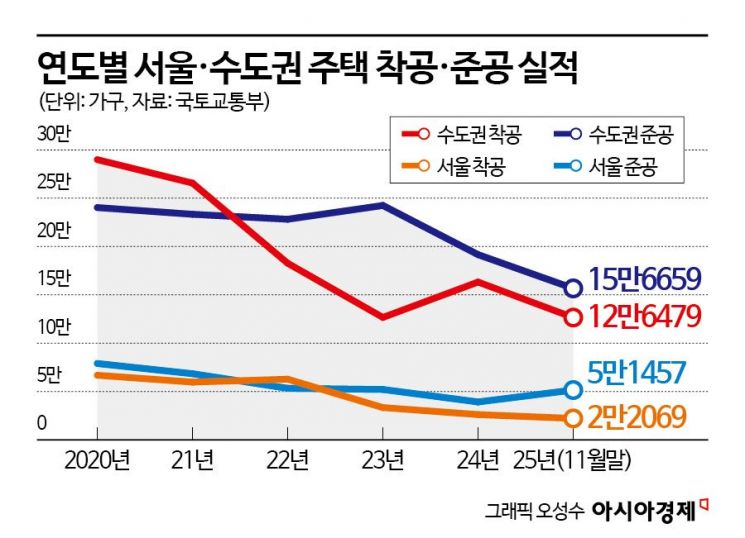
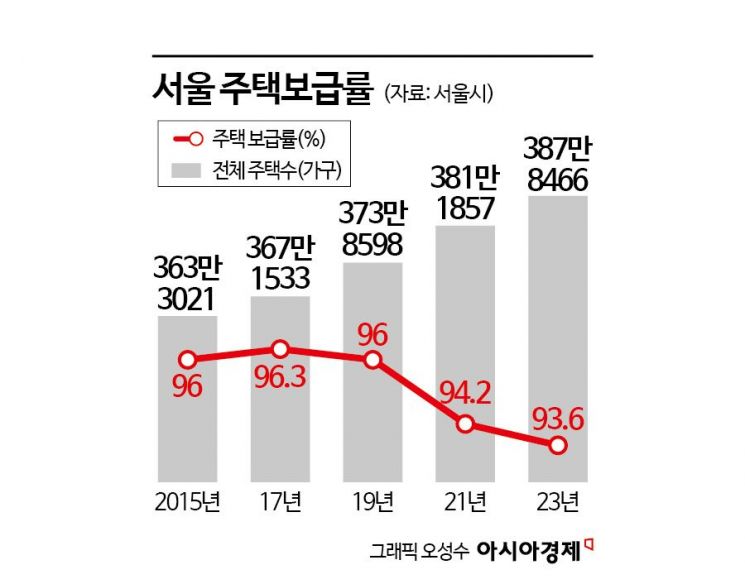
The government's decision to announce additional supply measures just four months after last September was based on the judgment that regulations alone are not enough to control housing prices. The government itself acknowledges the shortage of housing supply in Seoul and the surrounding metropolitan area. Even during the COVID-19 period, 60,000 homes were started in Seoul and over 200,000 across the metropolitan area, but as of 2024, this number has shrunk by more than half. This is due to both the prolonged slump in the construction industry and the cooling of housing demand. Given the nature of housing supply, it takes at least four to five years from planning and site selection to actual construction.
In the past two to three years, leading indicators such as housing permits and construction starts have continued to show weak trends, fueling anxiety in the market about a "supply cliff." This concern over supply shortages was one of the factors behind the sharp rise in apartment prices in Seoul last year. The September 7 real estate measures were introduced against this backdrop. The supply plan announced today is clearly positioned as an extension of those previous measures.
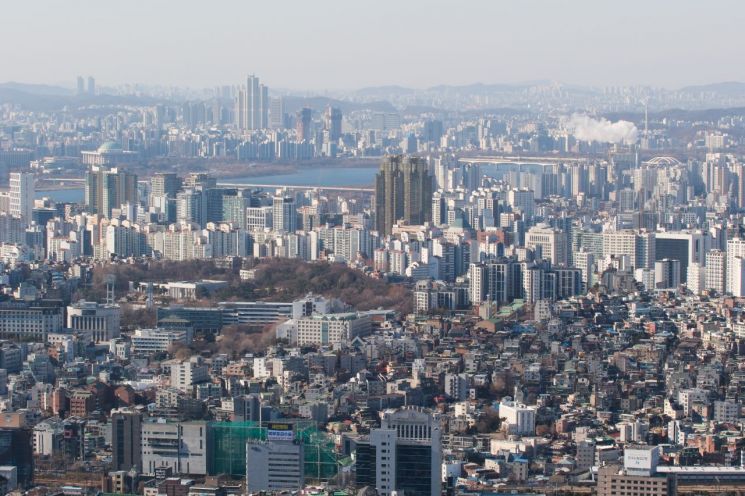
There have also been many criticisms that previous housing supply measures focused on the outskirts of Seoul or third-generation new towns near Seoul, which have relatively poor access to the city center and do not meet public expectations. This time, the government has responded to these concerns by significantly increasing the supply scale in Yongsan, located in the heart of Seoul, and by carefully planning supply around public office buildings with good access to transportation and infrastructure.
Park Wongap, Senior Real Estate Specialist at KB Kookmin Bank, said, "By gathering as many sites as possible, this 'all-in supply' approach reaffirms the government's policy stance and its commitment to market stability. In Seoul, there is strong housing demand among dual-income couples in their 30s and young people, and utilizing areas with existing infrastructure will enhance project efficiency."
"Uncertain Whether the 'One Smart Home' Phenomenon Will Be Eased" - Considering More Public-Oriented Urban Supply Methods
When announcing the new measures, the government stated, "We will continue to identify additional urban supply volumes in areas with demand, based on the principle of steady supply." This signals an intention to send ongoing supply expansion signals to the market, rather than implementing one-off measures. Officials inside and outside the Ministry of Land, Infrastructure and Transport have emphasized that, after laying the groundwork during the first year of the Lee Jaemyung administration, it is now time to deliver tangible results in its second year. The government plans to start construction on 58,000 urban homes and 53,000 public housing sites by the end of the year, totaling 111,000 units, including the first-ever urban public-private complex project in Jemulpo, Incheon.
Opinions are divided on whether these measures will help ease the so-called "one smart home" phenomenon, where demand is concentrated in preferred areas like Gangnam and Yongsan. Some believe that a large-scale supply of public housing in various parts of the city could help stabilize soaring home prices, while others point out that, since construction and move-in dates are two to three years away, it will take more time before the effects are felt.
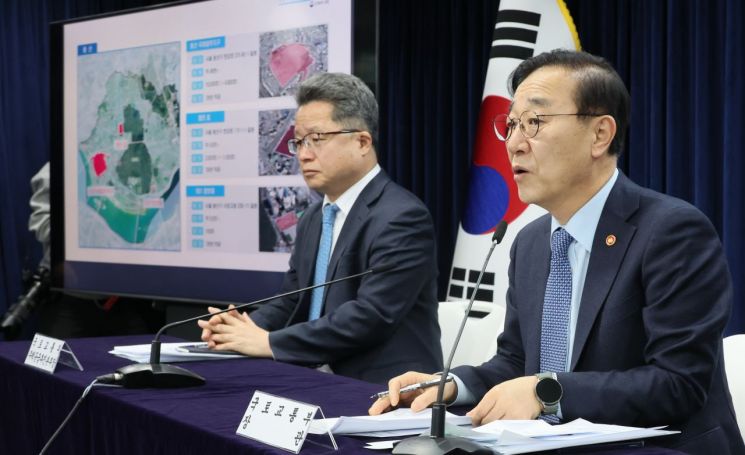 Kim Yoonduk, Minister of Land, Infrastructure and Transport, is announcing measures to expand and expedite urban housing supply on the 29th at the Government Complex Seoul in Jongno-gu, Seoul. Photo by Yonhap News
Park Jun, Professor at University of Seoul, said, "Given that the September 7 measures outlined a public-oriented supply strategy led by Korea Land and Housing Corporation (LH), I believe it will be possible to provide affordable, high-public-value housing throughout downtown Seoul. The government is aware that, even if sales prices are lowered, prices could still rise due to the unique characteristics of central Seoul, so I expect the supply will be provided through methods that ensure public value rather than conventional sales approaches."
Kwon Youngsun, Team Leader at Shinhan Bank's Real Estate Investment Advisory Center, commented, "Sites like Yongsan or Taereung Country Club are certainly more desirable than the existing public housing sites on the outskirts of the metropolitan area. However, there is a perception that if a large portion of the supply is public housing, it may not fully reflect market demand, so the key will be how well public and private demand are integrated."
Yoon Jihae, Head of Research Lab at Real Estate R114, said, "It is hard to say that the principle of 'adequate supply in preferred locations' has been realized; rather, it is more appropriate to interpret this as a signal that the government is 'actively searching.' Since the majority of the supply will start construction after 2028, it will not be enough to fill the immediate supply gap."
© The Asia Business Daily(www.asiae.co.kr). All rights reserved.
![Clutching a Stolen Dior Bag, Saying "I Hate Being Poor but Real"... The Grotesque Con of a "Human Knockoff" [Slate]](https://cwcontent.asiae.co.kr/asiaresize/183/2026021902243444107_1771435474.jpg)

















