Gap Between Renewal and New Jeonse Contracts in Guro-gu
Difference Doubles Compared to Last Year
Jeonse Shortage Continues to Worsen
Rising Loan Interest Rates Add to the Strain
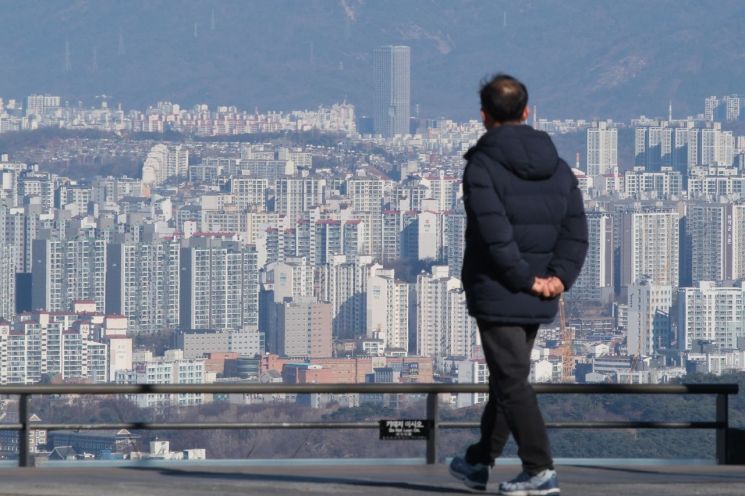
The gap between dual prices for apartment jeonse (long-term lease) in Guro-gu, Seoul has widened to over 100 million won. Within the same complex and for the same unit size, jeonse prices differ depending on whether tenants exercised their right to renew the contract or signed a new lease. This gap has grown as jeonse listings have become scarce due to regulatory measures. The dual pricing phenomenon was most pronounced in popular school districts and preferred areas such as Gangnam and Songpa in Seoul, but it is now spreading to the outskirts of the city.
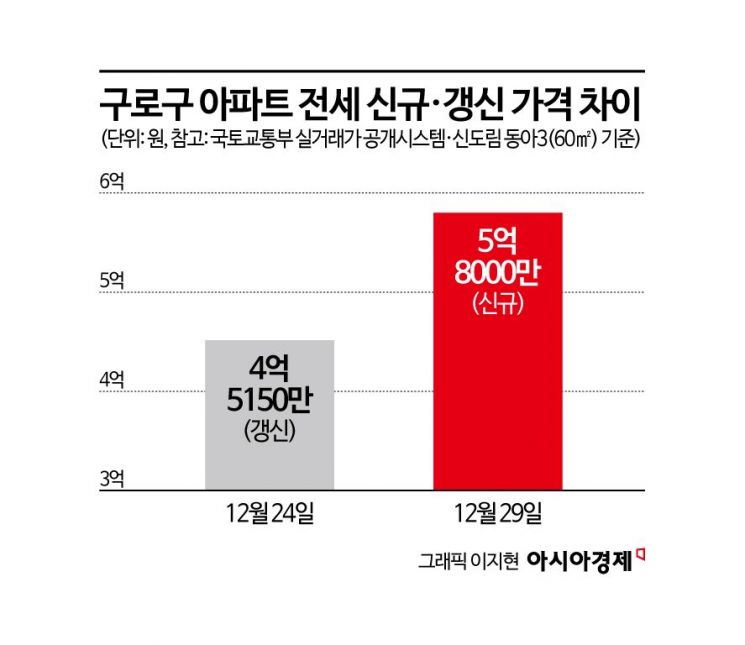
According to the Ministry of Land, Infrastructure and Transport's real transaction disclosure system on January 28, a 60-square-meter unit in Dong-A 3 Apartment, Sindorim-dong, Guro-gu, Seoul was renewed on December 24 last year for 451.5 million won. This amount reflects only a 5% increase from the previous deposit, as allowed under the right to renew the contract. Five days later, on December 29, a different unit of the same size and similar floor in the same complex was leased through a new contract for 580 million won. The difference in deposit between the two contracts amounted to 128.5 million won. A year ago, the gap in dual prices for this apartment was about 40 to 50 million won.
The government's stringent regulations have fueled the dual pricing phenomenon. Jeonse listings themselves have become extremely scarce. A real estate agent in Guro-gu, Seoul commented, "Jeonse listings have virtually dried up," adding, "Even the few remaining listings are being converted to semi-jeonse (mixed rent and deposit) by landlords."
According to Asil, a real estate big data firm, there were 21,807 apartment jeonse listings in Seoul as of the 27th. This represents a 6.3% decrease from the previous month (23,263 listings) and a drop of more than 26% compared to the same period last year (29,695 listings). The Korea Real Estate Board's jeonse supply-demand index for Seoul apartments also rose to 104.7 on January 19, up 0.2 points from the previous week (104.5). An index above 100 indicates that demand exceeds supply.
With the ongoing jeonse shortage and upward pressure on jeonse prices, the dual pricing phenomenon is expected to intensify. In particular, the market anticipates that if the heavier capital gains tax on owners of multiple homes resumes on May 10, these owners will either raise jeonse deposits to cover their taxes or choose to make gifts of their properties. This could further reduce the number of jeonse listings available.
Jeonse loan interest rates also remain high. The variable-rate jeonse loan interest rates at the four major banks-KB Kookmin, Shinhan, Hana, and Woori-currently range from 3.63% to 5.75%. The upper end of the range has risen by 0.35 percentage points from the previous month and is now approaching 6%.
© The Asia Business Daily(www.asiae.co.kr). All rights reserved.
![Clutching a Stolen Dior Bag, Saying "I Hate Being Poor but Real"... The Grotesque Con of a "Human Knockoff" [Slate]](https://cwcontent.asiae.co.kr/asiaresize/183/2026021902243444107_1771435474.jpg)
















