Transitioning from a Recovery-Focused System to Integrated Safety Administration Covering Prevention, Response, Recovery, and Management
Sancheong County in South Gyeongsang Province has completely overhauled its disaster management system following the unprecedented consecutive disasters of a major wildfire and extreme heavy rainfall in 2025. The county is now focusing its administrative resources on building an integrated safety system that covers the entire cycle of prevention, response, recovery, and management.
Going beyond simple facility reinforcement, the county has broadened its policy scope to comprehensively transform the administrative system itself to prioritize safety. This expansion includes disaster response systems, everyday safety management, infrastructure maintenance, worker safety, and the establishment of a smart safety city.
◆ Transforming 'the moment' a disaster occurs... 24-hour dedicated disaster safety situation room
Sancheong County has converted its disaster safety situation room to a dedicated operational system to ensure prompt and systematic responses to disasters. Four dedicated staff members have been assigned to establish a 24-hour real-time situation management system. In the event of a disaster, all steps-incident reporting, initial assessment, reporting, cooperation with relevant agencies, and on-site command-are seamlessly connected within a single system.
Collaboration with the integrated CCTV control center enables immediate assessment of on-site conditions during initial disaster response. The response process has been standardized to ensure that emergency actions can be taken within the golden time when urgent situations arise.
Additionally, the county analyzes types of disaster incidents on a monthly and quarterly basis, accumulating data on accident patterns, vulnerable areas, and response issues. This data-driven approach is used as foundational material for future safety policies, further establishing a disaster management system based on data.
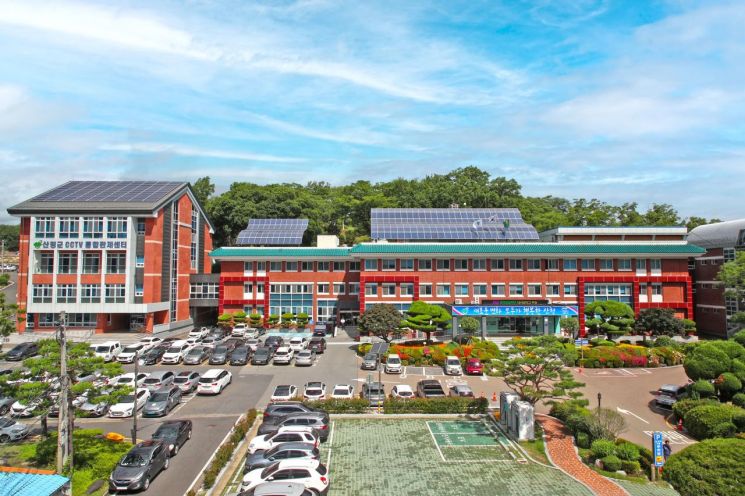
◆ Proactively eliminating risks in daily life... 'Fixing problems before accidents happen'
Sancheong County has shifted its administrative approach from taking action after accidents occur to preventing accidents before they happen.
Joint intensive safety inspections by public and private sectors are conducted at multi-use facilities, aging buildings, and disaster-prone facilities. The inspection system focuses on eliminating real risk factors rather than conducting formal checks.
Even minor issues such as cracks, leaks, and structural damage that could potentially lead to accidents are meticulously inspected. Issues that can be addressed on-site are immediately improved, while facilities requiring repairs or reinforcement are designated for continuous management with budget allocation. This strengthens the post-inspection management system, ensuring an uninterrupted cycle of inspection, action, and management.
◆ Zero fatalities from summer water activities... Transitioning to predictive safety management
Accidents during summer water activities are a recurring nationwide social issue each year.
In response, Sancheong County completely revamped its water activity safety management system in 2025, achieving zero fatalities.
Safety personnel were deployed at all 26 water activity management sites in the county (24 managed, 2 high-risk). All rescue equipment-including life rings, life jackets, and safety ropes-were thoroughly inspected. Field-oriented guidance and public awareness activities were conducted, and a response system was established to enable immediate control and restricted access when risk signals such as worsening weather or rising water levels were detected.
The number of free life jacket rental stations was increased from three to six. The county plans to further advance its predictive water activity safety management system by using real-time video monitoring to proactively prevent accidents.
◆ Daepo District selected for disaster prevention project... 'Resolving chronic flooding areas'
Daepo District in Saengcho-myeon has long been a representative chronic flooding area, with repeated flooding during the rainy season causing ongoing inconvenience and property damage for residents.
Sancheong County secured a total project budget of 19.2 billion won by designating this area as a target for the Ministry of the Interior and Safety’s comprehensive flood-prone area improvement project. The focus of the project is not simply on expanding drainage channels, but on fundamentally creating a structure where flooding does not occur-through comprehensive river maintenance, drainage system improvements, and overall enhancement of the residential area’s flood response structure. The aim is to fundamentally block recurring flood damage and create tangible improvements in residents’ living environments.
◆ Ongoing improvement of natural disaster risk zones... The results of preventive administration
Sancheong County has invested a total of 20.8 billion won in two natural disaster risk improvement zones-Beoppyeong and Dangae-completing the construction of new and rebuilt bridges and river maintenance. These efforts have structurally improved areas that were highly susceptible to flooding and isolation, significantly reducing the likelihood of disasters and greatly enhancing the stability of residents’ lives.
In addition, the county is in the process of designating new target zones for 2025 based on affected areas. Through disaster prevention project applications, it is securing national and provincial funding to reduce the county’s financial burden while systematically building long-term preventive infrastructure. This represents a shift from reactive spending after damage occurs to proactive investment to prevent damage.
◆ After two disasters-water and fire... 'Restoration that will not collapse again'
Sancheong County suffered two consecutive disasters in 2025: a major wildfire in March and extreme heavy rainfall in July.
Although roads, rivers, farmland, and residential areas were damaged throughout the county, administrative resources were focused on securing the necessary recovery budget immediately after the damage, enabling rapid response and recovery efforts.
In particular, a recovery budget of 636.2 billion won (567.8 billion for public facilities, 68.4 billion for private facilities) was secured immediately after the damage, and a swift recovery system was launched with full commitment.
For public facilities requiring functional restoration, the county aims to complete the process before the rainy season in 2026. For permanent restoration projects, which go beyond simple restoration to address structural weaknesses and prevent recurrence, the goal is to complete them by the first half of 2027.
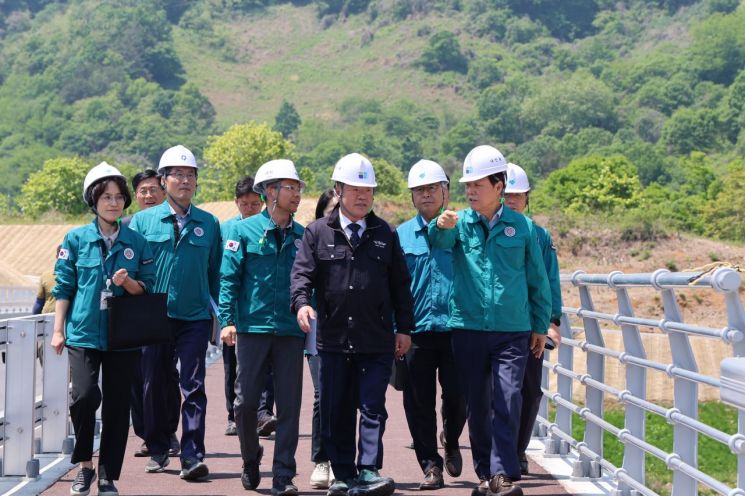 Sancheong County Natural Disaster Risk Improvement District (On-site Inspection of Beoppyeong Risk District)
◆ Creating accident-free workplaces-administration leads the way
Sancheong County plans to continuously establish a more detailed, field-oriented safety and health management system aimed at preventing serious accidents and reducing industrial accidents.
To prevent serious accidents, training for supervisors is conducted for all department heads, along with regular risk assessments, workplace environment measurements, safety and health education, and confined space rescue training. These comprehensive activities are systematically implemented to raise safety standards in industrial sites and create a work environment free from serious accidents.
Additionally, the county is supporting serious accident prevention consulting projects for private companies within its jurisdiction, continuously raising the overall safety level of local industries.
◆ Expansion of intelligent CCTV... 'From post-incident response to proactive prevention'
Sancheong County is establishing the foundation for a smart safety city by installing 1,150 high-definition intelligent CCTVs, AI wildfire surveillance CCTVs, and drone control infrastructure to detect crimes, fires, and disasters in advance. In 2026, the county plans to replace outdated control infrastructure and further expand intelligent CCTVs, focusing on safety spaces closely connected to daily life, such as safe routes home for women, child and senior protection zones.
Lee Seunghwa, Governor of Sancheong County, stated, "Based on the experience of major disasters, Sancheong County's disaster safety policies have fundamentally changed. We will create a stronger Sancheong by building a robust social safety net and ensuring perfect response throughout the entire process of prevention, response, and recovery, so that residents can truly feel safe in their daily lives."
© The Asia Business Daily(www.asiae.co.kr). All rights reserved.


















