Trump Claims "Korean National Assembly Fails to Fulfill Agreement" on Social Media
Mentions Delay in Special Act on Investment in the U.S.
Seen as Pressure to Accelerate U.S. Investment Implementation
Blue House Convenes Emergency Response
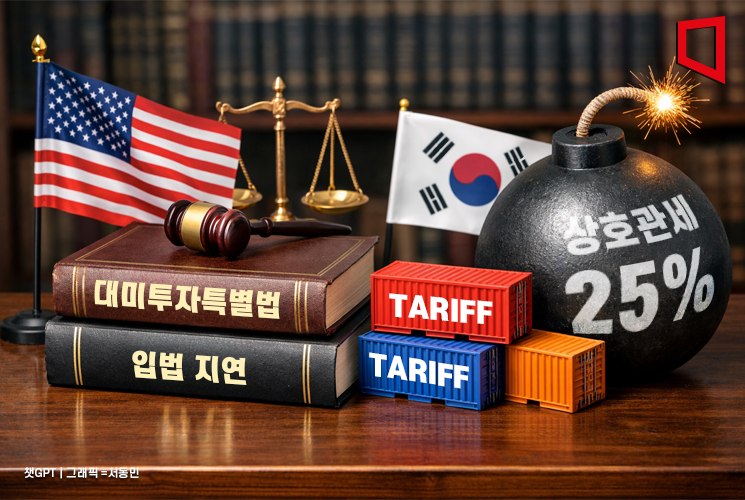
President Trump has pressured South Korea by threatening to raise tariffs on Korean products from 15% to 25%, citing delays in the National Assembly's passage of the "Special Act on Investment in the United States." This move is interpreted as an attempt to expedite the execution of the US-bound investment fund, which is worth 350 billion dollars. However, since the Korea-US trade agreement only stipulated the submission of the bill, some interpret Trump's demand as an excessive effort to speed up investment in the US.
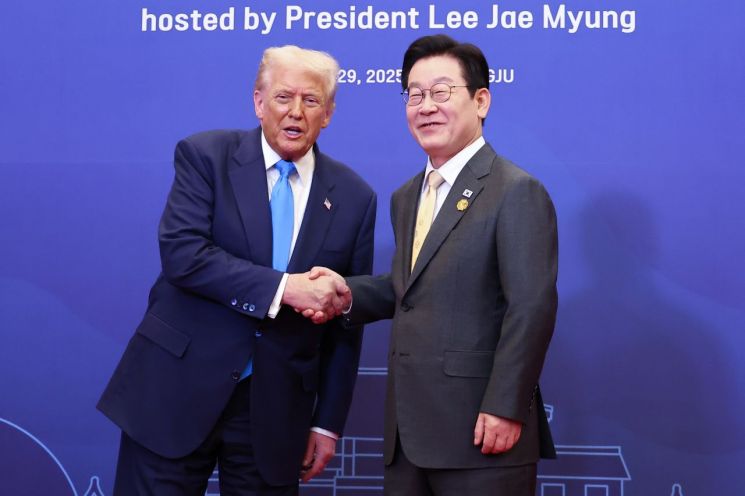
On January 26 (local time), US President Donald Trump posted on Truth Social, stating, "The South Korean National Assembly has not carried out the legal procedures necessary to implement the Korea-US trade agreement," and announced his intention to raise reciprocal tariffs on Korean products-such as automobiles, lumber, and pharmaceuticals-from 15% to 25%. Referring to the agreement reached last July and during his visit to South Korea, President Trump also questioned, "Why hasn't the Korean National Assembly approved the agreement?" However, he did not specify when the tariff increase would take effect.
In response, on the morning of January 27, the Presidential Office convened a "US Trade Affairs Meeting" chaired by Policy Chief Kim Yongbeom and National Security Chief Wi Seongrak to discuss the background of President Trump's tariff remarks and possible responses. The meeting was attended by Trade Negotiation Head Yeo Han-koo, First Vice Minister of Economy and Finance Lee Hyungil, and Second Vice Minister of Foreign Affairs Kim Jina, with Economic Growth Senior Secretary Ha Junkyung, National Security Office Third Deputy Director Oh Hyunju, and AI Future Planning Senior Secretary Ha Jeongwoo also present. Kang Hoonshik, Chief of Staff, and Kim Jeonggwan, Minister of Trade, Industry and Energy, who are currently in Canada as part of the Special Envoy for Strategic Economic Cooperation, participated via phone.
During the meeting, participants reviewed the status of the special legislation for strategic Korea-US investment management, which is being pursued as a follow-up to the tariff negotiations. The Presidential Office explained, "Minister Kim Jeonggwan will visit the United States after completing his schedule in Canada to discuss the matter with Secretary of Commerce Howard Lutnick, and Trade Negotiation Head Yeo Han-koo will also soon visit the US to consult with US Trade Representative Jamieson Greer." The office also noted, "A tariff increase would require administrative actions such as publication in the Federal Register," and stated that the government would communicate its intention to implement the agreement to the US side and respond calmly.
The main issue is that President Trump cited "legislative delay" as the basis for restoring tariffs. Since the Korea-US trade agreement specified that the condition for tariff reduction was the "submission (proposal) of the special bill to the National Assembly," some interpret Trump's pressure for a tariff hike due to "delayed passage" as unreasonable. In trade negotiations, it is common practice to specify implementation requirements in the text to reduce the risk of disputes. Nevertheless, President Trump's effective introduction of "National Assembly passage" as a new standard is seen as a political tactic to strengthen his negotiating leverage for a specific purpose. Currently, since November of last year, five bills to establish the Special Act on Investment in the United States have been proposed in the National Assembly (four by the Democratic Party, one by the People Power Party).
The purpose of Trump's public message is interpreted as primarily to speed up the "processing" of the special act and accelerate the creation of the 350 billion dollar US investment fund, which has an annual limit of 20 billion dollars. By threatening to raise tariffs again, the increased pressure on industry and markets could prompt the National Assembly to accelerate legislative discussions. Rather than focusing solely on the passage of the bill, the aim is to use legislation as a pretext to expedite the investment schedule and confirm investment destinations.
Some observers also believe there is an intention to package various Korean systems and regulations as "non-tariff barriers" and use them as leverage. In particular, the US appears to be highlighting areas such as the Information and Communications Network Act, personal data protection and data transfer regulations, and online platform fairness regulations-issues it has repeatedly raised-as obstacles to implementing the Korea-US trade agreement, thereby seeking to use them as leverage in future negotiations. Ultimately, by mentioning "legislative delay" in the National Assembly, the strategy is seen as an attempt to accelerate the implementation of the trade agreement and regain the upper hand in negotiations.
Regarding Trump's remarks, the People Power Party, which has advocated for "National Assembly ratification," focused on shifting responsibility to the government and the ruling party. Park Suhyeon, Senior Spokesperson for the Democratic Party, told The Asia Business Daily on January 27, "Currently, five bills for the Special Act on Investment in the United States have been proposed in the National Assembly, and the process is proceeding normally," adding, "We should first observe the government's response and also listen to the US explanation." Since November of last year, five bills for the Special Act on Investment in the United States (four by the Democratic Party, one by the People Power Party) have been proposed in the National Assembly. However, none have made progress beyond the National Assembly's Planning and Finance Committee stage.
The opposition has raised the issue of government and ruling party responsibility. Song Eonseok, Floor Leader of the People Power Party, said at a party meeting on the morning of January 27, "This situation clearly demonstrates how unstable the Korea-US tariff agreement-which the government has so self-praised as a success-actually is," adding, "All responsibility lies with the government and ruling party, who signed a trade agreement requiring ratification but have neglected the ratification process." The People Power Party plans to address the situation through an urgent inquiry into the matter.
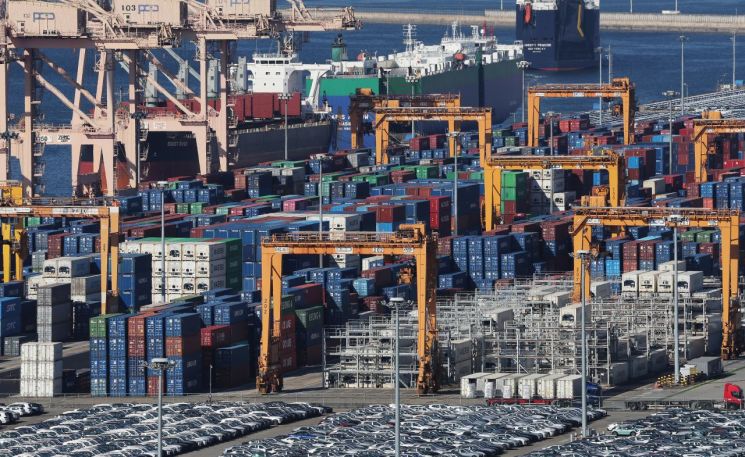
The industrial sector believes that if tariffs actually return to 25%, it will inevitably deal a direct blow to the price competitiveness and profitability of export items to the US, such as automobiles. However, since a tariff change does not occur immediately based solely on President Trump's social media post, some point out that the final implementation, timing, and scope of application must first be confirmed. The Presidential Office has stated that, in the absence of an official notification and detailed explanation, it will monitor the relevant administrative procedures and the US government's intentions, and seek to minimize the impact through high-level consultations.
© The Asia Business Daily(www.asiae.co.kr). All rights reserved.



















