Sales up by 5.4 billion KRW, operating profit up by 6.4 billion KRW, and 33 new jobs created compared to the previous year
Building a field-oriented support model to ensure technology development goes beyond research
Achieving both supply chain stability and business growth through localization of core components and materials
Expanding into AI-based advanced manufacturing R&D in 2026
The "Core Component and Material Technology Development Support Project" promoted by Gumi City in North Gyeongsang Province and the Gumi Electronics & Information Technology Research Institute is being recognized as a practical answer to this question.
The project replaced core components and materials, which were previously highly dependent on imports, with technologies developed by local companies. This led to mass production, increased sales, and job creation, making it the most impactful "performance-driven support project" among Gumi City's business support initiatives.
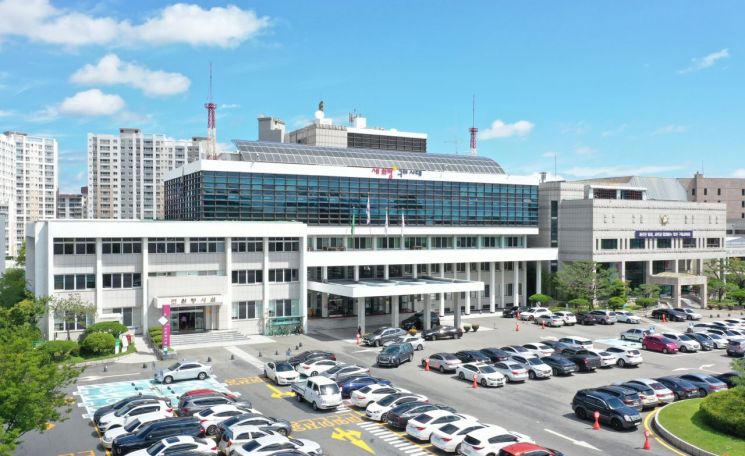
As global supply chain instability and core material supply crises become routine, the starting point for industrial competitiveness has become clear: "How quickly can localization be achieved?" and "Can the technology be commercialized immediately?"
The key achievement of this project is that technology development did not remain at the research stage but extended from localization to market expansion. In major industries such as automotive, semiconductors, displays, medical devices, robotics, and UAM, imported parts were replaced with technologies from local companies, resulting in both supply chain stability and improved cost competitiveness.
The results are also evident in figures. As of 2025, participating companies increased their sales by approximately 5.4 billion KRW compared to the previous year (2024), reaching about 140 billion KRW. They also created 33 new jobs, increased operating profit by 6.4 billion KRW, and secured 15 new business partners. This demonstrates a virtuous cycle of technology development, localization, mass production, sales, and employment being realized in the field.
Nizfix Co., Ltd., which developed fastening technology for automotive insulator brackets, succeeded in improving both assembly efficiency and part performance by developing a press-fit fastening method. Achievements such as securing orders for 600,000 units annually, relocating from a leased factory to a self-owned plant in Industrial Complex 4, achieving annual sales of 1.22 billion KRW, and increasing employment by 10 people serve as a representative example of how localization technology can directly drive business growth.
Jarvis Co., Ltd. and BRG Co., Ltd. developed an integrated antenna module for autonomous vehicles based on C-ITS. They secured core functions such as precise positioning with a margin of error within 1 meter and high-speed data communication, leading to over 18% sales growth. Additionally, they are expanding the application of this technology to the defense and robotics sectors, widening its scope, and are pursuing commercialization in the global market through collaboration with overseas companies.
Seoil Co., Ltd., which developed a transparent barrier film, achieved world-class performance with a water vapor transmission rate of 0.08g/㎡day and agreed to joint cooperation with global companies. As an example of Korean technology directly entering the global market, the company is working to secure new sales channels and expand employment in 2026.
Jiwon Industry Co., Ltd. succeeded in localizing MWCNT-based thermal dissipation materials, replacing imported materials. This led to increased exports, higher sales, and expansion to a self-owned factory. By challenging the global market, the company received the 1 Million Dollar Export Tower award in 2025.
Seamechanics Co., Ltd., which succeeded in localizing EGR valve housings, created 15 new jobs after completing the project in 2025. The company has set a goal of securing orders worth 12 billion KRW over the next three years and is emerging as a key supplier of eco-friendly vehicle parts.
Atoz, which developed a SLAM integrated package module, achieved 98.8% accuracy in AI algorithms applied to autonomous robots, demonstrating the potential for localization of core technologies in robotics and defense. Following technology development, the company created three new jobs, expanded sales and business partners, and is growing as a regional innovation company, with Korean technology directly leading to business expansion.
SL Tech Co., Ltd., which developed an intelligent drone station for wildfire response, achieved localization by reducing dependence on overseas equipment. In 2025, the company reached 11 billion KRW in sales, 400,000 dollars in exports, created four new research positions, and relocated its factory to Industrial Complex 5.
Hyeongje Partners Co., Ltd., which developed an electric vehicle platform, established a domestic platform to reduce reliance on overseas finished products. The company is rapidly expanding its business by supplying to government agencies, negotiating with buyers in four foreign countries, and securing eight new business partners. It is also in discussions to supply about 1,000 units annually to the domestic market for road-ready four-wheel electric agricultural machinery.
SYTech Co., Ltd., which localized silicon parts for semiconductor wafer etching processes, achieved a 21% increase in sales and expanded its workforce by 40 people in 2025 compared to 2024, thanks to new customer acquisition and the development of new silicon parts.
Mediconnector Co., Ltd., which localized COC materials for prefilled syringes, is expected to achieve sales of 2 billion KRW in 2025, increase employment by six people, and attract 1.5 billion KRW in investment. The company is demonstrating the potential for localization of medical device materials, supply stability, and growth as a prospective unicorn company, as evidenced by its selection for TIPS (Tech Incubator Program for Startup Korea).
This project, planned by Gumi City and operated by the Gumi Electronics & Information Technology Research Institute, is a field-oriented R&D model that has demonstrated a self-sustaining growth structure in practice, linking technology development, mass production, sales, employment, and exports.
Moon Chuyeon, President of the Gumi Electronics & Information Technology Research Institute, stated, "The greatest achievement was planning core technologies needed by companies together and accelerating commercialization through practical R&D that can be applied in the field."
Gumi Mayor Kim Jangho said, "We will continue to support R&D funding and demonstration infrastructure so that technology-driven companies can grow stably in Gumi."
Based on these achievements, Gumi City plans to expand the project into the AI-based advanced manufacturing sector starting in 2026. By supporting technology development focused on intelligent production systems that combine process automation using AI and data with robotics technology, the city aims to enhance the short-term commercialization and market responsiveness of small and medium-sized enterprises in Gumi. In addition, initial consulting on AI advanced manufacturing will be provided in parallel to accelerate the on-site application of manufacturing innovation, including process analysis and automation design.
© The Asia Business Daily(www.asiae.co.kr). All rights reserved.
![Clutching a Stolen Dior Bag, Saying "I Hate Being Poor but Real"... The Grotesque Con of a "Human Knockoff" [Slate]](https://cwcontent.asiae.co.kr/asiaresize/183/2026021902243444107_1771435474.jpg)















