Visiting Cafes to Persuade, Leading to Increased Citizen Participation
Blood Donation Reservations Rise 2 to 5 Times, Raising Hopes for Easing the Crisis
As blood shortages recur every winter, blood centers across the country have been striving to increase blood donation participation by offering unique gifts. In Busan, the proactive efforts of on-site nurses have drawn attention for delivering tangible results.
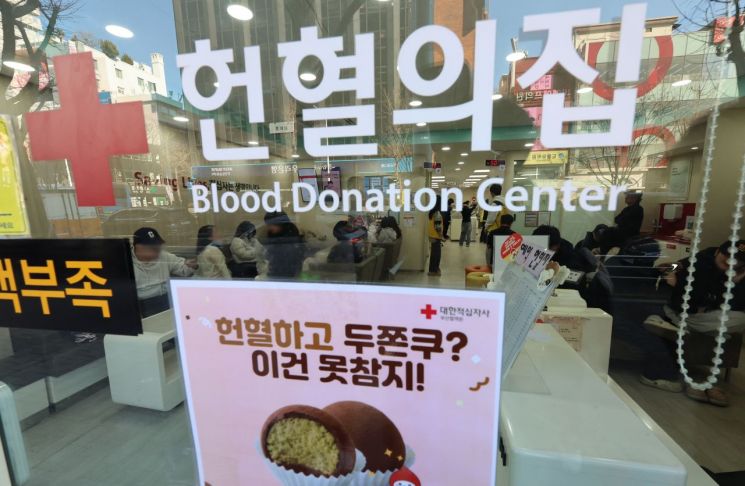 During the blood donation off-season, the Busan Blood Center held a promotion on the 23rd at 13 Blood Donation Houses, offering "Dujjonku" to whole blood and platelet donors for one day. Yonhap News
According to the Busan Blood Center of the Korean Red Cross on January 24, the 13 Blood Donation Houses in Busan held a one-day event the previous day, providing one "Dubai Sticky Cookie (Dujjonku)"-a dessert recently in short supply-to each whole blood and platelet donor. News quickly spread that donors could receive this popular dessert, resulting in a surge of citizens at each donation center.
At the Seomyeon Center, there were 20 reservations each for the morning and afternoon sessions, about twice the usual number. Lines formed early in the day, and the center remained busy throughout. A Busan Blood Center official explained, "We were very concerned as January is typically when blood reserves are at their lowest, but thanks to this event, more than twice the usual number of citizens participated in blood donation."
This idea originated from internal discussions on how to improve Busan’s blood reserves, which were below the national average. As of the previous day, Busan’s supply of red blood cell products stood at 2.5 days-only half of the recommended five-day standard. By blood type, AB had the lowest at 1.5 days, followed by O at 1.7 days, A at 2.1 days, and B at 4.2 days. Considering the national average is 4.2 days, the situation in Busan is relatively more urgent.
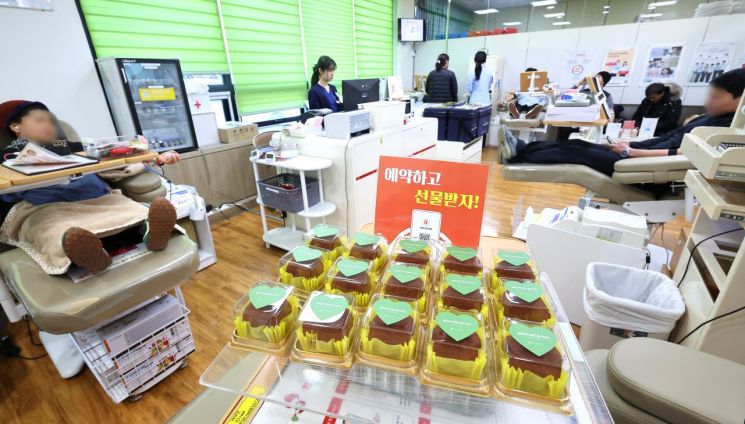 On the 20th, citizens are donating blood at the Red Cross Blood Donation Center Yeonsu in Yeonsu-gu, Incheon. The recent 'Dujjonku (Dubai Sticky Cookie)' giveaway event, conducted due to blood shortages in winter, is gaining attention. Photo by Yonhap News
The main challenge was securing the gifts. Initially, administrative staff contacted large cafes and bakeries to source supplies, but with Dujjonku itself being hard to obtain, most were unable to cooperate. A Busan Blood Center official said, "At the time, Dujjonku was so scarce that people could only buy one or two per person," adding, "Due to the high number of tourists in Busan, securing enough was even more difficult."
Nurses Visit Cafes to Explain Blood Donation and Procure 'Dujjonku'
In the end, the nurses took matters into their own hands. They visited small local cafes one by one, explaining the purpose of the blood drive and asking for help. After about a week of effort, they succeeded in gaining support from several cafes. They secured promises for deliveries ranging from as few as 20 to as many as 100 cookies, ultimately obtaining 650 Dujjonku from 13 businesses. To ensure freshness, the nurses personally picked up the cookies either the evening before or the morning of the event and distributed them on-site. Recently, a cafe in Jeonpo-dong’s cafe street offered to donate 100 more cookies, and an additional event is being prepared.
The impact of offering Dujjonku as a gift has also been seen in the Seoul metropolitan area and the Honam region. On January 23, the Gwanghwamun Blood Donation Center in Jongno-gu, Seoul, held a similar event for whole blood and platelet donors, resulting in about 50 reservations for the day-significantly higher than usual. As of 1 p.m. that day, 466 people had donated blood at the 14 Blood Donation Houses under the jurisdiction of the Seoul Eastern Blood Center, about 2.5 times more than the same day a week earlier.
The situation was similar in the Gwangju and Jeonnam regions. At the Chungjangno Center in Dong-gu, Gwangju, people began lining up before opening hours when news of the Dujjonku giveaway spread, and the number of reservations reached 100-five times the usual daily figure. An official from the Gwangju-Jeonnam Blood Center said, "Even though this is a period when group donations decrease due to school vacations, we saw an unusually high number of participants. To secure the gifts, staff personally visited cafes to ask for cooperation."
However, whether this temporary effect will lead to long-term stability in blood supply remains an open question. According to the Blood Management Headquarters of the Korean Red Cross, as of the previous day, the nationwide blood reserve stood at about 4.2 days, still falling short of the recommended five-day standard.
© The Asia Business Daily(www.asiae.co.kr). All rights reserved.
![Clutching a Stolen Dior Bag, Saying "I Hate Being Poor but Real"... The Grotesque Con of a "Human Knockoff" [Slate]](https://cwcontent.asiae.co.kr/asiaresize/183/2026021902243444107_1771435474.jpg)
















