Semiconductor Index Ends Down 1.21%
The three major stock indexes on the New York Stock Exchange ended mixed.
On January 23 (local time) at the New York Stock Exchange (NYSE), the Dow Jones Industrial Average closed at 49,098.7, down 285.3 points (0.58%) from the previous session.
The S&P 500 rose 2.26 points (0.03%) to finish at 6,915.61, while the Nasdaq Composite gained 65.22 points (0.28%) to close at 23,501.24.
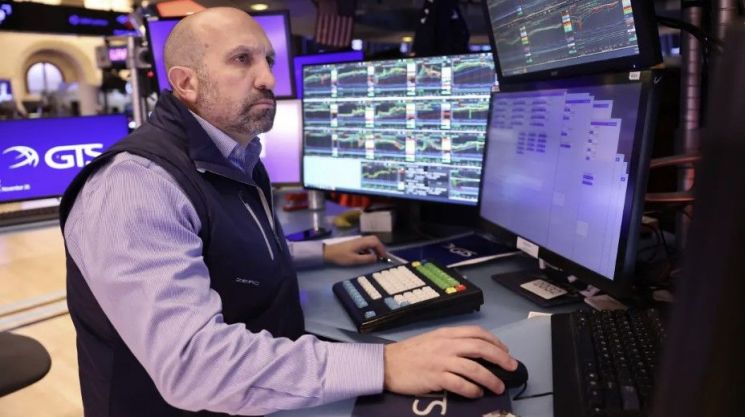
All three major indexes started the session lower. The risk-averse sentiment among investors was triggered when President Donald Trump stated the previous afternoon that a large U.S. naval fleet was heading toward Iran as a precautionary measure.
However, after the market opened, bargain hunting emerged, leading to a divergent trend among the three major indexes.
The rise in the Nasdaq was driven by news that China had allowed imports of Nvidia's H200 chip, a model made for the Chinese market, resulting in Nvidia shares climbing 1.59%. Most of the seven major tech stocks, except Alphabet and Apple, also rose. Microsoft gained 3.28%, Amazon was up 2.06%, and Meta increased 1.72%.
Bloomberg reported that Beijing had notified major Chinese companies that they could now place orders for the H200 chip, which had previously faced import restrictions.
By sector, electric vehicle stocks all declined, with Tesla down 0.07% and Lucid falling 3.57%. Semiconductor stocks were affected by a plunge of more than 17% in Intel shares. The semiconductor index closed down 1.21%.
Intel's shares plummeted more than 17% during regular trading after its first-quarter outlook fell short of market expectations, having already dropped as much as 13% in after-hours trading. Intel reported fourth-quarter 2025 revenue of $13.7 billion and adjusted earnings per share (EPS) of $0.15. The company projected first-quarter 2026 revenue between $11.7 billion and $12.7 billion, which is below the market consensus estimate of $12.5 billion.
Investors are now turning their attention to the upcoming Federal Open Market Committee (FOMC) meeting scheduled for January 27-28 and the nomination of the next U.S. Federal Reserve Chair. Treasury Secretary Bessent previously indicated that President Trump would nominate the next Fed Chair next week.
© The Asia Business Daily(www.asiae.co.kr). All rights reserved.
![Clutching a Stolen Dior Bag, Saying "I Hate Being Poor but Real"... The Grotesque Con of a "Human Knockoff" [Slate]](https://cwcontent.asiae.co.kr/asiaresize/183/2026021902243444107_1771435474.jpg)
















