Ministry Announces "Rice Supply and Demand Stabilization Plan"
Rice Surplus Forecast Reduced from 165,000 to 90,000 Tons
Concerns Over Potential Shortages if 100,000-Ton Market Isolation Proceeds
Additional 60,000 Tons of Processed Rice to Be Supplied
The government has postponed its plan to isolate 100,000 tons of rice from the market. This decision was made due to concerns that isolating 100,000 tons of rice from the 2025 harvest could lead to a supply shortage and further drive up rice prices.
On January 23, the Ministry of Agriculture, Food and Rural Affairs held the first Grain Supply and Demand Stabilization Committee meeting of the year and announced a "Rice Supply and Demand Stabilization Plan" containing these measures.
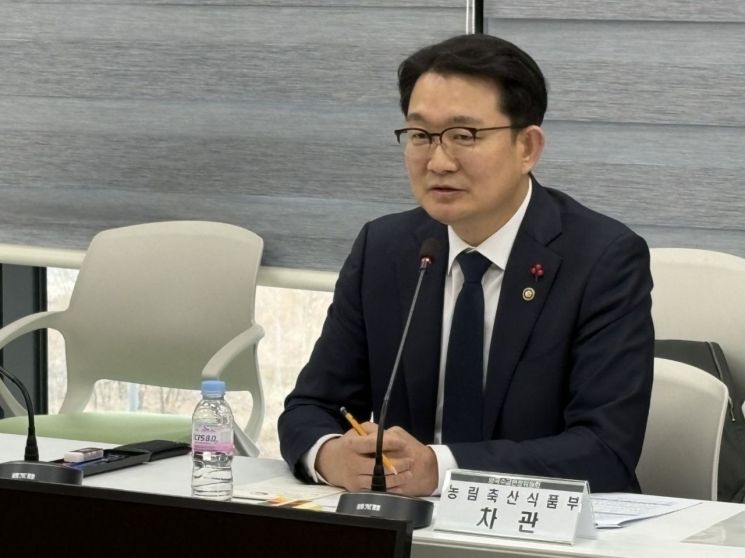
In October last year, when establishing harvest season measures, the Ministry estimated that there would be a surplus of 165,000 tons of rice from the 2025 harvest. However, after recalculating the supply and demand based on the 2025 rice consumption figures released by the National Data Agency on January 22, the estimated surplus decreased by about 90,000 tons. This is because the consumption of rice for processing increased significantly last year, resulting in this year's demand for processed rice rising by about 40,000 tons compared to initial forecasts.
A Ministry official stated, "Although a surplus of about 90,000 tons of rice from the 2025 harvest is expected, if we proceed with the market isolation of 100,000 tons as originally planned, the supply this year may fall short." The official added, "Therefore, the committee decided to postpone the plan to isolate 100,000 tons of rice from the market in order to prevent the recent rise in paddy and rice prices from translating into a greater burden for consumers."
Accordingly, the Ministry will suspend the pre-isolation of 45,000 tons and will reconsider its implementation while monitoring future rice price trends. The government will also extend the return period for 55,000 tons of government rice loans by one year, until March next year. However, this one-year extension will only be granted if the condition is met that the loaned rice must be returned if the government requests it due to changes in the rice supply and demand situation.
In addition, the Ministry has decided to supply an additional 60,000 tons of processed rice. Many committee members pointed out that, with the sharp increase in processed rice consumption, the previously planned government supply of 340,000 tons would be insufficient. As a result, the Ministry plans to increase the government supply of processed rice from the current 340,000 tons to up to 400,000 tons.
The mandatory purchase quota for government rice procurement funds in 2025 will also be relaxed from 150% to 120%. Last year, rice distribution companies that received government procurement funds were required to purchase 50% more rice than the amount they could buy with the support funds. By easing this requirement, the Ministry expects that these companies will face less pressure to secure large quantities of rice at this time.
Kim Jonggu, Vice Minister of Agriculture, Food and Rural Affairs, stated, "The current rise in prices is not closely linked to farm income and could increase the burden on consumers. Therefore, we have adjusted the market isolation volume and timing, and increased the supply of processed rice as part of our rice supply and demand stabilization measures." He added, "We will continue to closely monitor overall trends in the rice market, and if the market does not stabilize quickly, we will prepare additional measures as necessary."
© The Asia Business Daily(www.asiae.co.kr). All rights reserved.
![Clutching a Stolen Dior Bag, Saying "I Hate Being Poor but Real"... The Grotesque Con of a "Human Knockoff" [Slate]](https://cwcontent.asiae.co.kr/asiaresize/183/2026021902243444107_1771435474.jpg)















