Securing Leadership Backed by 75% Approval Rating
Centrist Reform Alliance Challenges LDP-Ishin Coalition
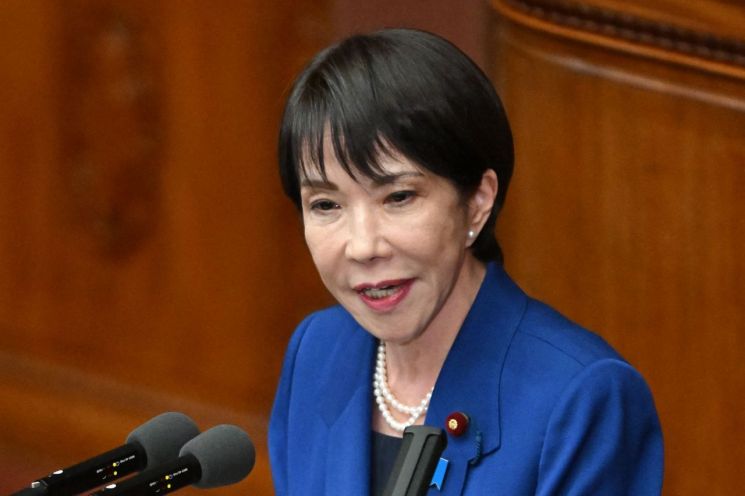
On January 23, Japanese Prime Minister Sanae Takaichi took a bold step by dissolving the House of Representatives (the lower house), setting Japan's political scene into early general election mode. Voting and ballot counting for the general election are scheduled to take place on February 8.
According to Kyodo News and other sources, Prime Minister Takaichi decided to dissolve the House of Representatives during an extraordinary Cabinet meeting held that morning. She then officially declared the dissolution at the afternoon plenary session.
The election schedule has been set with the official announcement on January 27 and voting and counting on February 8. This dissolution of the House of Representatives comes about one year and three months after the previous dissolution under the cabinet of Shigeru Ishiba on October 9, 2024.
Prime Minister Takaichi made her move to dissolve the House of Representatives based on the high approval ratings of her cabinet. According to a poll by the Nihon Keizai Shimbun (Nikkei), the approval rating for the Takaichi cabinet reached 75% last month. If the Liberal Democratic Party (LDP) increases its number of seats in the general election, it will be able to solidify its leadership of national affairs. However, if it fails to secure a majority of seats for the ruling party (233 seats), which is its stated goal, it could lose its centripetal force and find itself in a precarious position.
The ruling LDP and its coalition partner, the Japan Innovation Party, have already secured 233 seats based on parliamentary groupings, and there is speculation that they will aim for even more seats in reality.
At a press conference on January 19, Prime Minister Takaichi expressed her intention to dissolve the House of Representatives, stating, "I want the people, as sovereign citizens, to decide whether Sanae Takaichi should remain as Prime Minister." This is interpreted as a declaration that the fate of her cabinet will be staked on this general election.
This election will see the ruling coalition of the LDP and the Japan Innovation Party challenged by the new "Centrist Reform Alliance," formed by the main opposition Constitutional Democratic Party and the third-largest party, Komeito. Since Komeito left the coalition with the LDP, the LDP has joined forces with the conservative-leaning Innovation Party to push for early revision of the three key security documents and more conservative policies on foreign nationals. Prime Minister Takaichi has positioned responsible and proactive fiscal policy as a core agenda, is pursuing quantitative easing, and plans to target conservative voters by advancing security policies such as strengthening defense capabilities and constitutional revision.
Komeito has formed a new party with the main opposition Constitutional Democratic Party, which is critical of the Takaichi cabinet, and is seeking to appeal to centrist voters. The new party is focusing on "realizing politics that put citizens first" and is pledging policies such as a 0% food consumption tax and reducing the burden of social insurance premiums.
Kyodo News predicts that the key issues in this general election will include the rationale for Prime Minister Takaichi's dissolution, the reduction of the food consumption tax, the LDP's "slush fund scandal" and political funding issues, policies on foreign nationals, and the introduction of an optional separate surname system for married couples.
Meanwhile, given the timing of the dissolution and the four-year term of the House of Representatives, Prime Minister Takaichi's decision is being described as unusual.
This is the first time in 60 years, since 1966, that the regular session of the Japanese Diet has been dissolved on its opening day. A February general election is also the first in 36 years, since 1990. The period between dissolution and the general election is 16 days, breaking the previous record of 17 days set in 2021. This is the shortest period since the end of the Pacific War.
The number of days served by the House of Representatives will also be 454, the third shortest in the postwar era. However, in the two previous cases with shorter terms, in 1953 and 1980, dissolution was inevitable due to the passage of no-confidence motions against the cabinet.
© The Asia Business Daily(www.asiae.co.kr). All rights reserved.
![Clutching a Stolen Dior Bag, Saying "I Hate Being Poor but Real"... The Grotesque Con of a "Human Knockoff" [Slate]](https://cwcontent.asiae.co.kr/asiaresize/183/2026021902243444107_1771435474.jpg)















