The Supreme Court has overturned a lower court ruling that increased the sentence for an intellectually disabled boy charged with attempted murder, having dismissed his claim of mental illness as an attempt to evade responsibility. The Supreme Court found that the lower court had failed to take sufficient measures or conduct a thorough review regarding the boy's mental illness.
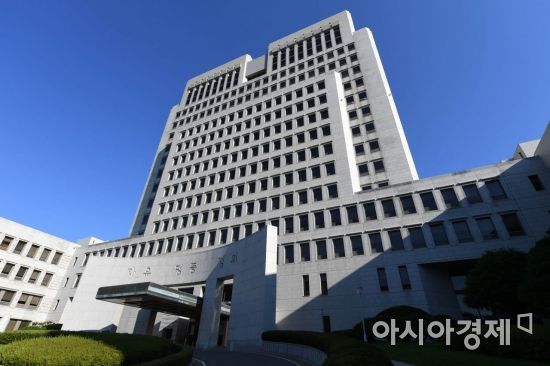
According to the legal community on January 23, the Supreme Court's First Division (Presiding Justice Ma Yongju) overturned the previous ruling that sentenced 18-year-old A to a maximum of nine years and a minimum of six years in prison on charges of attempted murder, and remanded the case to the Suwon High Court.
A was brought to trial on charges of striking B, a female student, on the head with a blunt object and wielding a weapon in an attempt to kill her near a middle school in Sangnok-gu, Ansan, on the morning of August 19, 2024. B was taken to the hospital in a state of heavy bleeding and received treatment, and it was reported that her life was not in danger. It was found that A had developed feelings for B and, after she refused to meet him, decided to commit the crime. A has a level 3 intellectual disability, and since around 2018, his aggression and violent tendencies had worsened, leading to multiple hospitalizations and outpatient treatments prior to the incident.
The court of first instance did not accept A's claim of diminished responsibility and sentenced him to a maximum of eight years and a minimum of five years in prison. Both the prosecutor and the defendant appealed on the grounds of an unfair sentence, but the appellate court concluded the trial at the first hearing and increased the sentence to a maximum of nine years and a minimum of six years, stating that the original sentence was too lenient.
The Supreme Court took a different view. The panel stated, "Although the defendant consistently raised issues of mental illness during both the first and second trials, the hearings concluded without any additional sentencing procedures or investigations, and there was no psychiatric evaluation regarding the nature and degree of his mental disability or the need for treatment."
The Supreme Court further explained, "The actions and judgments of the lower court were flawed, as they misunderstood the legal principles regarding the procedures for reviewing criminal cases involving disabled juveniles, the appropriate disposition, and the process and methods for considering claims related to mental disability during sentencing. As a result, the necessary measures and reviews were not properly conducted." The case was thus remanded for retrial.
© The Asia Business Daily(www.asiae.co.kr). All rights reserved.
![Clutching a Stolen Dior Bag, Saying "I Hate Being Poor but Real"... The Grotesque Con of a "Human Knockoff" [Slate]](https://cwcontent.asiae.co.kr/asiaresize/183/2026021902243444107_1771435474.jpg)















