A Rare Wooden Structure That Survived the Japanese Invasions
'Dapo' Style in Front, 'Ik-gong' Style in Rear
An Architectural Key to the Goryeo-Joseon Transitional Period
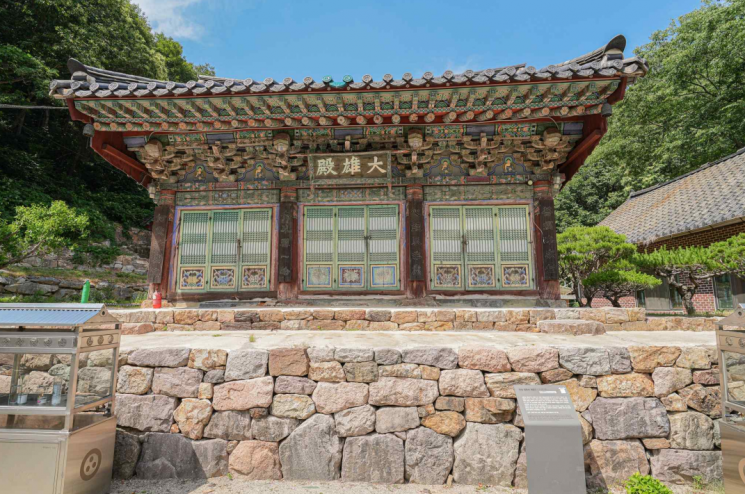
A wooden structure from the early Joseon Dynasty that survived the devastation of the Japanese invasions of Korea has been elevated to the status of a nationally designated cultural heritage treasure.
The Cultural Heritage Administration announced on the 23rd that it has designated the 'Anseong Cheongwonsa Daeungjeon' as a treasure. While the building’s exact construction date was previously unclear in historical records, its value has recently been reaffirmed through scientific analysis. Dendrochronology, which analyzes tree rings, confirmed that some of the building’s timbers date back to the mid-15th century.
Cheongwonsa Daeungjeon features a gabled roof with three bays at the front and three bays at the side. Its highlight lies in the bold structure where two architectural styles coexist. The front utilizes the 'Dapo' style, in which brackets supporting the roof are placed not only on the columns but also between them. In contrast, the rear employs the 'Ik-gong' style, characterized by a simpler arrangement with brackets only on top of the columns.
This unique hybrid composition is regarded as a vivid illustration of the transition from the Jusimpo style of the late Goryeo period to the Ik-gong style of the Joseon era. Scholars interpret this as a wise architectural technique chosen by small temples to overcome economic limitations. The grandeur of the facade is preserved, while the rear, which draws less attention, prioritizes practicality to enhance efficiency.
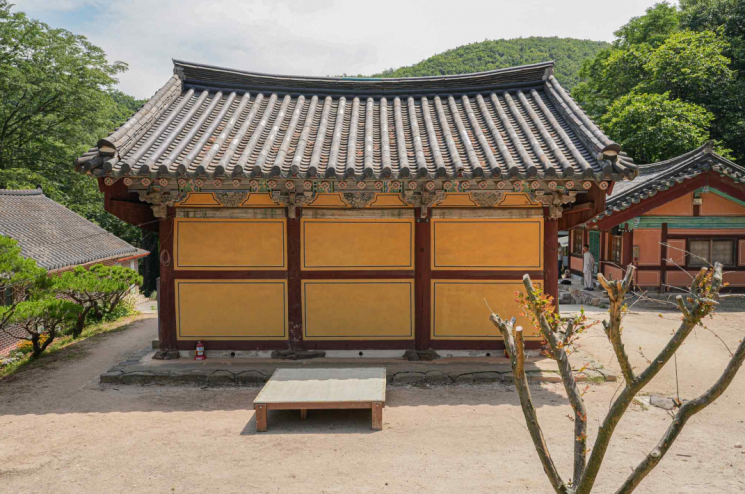
An official from the Cultural Heritage Administration stated, "Among existing buildings that predate the Japanese invasions, it is extremely rare to find a single structure where 16th-century architectural designs and compositions coexist in this way," adding, "It demonstrates the process of 'citation and transformation' in the history of Korean architecture."
© The Asia Business Daily(www.asiae.co.kr). All rights reserved.
![Clutching a Stolen Dior Bag, Saying "I Hate Being Poor but Real"... The Grotesque Con of a "Human Knockoff" [Slate]](https://cwcontent.asiae.co.kr/asiaresize/183/2026021902243444107_1771435474.jpg)
















