Eat White Bread After Freezing and Thawing Instead of Fresh
"Resistant Starch" Formation Slows Blood Sugar Rise
Many people exclude bread from their diet when trying to lose weight. However, experts now advise that instead of cutting out bread entirely, changing the way you consume it may be sufficient.
According to the Daily Mail in the United Kingdom on January 21 (local time), nutrition experts have stated that instead of eating white bread such as sandwich bread immediately, freezing it and then thawing it before consumption could help prevent sharp spikes in blood sugar levels.
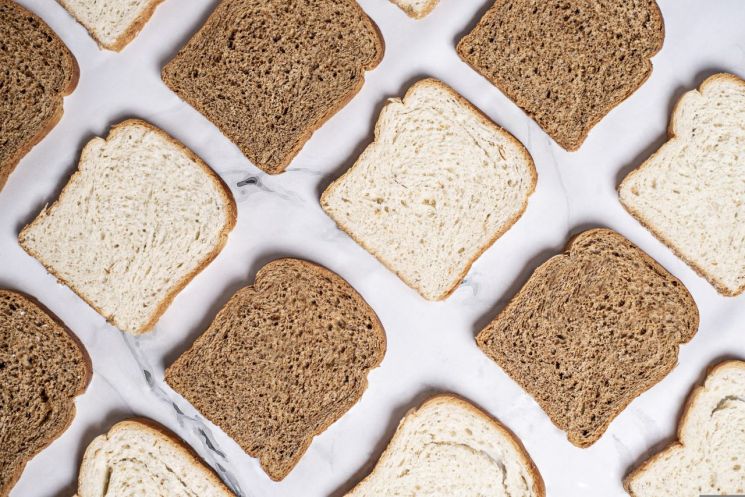 Freezing white bread and then thawing it before consumption increases the amount of 'resistant starch.' Pixabay
White bread is a refined carbohydrate food from which most of the fiber is removed during processing, and it is characterized by breaking down rapidly once ingested. As a result, blood sugar levels rise sharply after consumption, insulin secretion increases, and the feeling of fullness does not last long. Additionally, repeated consumption can lead to increased intake and a higher risk of weight gain.
However, bread that has been frozen undergoes a change in starch structure. When bread is frozen, the starch molecules recombine as the bread cools, transforming into a form that is more resistant to digestive enzymes. This phenomenon is known as retrogradation. The resistant starch produced during this process is broken down more slowly in the intestines, which slows the rise in blood sugar levels. It also acts similarly to dietary fiber, helping to maintain a feeling of fullness for longer and reducing spikes in insulin secretion.
Experimental results have also shown differences in bread that has been frozen. Compared to eating freshly baked white bread, consuming bread that has been frozen and then thawed leads to a more gradual increase in blood sugar. In particular, bread that has undergone three steps-freezing, thawing, and toasting-showed the most stable blood sugar response.
Experts explain, "The resistant starch content of freshly baked white bread is less than 1%, but after freezing and thawing, this proportion can increase two to three times." This means that even the same amount of bread can have a different effect on the body. However, this method does not transform white bread into a health food.
Excessive consumption still carries the risk of weight gain, and from a nutritional perspective, whole grain or whole wheat products are preferable to white bread. Nonetheless, experts advise, "If it is difficult to completely eliminate bread from your diet, consuming it after freezing may be a practical alternative," and added, "For those who need to manage their blood sugar, it is important to consider both portion size and preparation methods."
© The Asia Business Daily(www.asiae.co.kr). All rights reserved.

















