Oral Arguments on the Lawsuit Over the Dismissal of Fed Governor Lisa Cook
The attempt by U.S. President Donald Trump to push for the dismissal of Lisa Cook, a Federal Reserve Board Governor, has hit a roadblock amid skepticism from the U.S. Supreme Court. The justices expressed concerns that allowing the president to remove a Fed governor without sufficient procedure and clear justification could undermine the central bank’s independence and lead to instability in the financial markets.
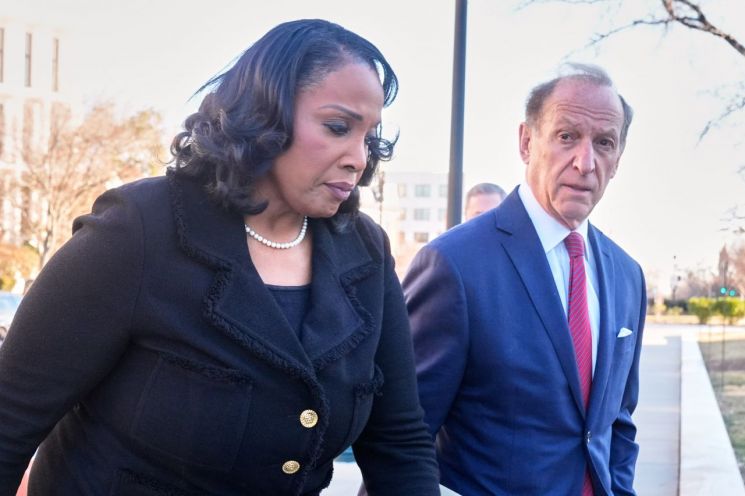
On January 21 (local time), the Supreme Court held oral arguments to review the Trump administration’s request to temporarily allow the president to exercise removal authority while the lawsuit filed by Governor Cook is ongoing.
John Sauer, Deputy Assistant Attorney General and legal representative for the Trump administration, cited allegations that Cook listed a false “primary residence” when securing a mortgage in order to obtain favorable terms as grounds for her dismissal. The key issues at the hearing were distilled into: ▲ the certainty of evidence supporting the allegation ▲ the legal validity of the grounds for dismissal ▲ and whether procedural fairness had been ensured.
However, the justices, regardless of their conservative or liberal leanings, responded coldly to the Trump administration’s arguments.
Brett Kavanaugh, a Supreme Court justice appointed by President Trump, warned that if the president’s claims were accepted, “the Fed’s independence could be weakened or even shattered.” He cautioned that once such tools of removal are used, “both sides end up utilizing them, and typically, they are used more frequently on the second attempt.”
Justice Amy Coney Barrett also raised concerns about the potential shock to financial markets from Cook’s dismissal, questioning whether such risks warrant greater judicial caution.
Chief Justice John Roberts pointed out that the listing of a primary residence in Cook’s mortgage application could simply have been an administrative error. When Deputy Assistant Attorney General Sauer countered that “even if it was a mistake, it was a serious one,” Chief Justice Roberts drew a line, stating that “such a judgment itself is open to considerable debate.”
After the hearing, Governor Cook released a statement emphasizing, “This case is about whether the Fed can set the benchmark interest rate based on evidence and independent judgment, or whether it will yield to political pressure. The Fed’s independence is essential for fulfilling the congressional mandate of price stability and maximum employment. That is why Congress chose a structure that both shields the Fed from political threats and holds it accountable for its duties.”
Given the overall tone of the Supreme Court during the oral arguments, observers believe it is unlikely that the Trump administration’s position will be fully accepted. The Court is expected to reach a decision by July at the latest. This ruling is anticipated to be a major turning point, not only for the independence of the Fed, but also for defining the limits of presidential authority over appointments in independent agencies going forward.
© The Asia Business Daily(www.asiae.co.kr). All rights reserved.
![Clutching a Stolen Dior Bag, Saying "I Hate Being Poor but Real"... The Grotesque Con of a "Human Knockoff" [Slate]](https://cwcontent.asiae.co.kr/asiaresize/183/2026021902243444107_1771435474.jpg)
















