Yonsei University Research Team's Analysis
28.3 Microplastic Particles Accumulate per 1g of Lung Tissue
"Enhanced Ventilation and Wearing Masks Are Practical Solutions"
A recent study has found that the concentrations of fine dust and microplastics in the air inside the Seoul Metropolitan Subway are significantly higher than those outdoors. In particular, the concentration of microplastics is 3.7 times higher than outside, raising concerns that this could place a burden on citizens' respiratory health.
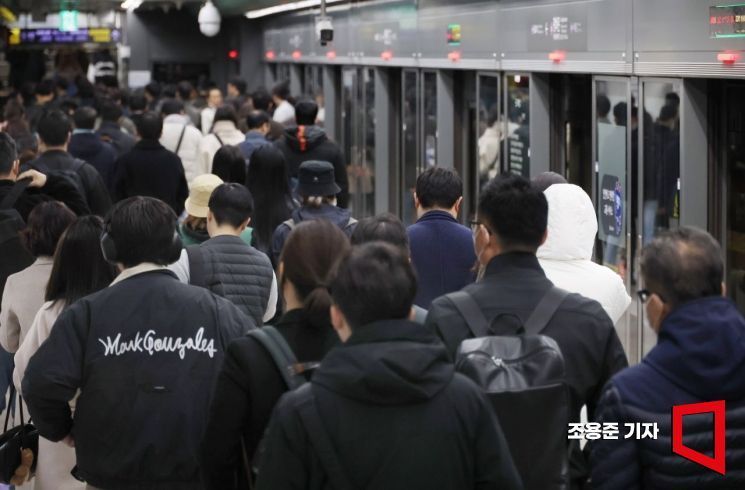
On January 21, Yonhap News reported these findings, citing a research paper recently published by a Yonsei University research team in the internationally renowned environmental science journal, the Journal of Hazardous Materials. The research team simultaneously collected and analyzed air samples from three Seoul subway stations, nearby outdoor areas, and residential indoor spaces in Seoul over a one-year period starting in March 2022.
The results showed that the annual average concentration of fine dust in subway stations was noticeably higher than outdoors, with some stations exceeding the national air quality standards by 1.5 to 3.6 times. When compared to residential indoor spaces over the same period, the cumulative annual exposure in long-term residential environments could be higher, but the study found that the "amount of fine dust deposited in the lungs per hour" was greatest in the subway environment.
Of particular concern is the concentration of microplastics suspended in the air, bound to fine dust particles. According to the study, the concentration of microplastics in subway air reached up to 5.94 particles per cubic meter, up to 3.7 times higher than in nearby outdoor air (0.43 to 1.24 particles). The concentration was also higher in stations with greater congestion.
The research team explained, "The concentration of microplastics inside the subway is distinctly higher than not only outdoors but also residential indoor spaces," attributing this to pollutants generated in the enclosed underground environment not being sufficiently ventilated. They noted that friction between rails and wheels during train operation, dust generated during braking, and synthetic fibers shed from passengers' clothing all accumulate in the poorly ventilated underground space, increasing the concentration of microplastics.
There are also concerns about the health effects of such microplastic exposure. Applying the International Commission on Radiological Protection model, the analysis estimated that an average of 28.3 microplastic particles could accumulate per gram of lung tissue over the lifetime of a Korean adult. This is five to ten times higher than the levels found in the lung tissue of patients with chronic obstructive pulmonary disease or lung cancer.
The researchers further explained that microplastics can be inhaled in forms bound to carcinogenic heavy metals such as nickel, chromium, and arsenic, which can trigger inflammatory responses and oxidative stress, potentially increasing the risks of both respiratory diseases and cancer.
While fundamentally addressing the microplastic issue requires a shift to biodegradable plastics, this is not a short-term solution. Therefore, as immediate measures, the researchers emphasized the need to increase the inflow of outside air into subway stations and trains and to actively operate ventilation and air purification systems. On an individual level, wearing a mask that can block both fine dust and microplastics when using the subway was suggested as the most practical response.
Park Junhong, Professor of Civil and Environmental Engineering at Yonsei University, who led the study, stated, "Subways running deep underground, like those in Korea, are structurally prone to poor air quality. For now, wearing a mask while using the subway is the most realistic way to reduce long-term health risks."
© The Asia Business Daily(www.asiae.co.kr). All rights reserved.
![Clutching a Stolen Dior Bag, Saying "I Hate Being Poor but Real"... The Grotesque Con of a "Human Knockoff" [Slate]](https://cwcontent.asiae.co.kr/asiaresize/183/2026021902243444107_1771435474.jpg)
















