National Palace Museum Publishes Translation of Heonjong-Era Palace Records
Includes Royal Anecdotes Such as King Jeongjo's Birth Dream
A 19th-century document that reveals the original forms of Changgyeonggung and Gyeonghuigung Palaces before they were damaged during the Japanese colonial period has been translated into Korean.
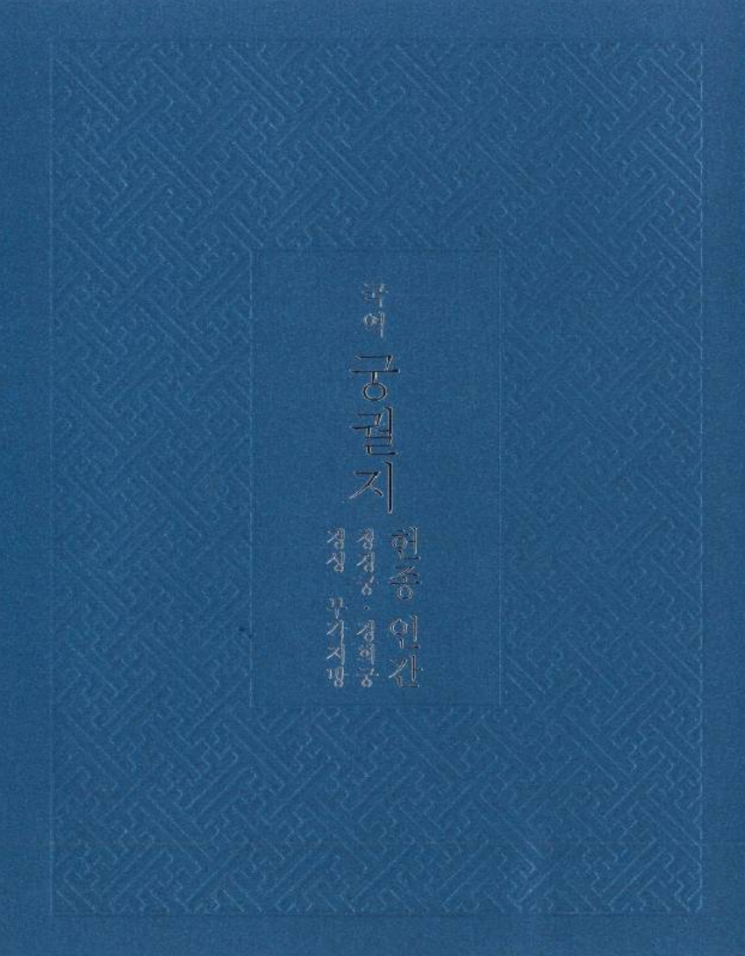
The National Palace Museum of Korea under the Cultural Heritage Administration announced on January 21 that it has published the translated version of "Gunggwolji (Palace Records) - Heonjong Era: Changgyeonggung, Gyeonghuigung, and Gyeongseong Bugak Districts." "Gunggwolji," compiled during the reign of King Heonjong of the Joseon Dynasty, is a book that records the history, layout, and construction process of palace buildings in the late Joseon period, and is used as a foundational resource for palace restoration.
The translated book contains detailed records of the former appearance of Changgyeonggung Palace and how it was used at the time. It also includes anecdotes related to the birth of King Jeongjo, the fact that the Irwolobongdo (Sun, Moon, and Five Peaks Screen) was enshrined in Haminjeong, the king's office, records about Yeonghuidheon where the king's portrait was kept, the Guanwangmyo shrine dedicated to Guan Yu, and the Hwaseong Haenggung temporary palace built during King Jeongjo's reign. According to the record on Gyeongchunjeon, the night before King Jeongjo was born, his father Crown Prince Sado dreamed of a dragon entering his bedroom and painted the scene himself on the east wall of Gyeongchunjeon.
With this publication, the translation of the Heonjong era "Gunggwolji" has been completed. The museum had previously translated and released records from the reigns of Kings Sukjong and Gojong, as well as the Heonjong era volumes on Gyeongbokgung and Changdeokgung Palaces. A museum official stated, "This has laid the foundation for a comprehensive understanding of 19th-century Joseon palaces and royal culture," and added, "We will continue to publish translated texts that clarify the history and culture of the Joseon royal family, sharing the value of our national heritage."
The translated book will be distributed to national and public libraries and research institutions, and will be accessible to everyone through the National Palace Museum of Korea's website.
© The Asia Business Daily(www.asiae.co.kr). All rights reserved.