Double Benefit: 9% Separate Taxation on Dividends
The government will offer an income tax deduction of up to 40% for investments in the National Growth Fund, which is set to launch between June and July this year, if the investment is held for more than three years. Investors will also be eligible for a double benefit, with a 9% separate taxation rate applied to dividend income.
On January 20, the Ministry of Economy and Finance announced that it will push for amendments to the Restriction of Special Taxation Act and the Special Rural Tax Act containing these provisions at the provisional session of the National Assembly next month.
Specifically, for investments in the National Growth Fund held for more than three years, a new special provision will be introduced: until the end of 2030, dividend income generated from the fund will be subject to a 9% separate tax rate, and up to 40% of the investment amount will be eligible for an income tax deduction, up to a payment limit of 200 million won. For investments of up to 30 million won, a 40% deduction applies; for investments exceeding 30 million won and up to 50 million won, a 20% deduction applies; and for investments exceeding 50 million won and up to 70 million won, a 10% deduction applies.
Business Development Companies (BDCs) will also be eligible for the 9% separate taxation on dividend income, up to a payment limit of 200 million won. This is the same tax rate that was applied to New Deal Funds during the Moon Jae-in administration. The aim is to attract retail investors’ funds, which have been dispersed into overseas stocks and real estate, back into the domestic capital market.
To support the return of Korean retail investors who have been investing abroad, a special provision will be introduced for the Domestic Market Return Account (RIA): if funds from the sale of overseas stocks are converted into Korean won and reinvested in the domestic market for one year, capital gains will be exempt from taxation.
The exemption applies up to a limit of 50 million won per person. If the return occurs in the first quarter of this year, 100% of capital gains will be tax-exempt; for returns in the second and third quarters, the exemption rates will be 80% and 50%, respectively. The earlier the return, the greater the tax benefit.
Funds transferred to the RIA can be freely invested in domestic stocks and equity funds. However, to prevent "cherry-picking" behavior-where investors take advantage of the tax benefits and then reinvest in overseas stocks-if an investor makes net purchases of overseas stocks through other general accounts, the income tax deduction will be adjusted in proportion to the amount reinvested abroad.
Additionally, a foreign exchange forward selling (currency hedge) product for individual investors will be introduced. In this case, when hedging foreign exchange risk for overseas stocks, 5% of the investment amount (up to a limit of 5 million won per person) can be deducted from capital gains on overseas stocks. Furthermore, the tax exemption rate (exclusion from taxable income) for dividends received from overseas subsidiaries will be raised from the current 95% to 100%.
The capital gains deduction for currency hedging and the increased exclusion from taxable income will apply to investments and dividends made after January 1 of this year. These measures will be applied temporarily for this year only, to help stabilize the foreign exchange market.
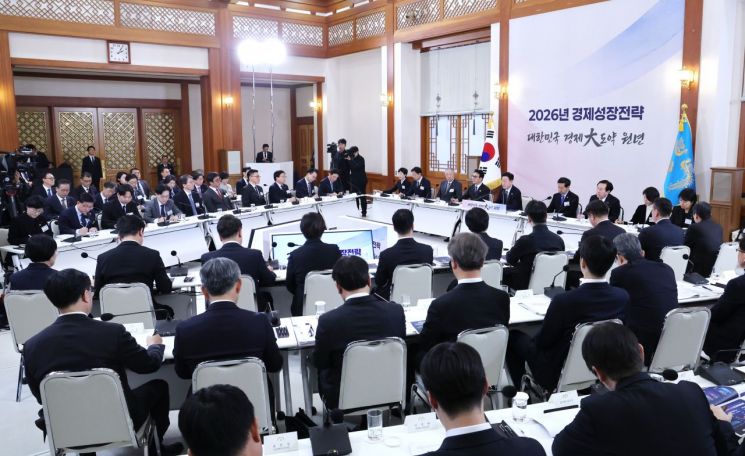
This amendment is a follow-up to the measures announced in the "2026 Economic Growth Strategy" previously released by the government, and will be submitted as a legislative bill for discussion at the provisional session of the National Assembly in February. Details such as the investment period, limits, and tax benefits will be finalized in consultation with the National Assembly. A Ministry of Economy and Finance official stated, "We will coordinate with relevant agencies to ensure that financial products eligible for tax benefits, such as the RIA, are launched in line with the implementation of the legislation."
© The Asia Business Daily(www.asiae.co.kr). All rights reserved.