Workers Previously Excluded from Legal Protection to Be Covered by 'Rights'
All Labor Providers to Be Protected Regardless of Contract Type
Presumption of Employee Status if Provision of Labor Is Proven
A legislative package aimed at protecting specially employed workers (such as freelancers and delivery riders) and platform workers is being promoted. This includes the enactment of the "Basic Act on the Rights of Working People" and the introduction of the "Presumption of Employee Status" system.
If the legislative package is implemented, 8 million workers who have been excluded from rights protection will be guaranteed constitutional fundamental rights such as protection against sexual harassment and bullying, safety and health, social insurance, and maternity protection. Both the state and employers will be obligated to protect these rights. In particular, economic disputes frequently raised by freelancers and service providers in the field-such as contract termination or modification and non-payment of remuneration-will be mediated through the Labor Relations Commission. If mediation fails, the government will provide separate support for lawsuits and other dispute resolution processes.
On January 19, the Ministry of Employment and Labor held a legislative briefing at the Government Sejong Complex, stating, "A basic law is needed to protect all people who provide labor and receive remuneration, regardless of contract type," and added, "This is being pursued as a national policy task, recognizing the limitations of supplementing fragmented individual laws."
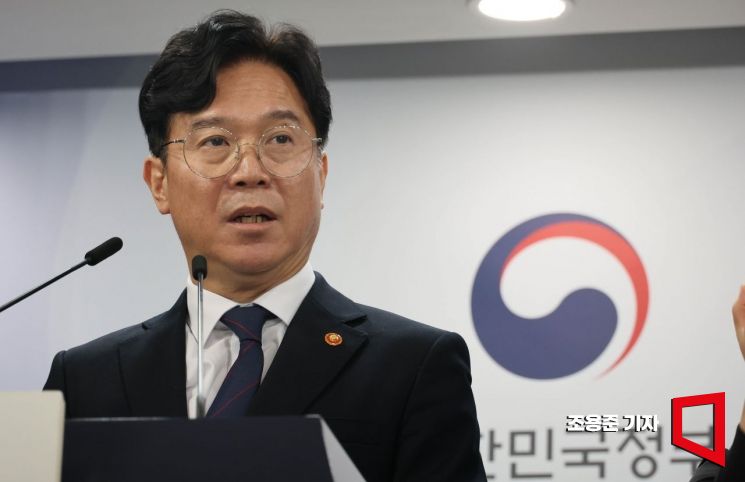 Kim Younghoon, Minister of Employment and Labor, is holding a briefing on the revised subordinate regulations of the Labor Union Act at the Government Seoul Office in Jongno-gu, Seoul on the 24th. 2025.11.24 Photo by Jo Yongjun
According to the government proposal, the law’s name has been changed from the original "Workplace Basic Act" to the "Basic Act on the Rights of Working People," reflecting concerns that "workplace" could be misunderstood as a physical space. The scope of application includes not only employees under the Labor Standards Act but also all labor providers such as specially employed workers, freelancers, and platform workers. Platform operators are also included as "recipients of labor." To ensure effectiveness, the government will also introduce the Presumption of Employee Status system.
This system is designed to address the issue of "misclassification," where individuals who should be recognized as employees could not prove their employee status due to the appearance of freelance or subcontract contracts. If the provision of labor is proven, the individual will be "presumed" to be an employee, and the burden of proof will shift to the employer to provide evidence to the contrary. However, the effect of this presumption is limited to civil disputes. The government determined that it is difficult to apply this to criminal cases due to the constitutional principle of presumption of innocence.
Accordingly, in cases of complaints or accusations filed with the Labor Office, administrative investigative powers will be significantly strengthened, including enhanced rights to request documents, the establishment of a committee to determine employee status, and linkage with income data from the National Tax Service. The government aims to enact the legislation by May 1. The Ministry of Employment and Labor stated, "Employee status disputes in various occupations, such as delivery drivers, broadcast and webtoon writers, and domestic and care platform workers, will be determined more accurately," adding, "This will serve as an opportunity to correct misclassification practices such as the so-called 'fake 3.3' contracts, where only 3.3% business income tax is paid instead of earned income tax."
© The Asia Business Daily(www.asiae.co.kr). All rights reserved.
![Clutching a Stolen Dior Bag, Saying "I Hate Being Poor but Real"... The Grotesque Con of a "Human Knockoff" [Slate]](https://cwcontent.asiae.co.kr/asiaresize/183/2026021902243444107_1771435474.jpg)















