"Foreign Language Syndrome" First Reported in 1907
Surgical Procedures and Anesthesia Lead to Improved Foreign Language Skills
A story about an American man whose foreign language skills noticeably improve every time he wakes up from anesthesia after surgery has attracted attention. This condition, known as "foreign language syndrome," is an extremely rare disorder, with only about 100 reported cases worldwide.
According to international media outlets such as The Economic Times and Daily Star on January 19, Stephen Chase, a resident of Salt Lake City, Utah, underwent surgery on his right knee at the age of 19 after being injured during an American football game. When he woke up from general anesthesia, he suddenly began speaking fluently in Spanish to the nurses.
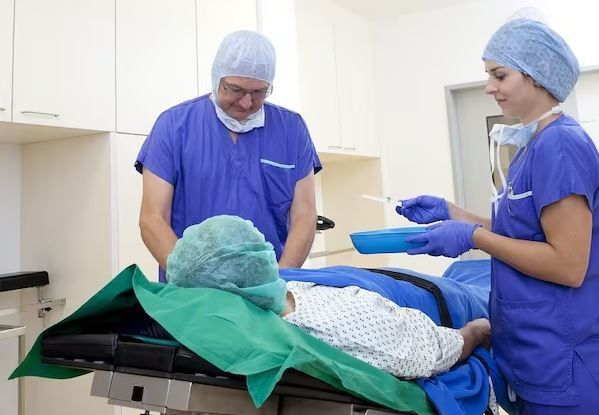 An American man suddenly began speaking Spanish after waking up from anesthesia surgery. Photo is unrelated to specific expressions in the article. Pixabay
When the nurses asked him to speak in English, Chase was confused and did not understand why they could not comprehend what he was saying. It was only afterward that he realized he had been speaking a foreign language instead of English.
He continued conversing in Spanish for about 20 minutes before switching back to English. Chase recalled, "I have no memory of speaking in Spanish," adding, "I only remember being confused because people around me were telling me to speak in English."
He reportedly took Spanish classes for only about a year in elementary school and never formally studied a foreign language. However, the same phenomenon repeated itself every time he woke up from anesthesia during several surgeries over the next ten years, and his proficiency in Spanish improved each time.
Medical staff diagnosed him with "foreign language syndrome." This rare neurological and psychiatric disorder was first reported in 1907 and can occur after brain damage, tumors, extreme stress, or general anesthesia. Its hallmark is the sudden use of a foreign language or a specific accent instead of one's native tongue.
Although Chase never formally studied Spanish, it is suspected that he was influenced by growing up in an area with a high Hispanic population during his childhood. Chase said, "I used to spend time at a close friend's house when I was young, and his parents always spoke in Spanish. I didn't understand what they were saying, but it felt familiar to me."
© The Asia Business Daily(www.asiae.co.kr). All rights reserved.
![Clutching a Stolen Dior Bag, Saying "I Hate Being Poor but Real"... The Grotesque Con of a "Human Knockoff" [Slate]](https://cwcontent.asiae.co.kr/asiaresize/183/2026021902243444107_1771435474.jpg)











