U.S. Job Market Worsens, Outpacing Pandemic Levels
Duke 21%, Michigan 15% Unemployed After Graduation
Harvard and Columbia See Improvement with Enhanced AI and Networking
As white-collar professional hiring declines in the United States, even graduates from prestigious business schools (MBA programs) are reportedly struggling to find employment.
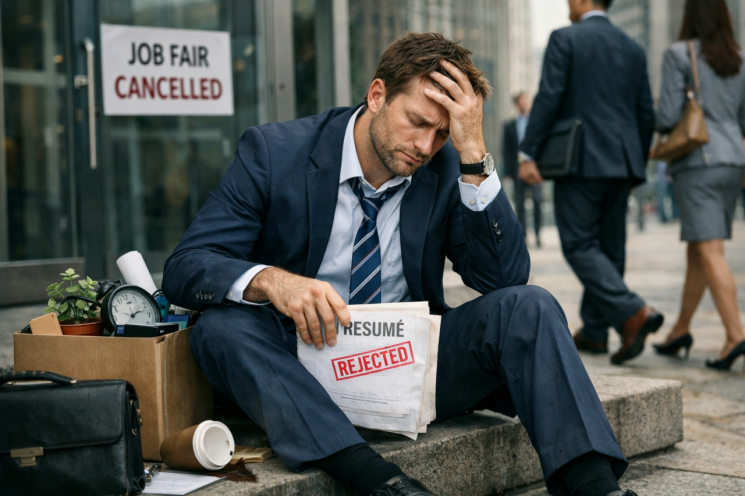
On January 18 (local time), The Wall Street Journal (WSJ) reported that the MBA job market in the U.S. has been in a slump for over a year, as companies have become more cautious about hiring white-collar employees.
According to the report, the employment outcomes for many MBA graduates have actually worsened compared to the period before the COVID-19 pandemic. Last summer, the percentage of graduates who failed to secure a job within three months of graduation reached 21% at Duke University's Fuqua School of Business and 15% at the University of Michigan's Ross School of Business. While these figures are similar to those in 2024, they are significantly higher than in 2019, when the rates were 5% and 4%, respectively.
The situation is similar at Georgetown University's McDonough School of Business. The proportion of MBA graduates still seeking employment three months after graduation was only 8% in 2019, but this rose to 16% in 2024 and surged to 25% in 2025.
Amidst the tough job market, graduates are also changing their career paths. John Bush (33), who earned his MBA from the University of North Carolina at Chapel Hill in May last year, initially aimed to work in New York's financial sector but later expanded his applications to banks in Charlotte, North Carolina. He told the WSJ that after spending some time in Paris, France, he is now even considering a career in the luxury retail sector.
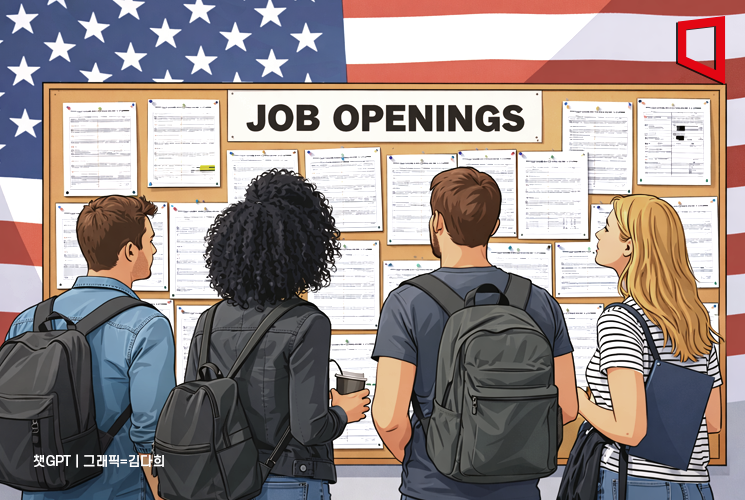
He noted that one of the retail jobs he applied for offered a lower salary than what he earned before pursuing his MBA, but added, "Even so, it could be worth it."
WSJ pointed out that the overall employment environment has also worked against MBA job seekers. In the U.S. last year, the average monthly increase in jobs was about 49,000-the lowest level in the past two decades, except for two periods of economic recession. Moreover, most of the new jobs were concentrated in the health services sector, which is far removed from the typical career options for MBA graduates, such as finance or consulting. Additionally, large-scale layoffs have flooded the job market with hundreds of thousands of displaced workers, making competition even fiercer.
However, some business schools have managed to improve employment outcomes for their MBA graduates through proactive measures. Schools that have focused on strengthening networking and utilizing artificial intelligence (AI) to connect graduates with employers have reported relatively positive results.
At Columbia University, the unemployment rate three months after graduation was 10%, the best result in recent years. More graduates from this school have been hired by companies such as Boston Consulting Group (BCG), JPMorgan Chase, and Amazon, and for the first time, around 200 companies hired MBA graduates from Columbia.
Harvard Business School has also enhanced its programs by using AI to connect graduates with job postings and alumni currently working in the field. As a result, the unemployment rate three months after graduation fell from 23% in 2024 to 16% in 2025.
Nevertheless, WSJ noted that these figures still remain disappointing compared to the pre-pandemic period.
© The Asia Business Daily(www.asiae.co.kr). All rights reserved.
![Clutching a Stolen Dior Bag, Saying "I Hate Being Poor but Real"... The Grotesque Con of a "Human Knockoff" [Slate]](https://cwcontent.asiae.co.kr/asiaresize/183/2026021902243444107_1771435474.jpg)

















