Ministry of Agriculture, Food and Rural Affairs Announces "1st Basic Plan for Agricultural Employment Support (2026?2030)"
The government will expand the introduction of foreign seasonal workers, who are in high demand among farming households, to address the labor shortage in rural areas. At the same time, starting this year, it will make it mandatory for farms employing seasonal workers to enroll in Agricultural Worker Safety Insurance in order to create a work environment where laborers can work with peace of mind.
The Ministry of Agriculture, Food and Rural Affairs finalized and announced the "1st Basic Plan for Agricultural Employment Support (2026-2030)" on January 19. This plan is the first legally mandated plan established under the Special Act on Support for Agricultural and Fishery Employment (effective February 2024).
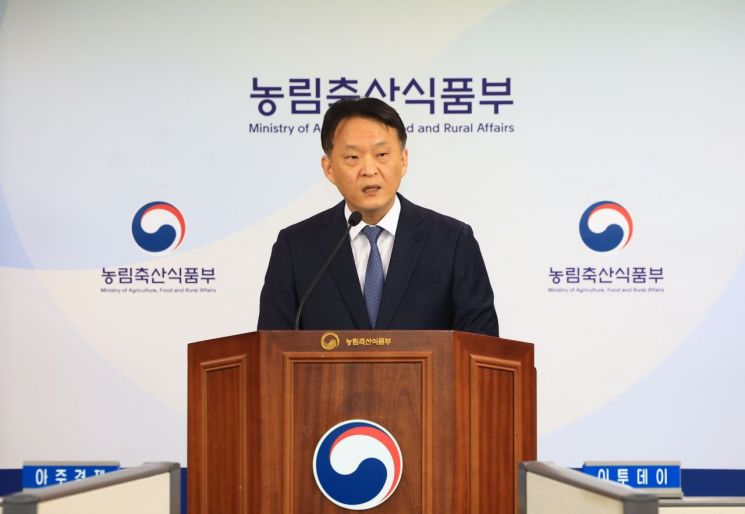 Yoon Wonsup, Director of Agricultural Policy at the Ministry of Agriculture, Food and Rural Affairs, is announcing the "1st Basic Plan for Agricultural Employment Support (2026-2030)" at the Government Sejong Complex on the 19th. Ministry of Agriculture, Food and Rural Affairs
Yoon Wonsup, Director of Agricultural Policy at the Ministry of Agriculture, Food and Rural Affairs, stated, "Until now, the government has only established short-term measures to address labor supply during peak farming seasons. The significance of this basic plan lies in presenting a comprehensive agricultural employment policy that covers both 'mid- to long-term stable labor supply' and 'the safety and rights of workers.' The core goals of this plan are: expanding the public sector's share of agricultural employment supply to 60% by 2030; achieving a 100% enrollment rate in Agricultural Worker Safety Insurance for seasonal workers by 2026; and making it mandatory for farms employing seasonal workers to subscribe to wage default guarantee insurance."
◆ Stable labor supply through the public sector = First, the government will expand the introduction of foreign seasonal workers, who are in high demand among farming households, and support the swift allocation of labor during peak farming seasons and other periods of labor shortage.
The number of seasonal workers allocated for the first half of 2026 will reach a record high of 92,104, an increase of 18,219 from the 73,885 introduced as of November last year. The number of public seasonal worker programs will also increase to 130 sites (4,729 workers), up by 40 from last year's 90 sites (2,786 workers). In particular, the public seasonal worker program aims to operate at least 200 sites (6,000 workers) by 2030, so the supply of labor through the public sector is expected to continue expanding.
The Ministry of Agriculture, Food and Rural Affairs plans to further develop its pilot program for a commissioned seasonal work model in 2026 to expand the supply of skilled foreign workers in agriculture. Additionally, "visa issuance task forces" will be established at major immigration offices to facilitate the timely entry of seasonal workers during peak seasons, and a "seasonal worker integrated management platform" will be built to help local governments efficiently manage seasonal workers.
Efforts will also be made to increase the proportion of domestic workers to over 40%. This is a measure to prepare for situations where it is difficult to bring in foreign workers due to pandemics such as COVID-19. To attract new workers, the government will expand support for transportation and accommodation costs for long-distance workers and provide customized job information both online and offline to meet the needs of various groups, such as aspiring young farmers and women or university students who cannot work full-time.
◆ Creating a safe work environment = The government will develop and distribute a mobile-based "agricultural safety checklist" to allow for pre-inspection of safety conditions at agricultural worksites. Starting this year, farms allocated seasonal workers will be required to submit this safety checklist, and tailored education and consulting will be provided to address vulnerabilities at each farm before labor allocation.
To prevent the three major types of accidents in agriculture-falls, machinery accidents, and heat-related illnesses-highly immersive VR-based educational content will be developed and distributed. In addition, a "safe work contract" will be introduced, which includes flexible adjustment of working hours during periods of extreme heat and outlines safety rules under the Occupational Safety and Health Act that both farms and workers must follow.
In particular, to prevent serious industrial accidents, education for farmers will be strengthened to include content on preventing such accidents. More agricultural safety management experts will be assigned to city and county agricultural technology centers to enhance on-site support for serious accident prevention at farms. From this year, it will also become mandatory for farms employing seasonal workers to enroll in Agricultural Worker Safety Insurance.
Institutional measures will also be put in place to protect the wages of seasonal workers. From this year, farms employing seasonal workers will be required to subscribe to wage default guarantee insurance, and specialized agencies for seasonal workers will be designated and operated to prevent third parties from intervening in the introduction of seasonal workers and extorting wages.
Farms will be educated on the prohibition of discrimination and mistreatment of foreign workers, the principle of wage payment (at least the minimum wage, paid at least once a month on a regular basis, and paid directly to the worker), while workers will receive focused education on how to respond to human rights violations. Starting this year, human rights surveys will be conducted regularly every year, and joint human rights inspections by the Ministry of Employment and Labor, the Ministry of Justice, and local governments will be increased from once to twice a year. If human rights violations are found during these inspections, penalties such as restrictions on the allocation of foreign workers will be strengthened for the relevant workplaces.
The public sector's role in improving the housing environment for foreign workers will also be further strengthened. Since 2022, the Ministry of Agriculture, Food and Rural Affairs has supported the construction of public accommodations for foreign workers. In particular, starting this year, a new support program will be launched to remodel idle rural spaces, such as Nonghyup business facilities or rural experience villages, for use as accommodations for foreign workers. The Ministry of Employment and Labor will also support the construction of public housing facilities in areas with high concentrations of foreign workers under the employment permit system, and will newly launch a program this year to support the renovation of existing accommodations.
Minister of Agriculture, Food and Rural Affairs Song Miryung stated, "Although the labor shortage in rural areas has been greatly alleviated through labor support projects such as rural labor brokerage centers and public seasonal worker programs, many farmers in the field still complain about a lack of labor. Through this basic plan for agricultural employment support, we will try various ways to efficiently supply labor from a long-term perspective and steadily implement institutional improvements to strengthen the safety and human rights protection of agricultural workers, which still require focused policy efforts."
© The Asia Business Daily(www.asiae.co.kr). All rights reserved.
![Clutching a Stolen Dior Bag, Saying "I Hate Being Poor but Real"... The Grotesque Con of a "Human Knockoff" [Slate]](https://cwcontent.asiae.co.kr/asiaresize/183/2026021902243444107_1771435474.jpg)
















