Hyangho Garden in Jumunjin Breaks Ground,
Urban Wind Path Forest Project Begins
City Accelerates Creation of Climate-Responsive Parks and Green Healing Spaces
Gangneung City in Gangwon Province is launching a full-scale initiative to create climate-responsive healing spaces aimed at mitigating urban heat islands and improving green environments, as part of its response to record-breaking heat waves and coastal erosion caused by the climate crisis.
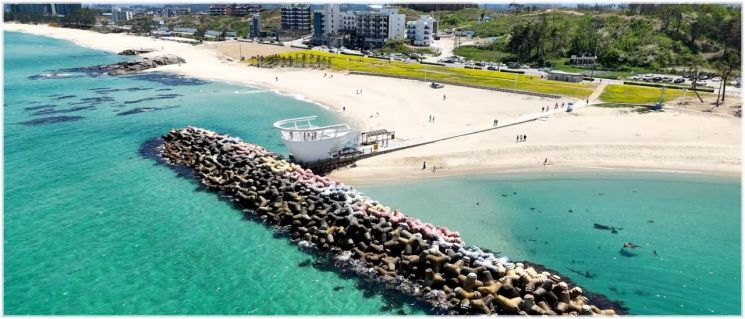 Gyeongpo Districts 2 and 3 Coastal Green Axis Park Project (Underwater Observatory). Provided by Gangneung City
Going beyond simply creating spaces, the city plans to implement environment and tourism-linked park and green space policies that connect a pleasant urban environment to enhanced tourism competitiveness.
First, the construction of the Hyangho Garden in Jumunjin is entering full swing. After overcoming major hurdles such as designating the planned garden site and the rural revitalization district, the city will finalize the master plan for the garden in the first half of the year and break ground on the project. With a total project budget of 6 billion won secured through selection for the 2025 local transfer project competition, the city will lay the groundwork for 12 themed gardens across four major zones, covering approximately 1.03 million square meters-the largest in the Yeongdong region and a modern reinterpretation of Gangneung’s identity.
Additionally, the "Urban Wind Path Forest," which will serve as a core axis for urban air purification, will begin its design phase with the goal of completion by 2029. With a total investment of 20 billion won, this project aims to establish 10 forests (including connection and diffusion forests) to channel fresh air from surrounding woodlands into the city center. This will help alleviate urban heat island effects and add new tree-lined medians, further enhancing Gangneung’s image as a clean and pine-scented city.
Efforts to improve green spaces in ways that citizens can directly experience will also continue. The city will actively address citizen inconveniences by replacing persimmon tree-lined streets on Yulgok-ro-a long-standing wish of the Gyodong residents-and by maintaining and upgrading other street trees in the urban area. In addition, the city will focus on ensuring safety and convenience in public parks (including Wolhwa Street) by continuously maintaining and improving existing green resources and park facilities.
Another major project, the Gyeongpo Districts 2 and 3 Coastal Green Axis Park Project, is also progressing smoothly in phases. In 2023, 53 unauthorized buildings, including those at Sageunjin and Sungeut Beach, which faced disaster risks such as coastal erosion, were demolished. On the reclaimed land, which returned to citizens after 40 years, seasonal flower fields-including canola and yellow cosmos-have been established.
The "Sageunjin Multi Plaza," scheduled for completion in February, is expected to become a new popular attraction in Gangneung by offering a variety of healing spaces such as Muscle Beach and shaded rest areas.
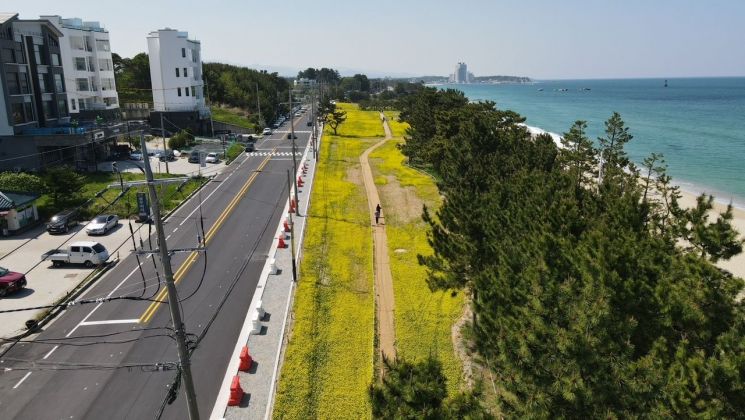 Gyeongpo Districts 2 and 3 Coastal Green Axis Park Project (Sageunjin Canola Flower Plantation). Provided by Gangneung City
Meanwhile, the city is promoting an "Accessible Sharing Trail" project, which will install a 2.05-kilometer circular deck path and nighttime lighting along the beloved Songjeong Beach pine forest and the boundary of the public waterfront. This will improve trail accessibility for those with limited mobility and renew the central plaza at Songjeong Beach, further highlighting the value of Songjeong Pine Forest as one of Gangneung’s premier healing destinations.
Solhyang Arboretum, which continues to see a steady increase in annual visitors, is on track to expand to 138.86 hectares by 2030. The city is also beginning site development for the relocation and expansion of the Children’s Forest Experience Center, which will offer children opportunities for interaction with nature. The city plans to gradually enhance exhibition and experiential features by expanding parking, constructing new propagation greenhouses, and installing nighttime landscape lighting, with the goal of developing the arboretum into Korea’s leading botanical garden.
Shin Seungchun, head of the Greenery Division, stated, "In 2026, through the creation of diverse green and healing spaces, we will proactively respond to the climate crisis while continuously expanding eco-friendly, experiential spaces that can be enjoyed by both citizens and tourists."
© The Asia Business Daily(www.asiae.co.kr). All rights reserved.
![Clutching a Stolen Dior Bag, Saying "I Hate Being Poor but Real"... The Grotesque Con of a "Human Knockoff" [Slate]](https://cwcontent.asiae.co.kr/asiaresize/183/2026021902243444107_1771435474.jpg)

















