Macron Moves to Invoke Anti-Coercion Instrument
"EU Considering Retaliatory Tariffs or Restrictions on US Companies"
As U.S. President Donald Trump expressed his intention to annex Greenland and raised the prospect of imposing tariffs on Europe, there are growing calls for the European Union (EU) to activate its Anti-Coercion Instrument (ACI) in response to these trade threats. It has also been reported that major EU countries are reconsidering the 100 billion euro (approximately 159 trillion won) retaliatory tariffs that were prepared during last year's trade negotiations with the United States.
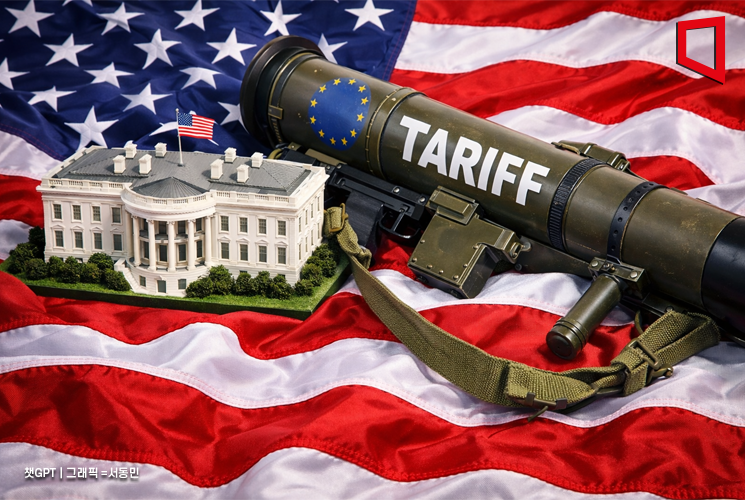
On January 18 (local time), BBC and other outlets reported that French President Emmanuel Macron is in contact with leaders of major European countries and plans to officially push for the activation of the ACI. The ACI, often referred to as the "trade bazooka," is a measure that allows the EU to restrict trade in services, foreign direct investment, financial markets, public procurement, and intellectual property with third countries that economically threaten the EU or its member states. Since its introduction in 2023, it has never been used.
President Macron reportedly regards President Trump's threats as "unacceptable" and is coordinating a Europe-wide response. Sources say he is also expected to question the validity of the U.S.-EU trade agreement reached last July between European Commission President Ursula von der Leyen and President Trump. The previous day, Bernd Lange, Chair of the European Parliament's Committee on International Trade, also called on the European Commission to trigger the ACI, and hinted at the possibility of linking the Greenland issue to the European Parliament's approval of the trade agreement. The European Parliament is scheduled to vote on the trade agreement with the United States on January 26-27, but there are arguments that the vote should be postponed due to the Greenland issue.
The Financial Times (FT) reported that major EU member states are considering imposing retaliatory tariffs amounting to 93 billion euros (about 159 trillion won) or restricting U.S. companies in the EU market. According to officials, European leaders are preparing such retaliatory measures to increase their bargaining power when they meet President Trump at the World Economic Forum (WEF) in Davos, Switzerland this week, describing the situation as the most serious crisis between the U.S. and Europe in decades.
The EU had already drawn up a list of products for retaliatory tariffs during last year's trade negotiations with the United States, but suspended implementation to avoid an all-out trade war. However, in response to President Trump's latest threats, ambassadors from the 27 EU member states reportedly held a meeting in Brussels, Belgium, to discuss reactivating these retaliatory tariffs. While many member states supported reviewing how the ACI could be used against the United States, most preferred to pursue dialogue first, with some EU diplomats noting that the upcoming Davos Forum would be a key turning point. One EU diplomat said, "Since President Trump's tariff threats are clear coercion, the ACI is justified, but we want to give him until February 1 to see if he will back down."
Key leaders are also attempting to engage in dialogue with President Trump. Mark Rutte, Secretary General of the North Atlantic Treaty Organization (NATO), stated on X (formerly Twitter) that he had a phone call with President Trump to discuss the situation in Greenland and Arctic security. He said, "We will continue to work on this issue," adding, "I look forward to meeting him in Davos." British Prime Minister Keir Starmer also spoke with President Trump and reiterated his position that imposing tariffs for the sake of collective security among NATO allies is wrong, according to the Prime Minister's Office. After a series of calls with Danish Prime Minister Mette Frederiksen, European Commission President von der Leyen, and Secretary General Rutte, Prime Minister Starmer emphasized during his conversation with President Trump that Arctic security is a top priority for all NATO allies in order to protect European and transatlantic interests.
The previous day, President Trump announced that he would impose a 10% tariff on eight countries that have deployed small contingents to Greenland starting February 1, and raise the tariff to 25% from June. In response to the tariff threats, the eight countries issued a joint statement expressing full solidarity with the people of Denmark and Greenland, and criticized the tariff threats, stating that they "undermine transatlantic relations and risk a dangerous downward spiral."
© The Asia Business Daily(www.asiae.co.kr). All rights reserved.

















