PC DRAM Prices Up Sevenfold in a Year
Global Brands Also Hike Prices
Korean Companies Struggle Amid High Exchange Rates
The surge in memory semiconductor prices has delivered a direct blow to the personal computer (PC) market.
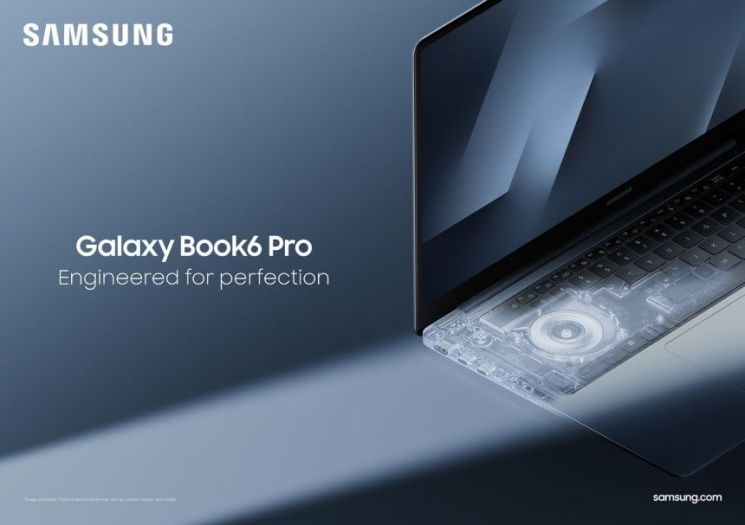
According to Samsung Electronics on January 18, the price of the 2026 model Galaxy Book6 series, which is scheduled to go on sale on January 27, will start at 3.41 million won. For the Pro model, the 14-inch version is priced at 2.41 million won, and the 16-inch version at 3.51 million won. Considering that the previous Galaxy Book5 Pro series ranged from 1.768 million to 2.808 million won, it is clear that prices have risen significantly. The perceived increase is even greater when taking into account that the Galaxy Book5 series was released at up to 180,000 won lower than the Galaxy Book4 series.
The higher-end Book6 Ultra 16-inch model is available in just two versions, depending on the graphics card specification, priced at 4.63 million won and 4.93 million won. In contrast, the Ultra model of the Book4 series released two years ago offered a broader range, from 3.36 million to 5.09 million won. The new model starts at over 4.6 million won, which has raised the entry barrier for consumers.
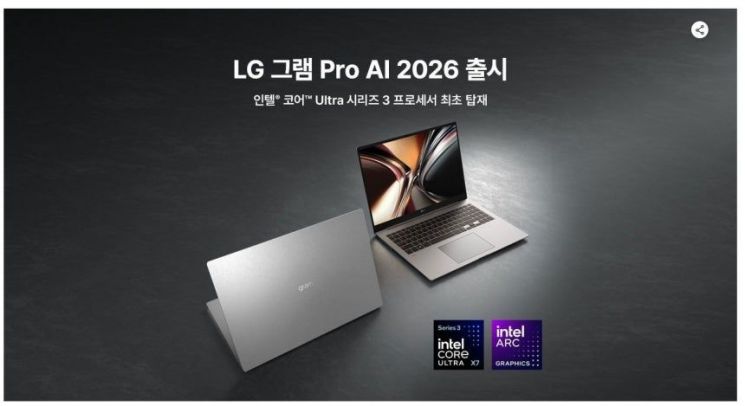
LG Electronics is facing a similar situation. The new 16-inch LG Gram Pro AI 2026 is priced at 3.14 million won, which is 500,000 won higher than its predecessor with comparable specifications. Not only in Korea but also among global laptop manufacturers such as Dell Technologies, Asus, and Lenovo, the launch prices of new products are rising across the board.
The main reason for the increase in laptop prices is the rising cost of memory semiconductors. According to market research firm DRAMeXchange, the fixed transaction price for standard PC DRAM (DDR4 8Gb) reached $9.3 (approximately 13,700 won) in December 2025. This marked the ninth consecutive month of increases since March 2025, when the price was $1.35. The reason is that manufacturers have been focusing on producing high-performance memory, such as high-bandwidth memory (HBM), which has led to a tighter supply of standard memory products that are less profitable.
The weak Korean won has also contributed to price increases. Central processing units (CPUs) and graphics processing units (GPUs), which are the brains of laptops, are imported from American companies such as Intel and Nvidia. The high exchange rate has made it difficult to lower the final product prices. Nevertheless, manufacturers cannot sacrifice performance for the sake of price. On January 4 (local time), at CES 2026 in Las Vegas, the world's largest electronics and IT trade show, Samsung Electronics President Roh Taemoon stated, "We will become an AI companion in customers' daily lives and lead the popularization of AI experiences." To build AI PCs, higher-capacity memory and storage than before are required.
There are concerns in the market that the sharp rise in prices for laptops and other IT devices could dampen demand. Despite the end of Windows 10 support last year and the AI PC boom driving PC replacement demand, Omdia has projected that global PC shipments could decline by up to 9% year-on-year in 2026.
Industry observers also expect that not only laptops but also the Galaxy S26 series, which is scheduled to be unveiled in February, will see price increases. Samsung Electronics is reportedly working to alleviate cost pressures by equipping the base and Plus models of the S26 series with its own mobile application processor (AP), the Exynos 2600. However, President Roh stated, "The rising cost of key components, especially memory, is the biggest burden for the smartphone business." Counterpoint Research has also forecast a 2.1% decline in global smartphone shipments this year.
© The Asia Business Daily(www.asiae.co.kr). All rights reserved.
![Clutching a Stolen Dior Bag, Saying "I Hate Being Poor but Real"... The Grotesque Con of a "Human Knockoff" [Slate]](https://cwcontent.asiae.co.kr/asiaresize/183/2026021902243444107_1771435474.jpg)
















