Last year, China's new Belt and Road Initiative (BRI) investment and construction contracts reached an all-time high. Analysts attribute this to China's efforts to expand its influence in developing countries, particularly through large-scale energy projects, as tensions between the United States and China intensify.
According to the Financial Times (FT) on January 18 (local time), a joint survey by Griffith University in Australia and the Shanghai Green Finance Development Center found that the total value of new investment and construction contracts signed by Chinese companies with BRI partner countries last year reached 213.5 billion US dollars (315 trillion won), a surge of about 74% compared to the previous year. This is the largest scale since the launch of the Belt and Road Initiative.
The number of contracts also increased from 293 in 2024 to 350.
Last year, China's BRI investments were concentrated in large-scale gas development and green energy projects. The value of energy-related projects amounted to 93.9 billion US dollars (138 trillion won), of which 18 billion US dollars (26 trillion won) was allocated to wind, solar, and waste-to-energy projects.
Investments in the metals and minerals sector also reached 32.6 billion US dollars (48 trillion won), and in the second half of last year, investments surged, particularly in copper, due to rising demand driven by the proliferation of artificial intelligence (AI) data centers.
By region, mega-projects included large-scale gas development in the Republic of the Congo, the Ogidigben Gas Industrial Park in Nigeria, and the construction of a petrochemical complex in North Kalimantan, Indonesia.
Christoph Nedopil Wang, professor at Griffith University who led the BRI investment scale research, stated, "These kinds of mega-projects were unprecedented before," adding that "developing countries are demonstrating trust in the ability of Chinese companies to execute large-scale projects."
China's expansion of investment is interpreted as a strategy to strengthen economic ties with developing countries amid the disruption of the international order triggered by the United States. The FT noted that as US-China tensions disrupt supply chains and President Donald Trump's moves toward military intervention shake global energy markets, China's investments have surged.
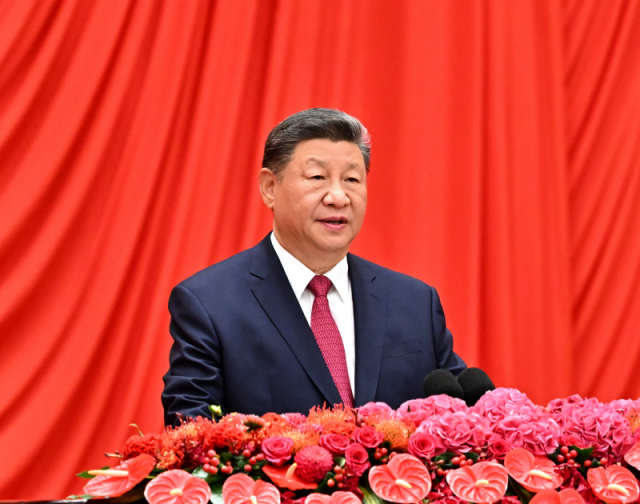
The Belt and Road Initiative, launched by Chinese President Xi Jinping shortly after taking office in 2012, refers to China's large-scale overseas investments in infrastructure, energy, and resources. Its goal is to strengthen economic influence and deepen trade relations with developing countries. China now counts over 150 countries as BRI partners, with cumulative contracts and investments totaling 1.4 trillion US dollars (2,066 trillion won).
© The Asia Business Daily(www.asiae.co.kr). All rights reserved.

















