50 Cafes and Convenience Stores Designated as Rest Areas
for Delivery and Courier Workers
Supporting Both the Right to Rest and Safety
The workplace may be on the road, but there was nowhere to rest. In a city where delivery, courier, and other mobile-based work have become part of daily life, Gwangsan District in Gwangju has opened cafes and convenience stores as "rest areas." These spaces allow mobile workers to catch their breath during work.
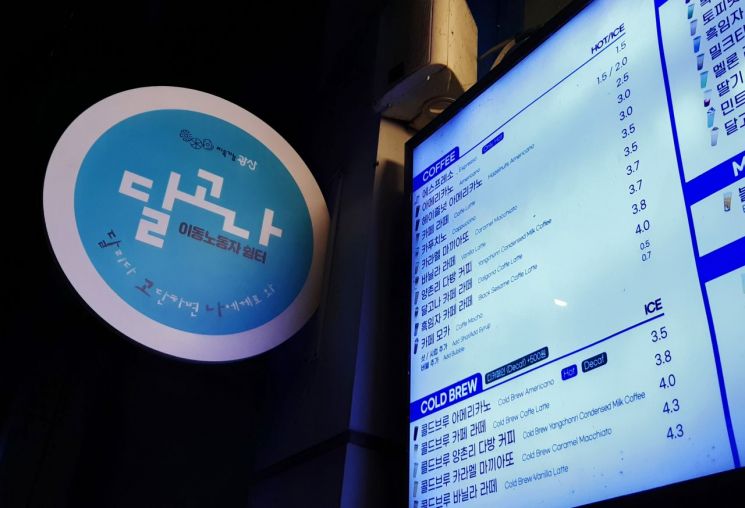 At the entrance of the cafe designated as a rest area for mobile workers in Gwangsan District, Gwangju, there is a sign indicating the "Dalgona Mobile Workers' Rest Area." Gwangsan District operates rest areas where delivery and courier workers can take a short break during work by utilizing cafes, convenience stores, and other food and beverage establishments. Provided by Gwangsan District
According to Gwangsan District on January 18, the district has been promoting the "Mobile Workers' Rights Protection Support Project" since 2023 to guarantee the right to rest and safety for mobile workers, who often fall through the cracks of social safety nets such as the Labor Standards Act. Over the past three years, approximately 1,100 mobile workers have participated in this project.
The core of this initiative is accessibility. Gwangsan District has designated and operated cafes and convenience stores as rest areas for mobile workers. The aim is to ensure that workers can take a break at a nearby location whenever needed during work. Currently, a total of 50 locations are operating as rest areas, including 40 cafes such as Bulk Coffee Hanam Industrial Complex Branch and Suwan Seongdeok Branch, and 10 convenience stores such as CU Suwan Areummaeul Branch and Hanam Tool Store Branch.
Safety support has also been provided. Gwangsan District has offered safety training that combines theory and practice, focusing on traffic regulations and accident response procedures. Graduates of the training received co-prosperity cards and financial support for purchasing safety equipment. The district explained that the focus was not only on education but also on providing support that workers can feel in the field.
Gwangsan District plans to continue this project this year, aiming to support up to 300 additional mobile workers.
A Gwangsan District official stated, "Protecting the rights and interests of mobile workers, who do not receive sufficient protection from laws and systems, is a challenge that local governments must actively address," adding, "We will guarantee the safety and right to rest for mobile workers through policies that provide real help in the field."
© The Asia Business Daily(www.asiae.co.kr). All rights reserved.

















