Ministry of Health and Welfare Ensures Specialist Care During Transport
Protecting the Golden Hour for Severe Patients and Newborns to Improve Survival Rates
#A man in his 40s was found unconscious after a motorcycle accident on a road in City A, Gyeonggi Province. He was classified as a severe trauma patient with an Injury Severity Score (ISS) of 26 (a score of 16 or higher out of 1 to 75 is considered severe), and his life was in critical danger due to traumatic shock and hypoxia. Within 12 minutes of the emergency call, a doctor helicopter flew 48 kilometers to the scene, administered sedatives, supplied oxygen and fluids, and transported him to Hospital B. Upon arrival at the hospital's trauma resuscitation room, the patient immediately underwent endotracheal intubation. He was diagnosed with a skull fracture and traumatic brain hemorrhage and received intensive care in the intensive care unit.
#A newborn who showed signs of hypoxia and cyanosis immediately after birth was transferred to Hospital C for treatment and admitted to the neonatal intensive care unit. However, an echocardiogram showed "persistent pulmonary hypertension of the newborn (PPHN)" and "anomalous left coronary artery from the pulmonary artery (ALCAPA)," making it necessary to transfer the baby to another hospital, Hospital D, for specialized treatment. The challenge was that the baby was already receiving inhaled nitric oxide therapy (iNO) at Hospital C, and this equipment was necessary to maintain oxygen saturation during the transfer. Thanks to the deployment of a severe patient dedicated ambulance, which operated specialized treatment equipment and a ventilator not available in standard ambulances, the baby was safely transferred to Hospital D for further treatment.
The Ministry of Health and Welfare announced on the 18th that, over the past year, a total of 1,414 severe emergency patients were transported using emergency medical helicopters (doctor helicopters) and severe patient dedicated ambulances (MICU), contributing to improved survival rates.
For severe trauma or cardiovascular and cerebrovascular diseases, delayed treatment drastically reduces survival rates, making rapid patient transport essential. Providing appropriate treatment tailored to the patient's condition during transport is also critical.
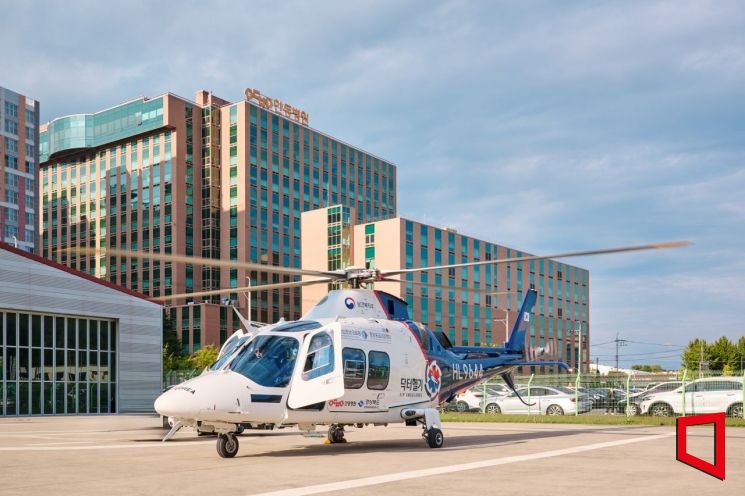
Doctor helicopters are staffed with emergency medicine specialists who perform advanced emergency procedures and quickly transport patients to medical facilities capable of providing treatment. In areas where vehicle access is difficult, such as islands and mountainous regions, or when roads are congested with heavy traffic, doctor helicopters play a crucial role as an alternative to ambulances. The Ministry currently operates eight doctor helicopters with specialists on board. In 2025 alone, 1,075 severe emergency patients were transported, including 515 with severe trauma and 163 with cardiovascular and cerebrovascular diseases. Since their introduction in 2011, the cumulative number of patients transported has reached 16,057.
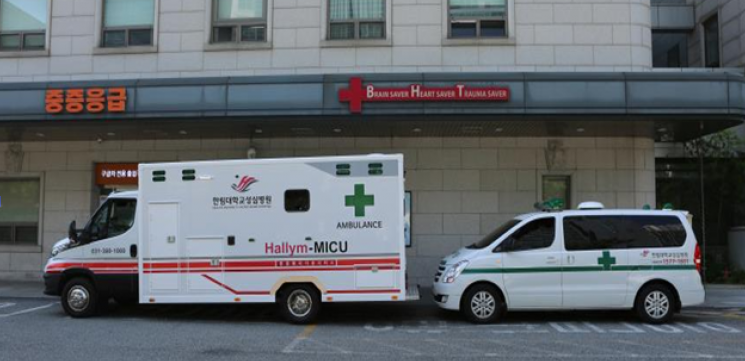 Severe Patient Dedicated Ambulance (MICU) operated by Hallym University Sacred Heart Hospital. Ministry of Health and Welfare.
For professional care and safe transfer between hospitals, severe patient dedicated ambulances are essential. Since the end of 2024, these ambulances have been piloted in the Gyeonggi region, equipped with intensive care unit (ICU)-level devices such as ventilators, and staffed by specialists and nurses.
Currently, Hallym University Sacred Heart Hospital, where the severe patient dedicated ambulance is stationed, has organized a dedicated medical team for patient transfers and maintains a 24-hour continuous transfer system. As a result, over the past year, 339 severe patients, including newborns requiring oxygen saturation management, were safely transported.
The government plans to further strengthen the emergency transport system for severe patients based on these achievements.
Lee Jungkyu, Director of Public Health Policy at the Ministry of Health and Welfare, stated, "This year, we plan to add one more doctor helicopter and replace two small helicopters with medium-sized ones to improve operational capabilities. We will also introduce an additional severe patient dedicated ambulance and continue to strengthen the emergency patient transport system."
© The Asia Business Daily(www.asiae.co.kr). All rights reserved.
![Clutching a Stolen Dior Bag, Saying "I Hate Being Poor but Real"... The Grotesque Con of a "Human Knockoff" [Slate]](https://cwcontent.asiae.co.kr/asiaresize/183/2026021902243444107_1771435474.jpg)
















