Influenza Cases Rebound After Seven Weeks, Says Disease Control Agency
"Vaccination Recommended Even After Influenza A Infection"
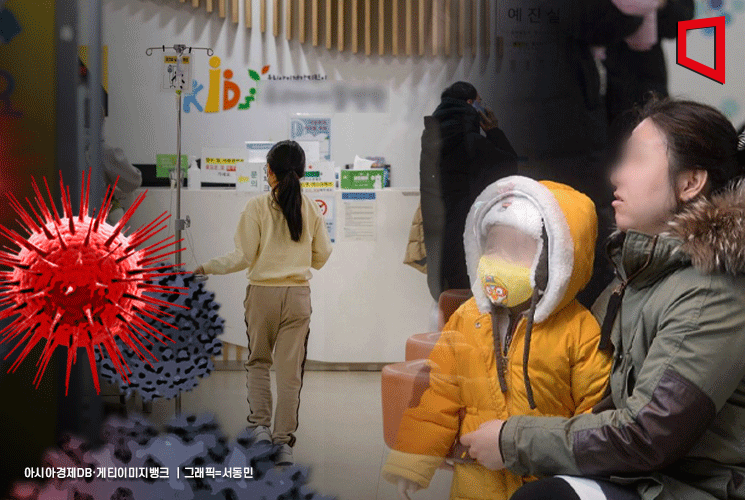
Although the influenza (flu) outbreak appeared to subside toward the end of last year, cases have started to rise again in the new year, particularly among children and adolescents, prompting the need for caution.
According to the Korea Disease Control and Prevention Agency on January 16, the proportion of influenza-like illness cases reported by sample-surveyed clinics had been declining since mid-November last year, but began to increase again in the second week of this year (January 4-10), marking a rebound after seven weeks.
Last week, there were 40.9 influenza-like illness cases per 1,000 outpatients, a 12.3% increase from the previous week's 36.4 cases, significantly exceeding the seasonal epidemic threshold of 9.1 cases.
By age group, the proportion was highest among children aged 7-12 at 127.2 cases, followed by 97.2 cases among those aged 13-18, and 51.0 cases among children aged 1-6, indicating that most cases are occurring in the pediatric and adolescent population.
In particular, the detection of influenza B virus has increased in respiratory samples from clinic-level patients. In the 51st week of last year, the detection rate for influenza A virus was 36.1% and for influenza B virus was 0.5%. However, in the second week of this year, the detection rate for influenza A virus was 15.9%, while that for influenza B virus rose to 17.6%.
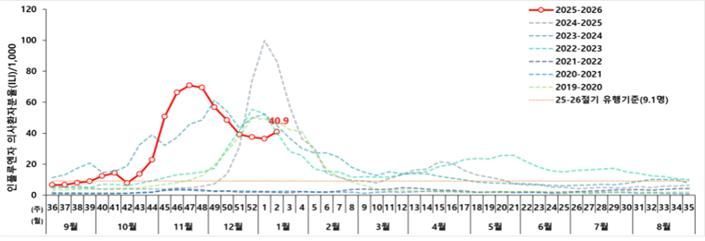 Weekly Influenza-Like Illness Cases by Region (As of January 10, 2026, Unit: Cases per 1,000 People, Source: Korea Disease Control and Prevention Agency)
The agency explained that the influenza B virus currently circulating is very similar to the virus strain (vaccine strain) used in this season's vaccine production, so vaccination is effective, and no mutations affecting antiviral resistance have been identified.
Im Seungkwan, Commissioner of the Korea Disease Control and Prevention Agency, stated, "Influenza B, which typically spreads from late winter to early spring, is showing an earlier pattern this year. Even if you were infected with influenza A earlier in the season, you can still contract influenza B, so we urge high-risk groups such as seniors, children, and pregnant women to get vaccinated as soon as possible."
© The Asia Business Daily(www.asiae.co.kr). All rights reserved.
![Clutching a Stolen Dior Bag, Saying "I Hate Being Poor but Real"... The Grotesque Con of a "Human Knockoff" [Slate]](https://cwcontent.asiae.co.kr/asiaresize/183/2026021902243444107_1771435474.jpg)

















