"Dialogue with Residents and Basic Income Briefing Sessions" Held Across 11 Towns and Townships
Gokseong County in South Jeolla Province announced on January 16 that it successfully concluded the "Dialogue with Residents and Basic Income Briefing Sessions," which were held from January 8 to 16 across 11 towns and townships in the county, drawing high interest and participation from residents.
This year's event aimed to strengthen communication with residents by combining the traditional "Dialogue with Residents" with a briefing session on the rural basic income program, which is being implemented for the first time this year. The county focused on directly explaining the background and direction of the policy to residents to enhance their understanding of the initiative.
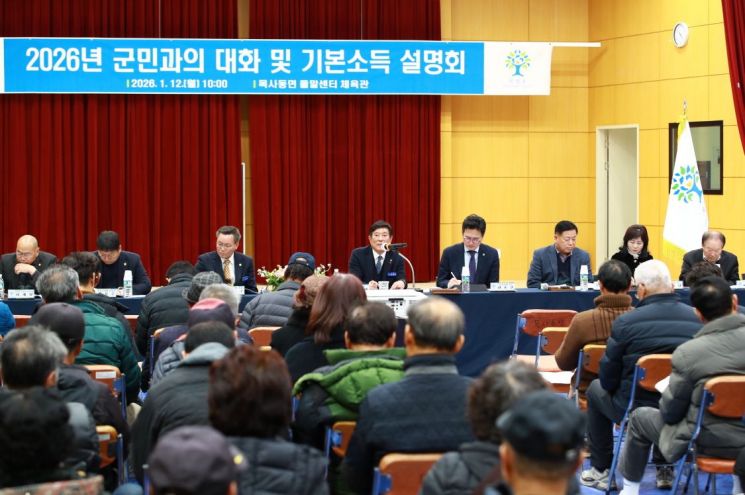 Gokseong County is promoting dialogues with residents and basic income briefings to communicate with the local community. Photo by Gokseong County
At the event venues, communication was more active than in previous years. Residents voiced a wide range of opinions, not only about everyday inconveniences and local issues, but also about development plans for each town and township, as well as policy proposals for the mid- to long-term future of Gokseong County. Residents actively submitted suggestions on areas closely related to daily life, such as transportation, housing, welfare, and agriculture.
In particular, major department heads attended the event and provided immediate responses and explanations to the suggestions on site, which increased trust in the administration and received a positive response by offering detailed guidance on administrative procedures.
County Governor Cho Sangrae stated, "It was a valuable time to share opinions with residents for greater change in Gokseong," adding, "Every single voice comes together to shape major policies that draw the future of Gokseong. We will continue to communicate with residents and move forward together in the same direction."
Meanwhile, Gokseong County plans to carefully review the suggestions received by each department and take follow-up actions such as budget allocation and project implementation, while also working to create highly effective policies and bring about tangible changes.
© The Asia Business Daily(www.asiae.co.kr). All rights reserved.
![Clutching a Stolen Dior Bag, Saying "I Hate Being Poor but Real"... The Grotesque Con of a "Human Knockoff" [Slate]](https://cwcontent.asiae.co.kr/asiaresize/183/2026021902243444107_1771435474.jpg)
















