Louis Vuitton Flagship Store Opens in Sanlitun, China
"Rising Stock Prices Drive Recovery in Luxury Market Demand"
Amid the rebound of the Chinese stock market and the recovery of consumer sentiment, global luxury brands are accelerating their investments in offline stores in China. There is a clear trend of moving away from standardized store formats and instead strengthening experiential elements to expand brand awareness and customer touchpoints.
"Luxury Stores Continue to Open in Sanlitun, China"
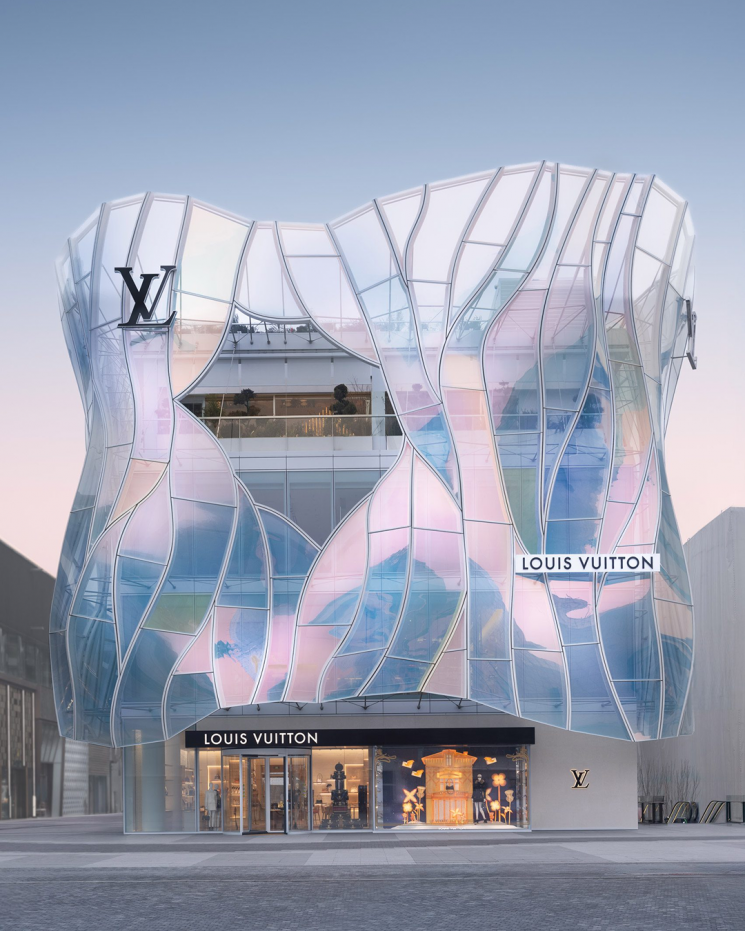
According to foreign media outlets such as CNBC, last month, Louis Vuitton opened its flagship store, 'Maison Louis Vuitton Sanlitun', in Sanlitun, Beijing. Designed by world-renowned architect Jun Aoki, the store was created as a multi-cultural space combining a cafe, restaurant, and terrace. Four private lounges for VIP customers have also been established, expanding the store beyond a simple shopping space to an experience-focused venue.
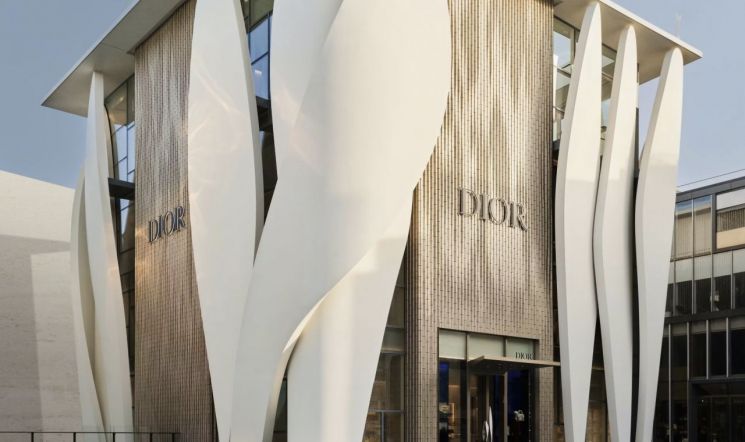
CNBC reported, "In recent weeks, the opening of new luxury stores in downtown Beijing has begun to revitalize the long-stagnant consumer market," adding, "On either side of the newly opened Louis Vuitton store are Tiffany & Co. and Dior flagship stores, and three brands under LVMH Group have simultaneously opened in a nearby shopping complex."
In particular, the new Louis Vuitton store has quickly gained attention as local influencers continue to visit. CNBC noted, "Crowds of young people gathered to watch celebrities ascend the staircase inside the Louis Vuitton store," and "the excitement was even greater than at the Apple iPhone launch event in a nearby mall." CNBC evaluated this as evidence that luxury brands continue to attract significant public interest.
There is analysis that this new Louis Vuitton flagship store is a strategic location that goes beyond simply selling products, with a focus on enhancing various experiential spaces. The main purpose is seen as increasing long-term customer loyalty by elevating brand experience and symbolism, rather than merely boosting short-term sales.
Chinese luxury media outlet Jing Daily reported, "Recently, independent flagship stores of luxury brands have been opening one after another in the Sanlitun area, and these buildings, designed by world-renowned architects, have become symbolic landmarks representing the stature of LVMH Group brands." It continued, "these buildings serve as cultural landmarks that embody brand heritage, artistry, and modern aesthetics, going beyond simple retail spaces." Jing Daily assessed that this trend shows a shift away from rapidly increasing standardized stores, focusing instead on differentiated spaces and experiences.
Reasons for Luxury Brands' Investment in China... Stock Market Boom Also a Factor
The expansion of luxury brands' investments in China is underpinned by the recovery of consumer sentiment following a rebound in asset markets. On January 9, the Shanghai Composite Index closed at 4,120.43, marking its highest closing value in about 10 years since July 2015. This is attributed to the appreciation of the yuan and expectations for economic stimulus measures being reflected in the stock market. In particular, last year, the Shanghai Composite Index rose by about 18% annually, recording the highest growth rate since 2020, while the Shenzhen Composite Index increased by about 29% over the year.
Shanghai-based luxury critic Drizzie Zuo(Drizzie Zuo) analyzed that the recent stock market rally has created a so-called 'wealth effect,' leading to a recovery in luxury consumption. Zuo stated, "the stock price increases over the past few months have driven a rebound in luxury market demand, and this trend is expected to continue," adding "The fact that luxury brands are opening new stores now can be perceived by consumers as a signal that the luxury market is recovering."
Meanwhile, as positive outlooks for the Chinese stock market continue, the recovery in luxury consumption is expected to persist for the time being. Thomas Fang, Head of China Global Markets at UBS, predicted, "As interest in diversified investment grows, the appeal of Chinese assets will only increase," and "with innovation capabilities and expectations for capital inflows aligning, the Chinese stock market is likely to maintain its positive momentum this year as well."
© The Asia Business Daily(www.asiae.co.kr). All rights reserved.
![Clutching a Stolen Dior Bag, Saying "I Hate Being Poor but Real"... The Grotesque Con of a "Human Knockoff" [Slate]](https://cwcontent.asiae.co.kr/asiaresize/183/2026021902243444107_1771435474.jpg)












