The Perfect Attendance Award, Once Common, Now a Rare Honor
Experiential Learning Expands, Changing School Perspectives on Attendance
More Schools Abolishing the Perfect Attendance Award as Attitudes Shift
As graduation season approaches, the "Perfect Attendance Award," which was once given to almost every student, is drawing renewed attention. This is because the number of students receiving the award has dropped sharply due to the expansion of experiential learning and changing perceptions of school attendance. On January 16, Yonhap News Agency reported that, with graduation season underway, only about 10% of students at schools are now receiving perfect attendance awards, and highlighted how perceptions of attendance are changing in schools. According to Yonhap News Agency, Ms. Cho, who lives in Seoul, was surprised while attending her child's recent middle school graduation ceremony. Although her son received a perfect attendance award for three years, only about 10 out of over 100 graduates received the award. Ms. Cho said, "It used to be an award that almost everyone received, but now it seems to have become truly rare."
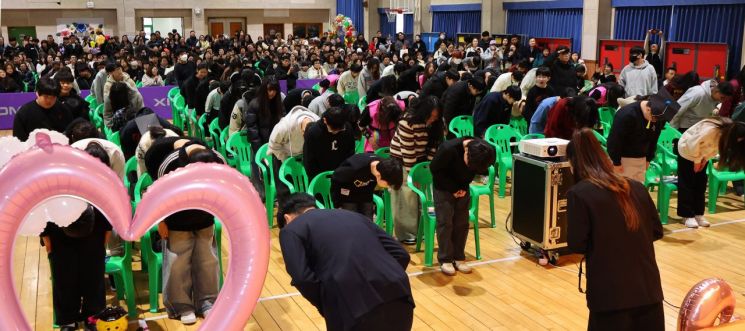 Graduation ceremony held on December 23 last year at Incheon Nambu Elementary School in Michuhol-gu, Incheon. Photo by Yonhap News
Similar reactions have been shared by other parents. In elementary and middle schools not only in Gangnam and Seocho districts of Seoul but also in regional areas, there are many cases where only around 20 students out of several hundred receive the perfect attendance award. It has become difficult to achieve "attendance without missing a single day" due to experiential learning, overseas travel, and hospital visits.
In fact, an increasing number of schools in the field of education have abolished the perfect attendance award altogether. Teachers have noted, "Since attendance is already recorded in the attendance section of the student record, there is a growing perception that there is no need to duplicate this by giving an award." One middle school teacher said, "It is common for only about 20% of the entire student body to maintain perfect attendance."
Students' perceptions have also changed. Among high school students, it has become common to be absent for private academy classes or personal schedules in the final stages of university entrance preparation, and teachers often advise, "If necessary, make use of experiential learning." The atmosphere now emphasizes efficiency and choice rather than setting perfect attendance as a goal. In this context, the term "gaegeun geoji" (a derogatory term meaning "perfect attendance beggar") has emerged, fueling controversy. Some now belittle perfect attendance not as a sign of diligence, but as a result of not being able to go on trips or participate in experiential learning. Experts see this as a side effect created by perceptions of social inequality.
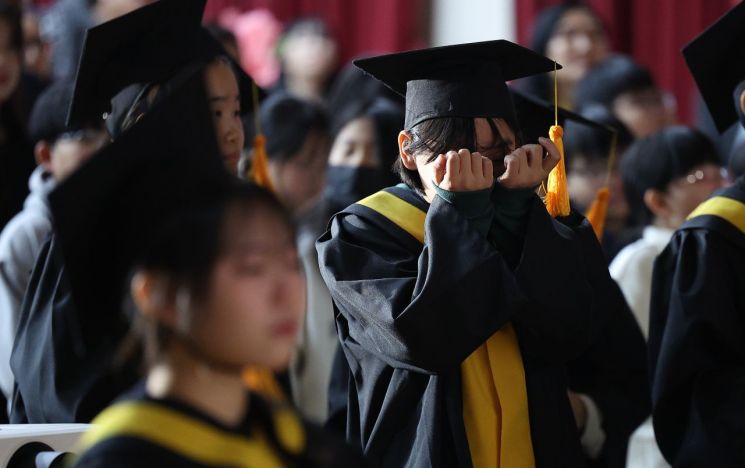 On the 5th, a sixth-grade student was shedding tears at the graduation and school closure ceremony held at Wolgok Elementary School in Dalseo District, Daegu. Wolgok Elementary School will be closed in March due to a decline in the school-age population, and the school closure ceremony was held along with the 33rd graduation ceremony on that day. Photo by Yonhap News Agency
In the field of educational studies, these changes are being diagnosed as part of the dismantling of modern educational discourse. In the past, diligence and industriousness were core values in education, but recently, a focus on health, rest, and work-life balance is also being reflected in the educational environment. Especially after COVID-19, there is a growing consensus that "resting when sick" is desirable, as awareness of infectious disease prevention and public health has increased.
Meanwhile, some evaluations suggest that the meaning of perfect attendance has not disappeared entirely. In the university early admission process or in the employment process for specialized high schools, attendance is still an important evaluation factor, and in some cases, when students have similar grades, the diligence of a student with perfect attendance is positively recognized. Yang Jeongho, a professor of education at Sungkyunkwan University, said, "Perfect attendance is more than just the number of days attended; it is an indicator of a student's sense of responsibility and attitude," adding, "It is educationally valuable and should be encouraged." However, experts emphasized that a balanced perspective is needed, one that evaluates both legitimate reasons for absence and sincere school life, rather than enforcing perfect attendance unconditionally.
© The Asia Business Daily(www.asiae.co.kr). All rights reserved.
![Clutching a Stolen Dior Bag, Saying "I Hate Being Poor but Real"... The Grotesque Con of a "Human Knockoff" [Slate]](https://cwcontent.asiae.co.kr/asiaresize/183/2026021902243444107_1771435474.jpg)

















