Transition to On-Site Command System
Reducing Response Times
The National Fire Agency will fully utilize artificial intelligence (AI) to respond to new risks such as complex disasters and electric vehicle fires. A representative example is a system in which drones collect information, AI analyzes it, and then directs firefighting resources accordingly.
On January 16, the National Fire Agency announced that it has established and will implement the "Top 10 Strategic Tasks for Utilizing Firefighting AI and Advanced Technology." This policy aims to overcome the limitations of the existing response system, which relied on manpower and experience, by integrating information and communication technology into the field and transitioning to a "scientific disaster management system." The core of the plan consists of 10 strategic tasks across four key areas: ultra-wide area information systems, digital infrastructure, advanced equipment innovation, and promotion of K-Firefighting exports.
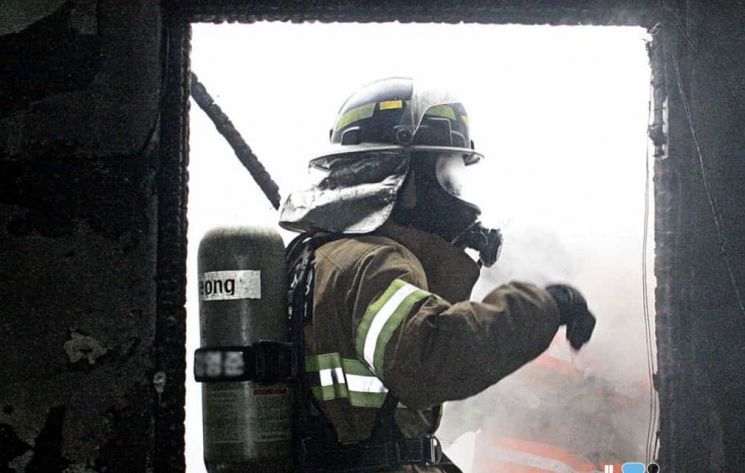
First, the agency will accelerate the transition to an "AI and digital-based on-site command system." In this approach, AI analyzes information collected by drones or robots to suggest fire spread routes and optimal resource deployment plans, thereby directing operations on the ground. Additionally, an "ultra-wide integrated information network" will be established to unify dispersed information and realize an AI-based command system. Through the "AI-based intelligent next-generation 119 integrated system," which manages all firefighting resources nationwide as a single system, the nearest fire truck to the caller's location can be dispatched immediately, regardless of city or provincial administrative boundaries.
The agency will also advance equipment to prepare for high-risk sites that are difficult for personnel to enter. The plan is to deploy unmanned firefighting equipment, such as land-based unmanned firefighting robots, unmanned surface vessels, and tethered aerial drones, to enable multidimensional operations. In addition, an AI-based early detection system for battery fires and omnidirectional cooling and suffocating fire suppression equipment will be developed to respond to electric vehicle fires. High-performance non-clogging drainage pumps capable of removing rainwater mixed with debris will also be introduced to prevent urban flooding.
Furthermore, reflecting feedback from on-site personnel surveys, the agency will prioritize the development of "advanced safety protection equipment for firefighters." Items under consideration include "vision devices" (visual enhancement devices) that provide visibility in smoke, "muscle augmentation suits" (wearable robots) to reduce physical strain during intense activity, and lightweight yet durable "carbon fiber helmets" (safety helmets).
Kim Seung-ryong, Acting Commissioner of the National Fire Agency, stated, "We will completely transform our disaster management system from one that relied on experience to a scientific approach driven by data and AI. We will rapidly pursue the 10 strategic tasks so that advanced technology can become a strong pillar protecting both the safety of our on-site personnel and the daily lives of the public."
© The Asia Business Daily(www.asiae.co.kr). All rights reserved.

















