US Lowers Mutual Tariffs on Taiwan from 20% to 15%
Taiwanese Companies to Invest $250 Billion in US Advanced Semiconductors
Taiwanese Government to Provide $250 Billion in Credit Guarantees for Domestic Firms
The Donald Trump administration in the United States has concluded a trade agreement with Taiwan that centers on reducing mutual tariffs to 15% in exchange for direct investments totaling $250 billion (approximately 367 trillion won) by Taiwanese companies in the United States. These investments will be led by private companies, with the Taiwanese government providing support in the form of credit guarantees.
The U.S. Department of Commerce announced on the 15th (local time) that it had signed this trade agreement with Taiwan.
According to the Department of Commerce, Taiwanese semiconductor and technology companies plan to make new investments of approximately $250 billion in the United States to build and expand production and innovation capabilities in advanced semiconductors, energy, and artificial intelligence (AI). In response, the Taiwanese government will provide credit guarantees of the same amount, $250 billion, to these companies. However, the scale of Taiwan's investment is smaller compared to South Korea's pledged $350 billion and Japan's $550 billion investments in the United States.
The United States will lower the mutual tariff rate imposed on imports from Taiwan from the previous 20% to 15%, matching the rate applied to South Korea and Japan. In addition, mutual tariffs will not be imposed on generic pharmaceuticals, pharmaceutical raw materials, aircraft parts, and certain natural resources.
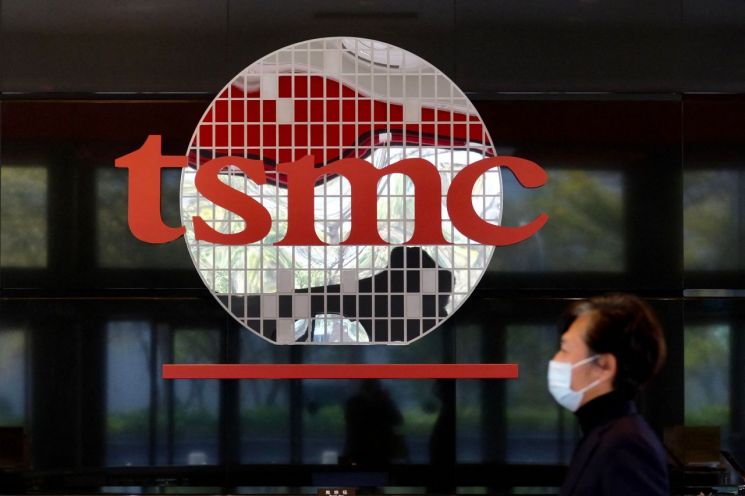
There is also speculation about additional investments in the United States by TSMC, the world's largest semiconductor foundry company based in Taiwan. Howard Lutnick, U.S. Secretary of Commerce, said in a CNBC interview on this day, "TSMC recently purchased several hundred acres of land near its existing (Arizona) site," adding, "We will give them time to make a decision at the board level."
Previously, the New York Times reported that TSMC had decided to build five additional semiconductor plants in Arizona, in addition to its existing plans to construct six semiconductor plants and two packaging facilities. This would roughly double the scale of TSMC's facility investments in the United States compared to previous plans, adding to the previously announced maximum investment plan of $165 billion.
This bilateral trade agreement also includes item-specific tariff exemptions under Section 232 of the Trade Expansion Act. Taiwanese companies currently constructing semiconductor plants in the United States will be able to import up to 2.5 times the production capacity under construction into the United States tariff-free until the completion of the plants. Even after completion, tariff-free imports will be allowed up to 1.5 times the domestic production capacity.
Additionally, Taiwanese automobile parts, timber, and related derivative products will not be subject to tariffs exceeding 15% under Section 232 of the Trade Expansion Act.
© The Asia Business Daily(www.asiae.co.kr). All rights reserved.
![Clutching a Stolen Dior Bag, Saying "I Hate Being Poor but Real"... The Grotesque Con of a "Human Knockoff" [Slate]](https://cwcontent.asiae.co.kr/asiaresize/183/2026021902243444107_1771435474.jpg)
















