Cargo Business Maintains Stable Profitability
Korean Air announced on January 15 that its operating profit for the previous year, based on separate financial statements, was 1.5393 trillion won, a 19% decrease compared to the previous year.
Revenue increased by 2% to 16.5019 trillion won, setting a new all-time high just one year after the previous record. Net profit for the year was 965 billion won, down 21%.
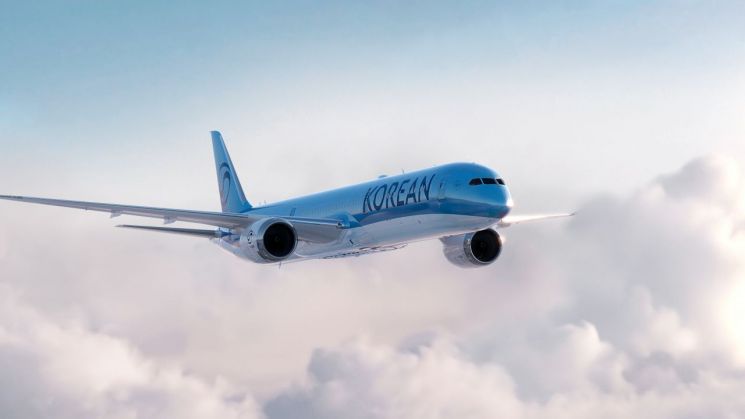
Fourth-quarter revenue rose by 522 billion won year-on-year to 4.5516 trillion won. However, due to an overall increase in operating costs, including inflation, operating profit for the quarter declined to 413.1 billion won compared to the same period last year.
Quarterly passenger business revenue reached 2.5917 trillion won, up 217.1 billion won from the same period the previous year. While North American routes experienced stagnation due to stricter entry regulations and intensified competition on West Coast routes, demand for short-haul flights to Japan and China increased during the Chuseok holiday in early October, resulting in higher revenue and profitability overall compared to the previous year.
Cargo business revenue totaled 1.2331 trillion won, up 35.1 billion won from a year earlier. The easing of external uncertainties due to US-China tariff suspension negotiations, stable inflow of e-commerce demand, and strong year-end consumer spending contributed to maintaining stable profitability.
In response to the recent depreciation of the Korean won and weakening outbound demand from Korea, Korean Air plans to boost overseas sales and flexibly expand capacity during peak demand periods at the beginning of the year, such as the Lunar New Year holiday in February, to enhance profitability in the passenger business. For the cargo business, the company aims to maximize profitability by diversifying its portfolio and flexibly adjusting cargo aircraft supply in line with market conditions, taking into account the slowdown in global economic growth.
A Korean Air official stated, "This year, we expect intensified market competition due to the accelerated recovery of global passenger capacity and increased global policy volatility. We plan to respond swiftly to various external factors and provide the best possible service based on systematic preparations for the launch of an integrated airline."
© The Asia Business Daily(www.asiae.co.kr). All rights reserved.
![Clutching a Stolen Dior Bag, Saying "I Hate Being Poor but Real"... The Grotesque Con of a "Human Knockoff" [Slate]](https://cwcontent.asiae.co.kr/asiaresize/183/2026021902243444107_1771435474.jpg)















