Apples Are the Top Source of Sugar Intake Among Koreans
Carbonated Beverages Rank Second
It has been found that, on average, people in Korea consume the most sugar through apples. The second highest source was carbonated beverages. However, experts advise that more attention should be paid to the intake of refined carbohydrates or processed foods, which cause abnormal blood sugar spikes (a rapid increase in blood glucose after eating), rather than to apples.
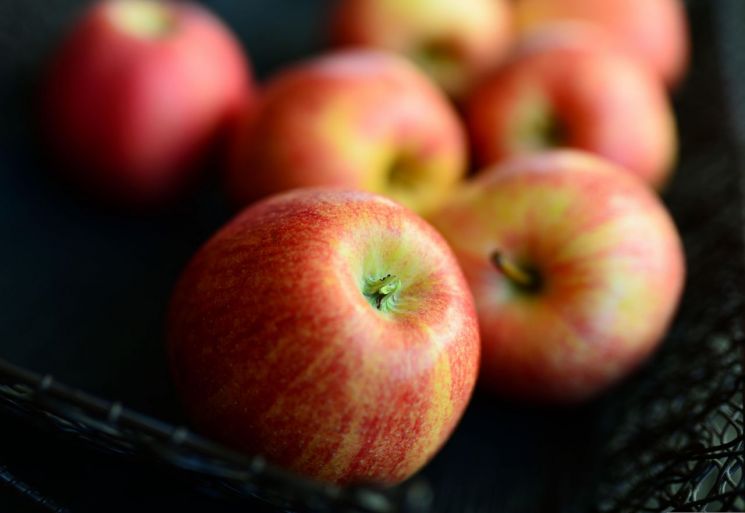
According to the latest National Health Statistics released by the Korea Disease Control and Prevention Agency on January 15, which surveyed 6,802 individuals aged one year and older, apples ranked first as the main food source of sugar intake in Korea as of 2024.
The daily sugar intake from apples was 3.93 grams, accounting for 6.9% of the total daily sugar intake by food category. Carbonated beverages ranked second, and milk ranked third. The sugar intake from these sources was 3.55 grams and 3.40 grams per day, respectively, with their shares of daily sugar intake being 6.2% and 5.9%, respectively.
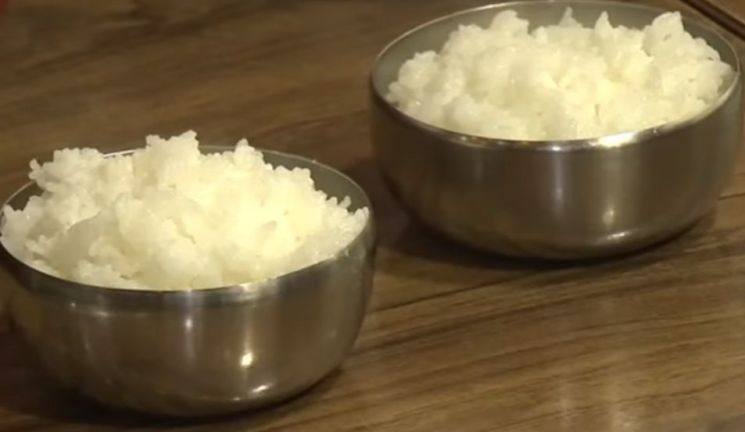
Rice is the Top Source of Energy; Pork for Protein and Fat
For Koreans, the top food source of energy was non-glutinous rice. The daily energy intake from non-glutinous rice was 428.5 kcal, accounting for 23.2% of total energy intake. Pork (101.9 kcal, 5.5%) and bread (68.6 kcal, 3.7%) followed.
For protein, pork was the top source, with a daily intake of 8.82 grams and a share of 12.3%. Non-glutinous rice ranked second (8.02 grams, 11.2%), and chicken ranked third (6.99 grams, 9.7%).
Pork was also the top source of fat, providing 6.75 grams per day and accounting for 12.9% of total fat intake. Beef (5.20 grams, 9.9%) and soybean oil (4.00 grams, 7.6%) followed.
The main source of sodium was salt, with a daily sodium intake of 490.4 mg, accounting for 15.6% of total daily sodium intake. Kimchi made from napa cabbage ranked second with 357.5 mg (11.4%), and soy sauce ranked third with 325.8 mg (10.4%).
Apples Have a Low Glycemic Index... Caution Needed with Bread and Carbonated Beverages
Experts say that food intake should be adjusted not just based on simple sugar content but also by considering the glycemic index (GI) and glycemic load (GL). Oh Seungwon, Professor of Family Medicine at Seoul National University Hospital, stated, "It is difficult to compare fruits, bread, and carbonated beverages on the same level as sources of sugar."
Professor Oh added, "Apples have a relatively low GI and GL, and they are rich in fiber and other antioxidants, so they are less harmful to health compared to carbonated beverages."
© The Asia Business Daily(www.asiae.co.kr). All rights reserved.
![Clutching a Stolen Dior Bag, Saying "I Hate Being Poor but Real"... The Grotesque Con of a "Human Knockoff" [Slate]](https://cwcontent.asiae.co.kr/asiaresize/183/2026021902243444107_1771435474.jpg)
















