Seungse Cha, Democratic Party Political Affairs Advisor, Proposes District Office Relocation
Plans for an AI-Integrated Administrative Complex at the Former Military Airport Site
With the relocation of the Gwangju military airport now confirmed, there have been calls to relocate the Gwangsan District Office to the former airport site and to establish an artificial intelligence (AI)-based local government model.
On January 15, Seungse Cha, Political Affairs Special Advisor to Democratic Party of Korea Leader Jeongcheongrae, officially proposed constructing a new Gwangsan District Office on the former military airport site, emphasizing that this should be reviewed as a mid- to long-term future strategy for Gwangsan District. Cha stated, "The large-scale site secured by the military airport relocation provides the conditions necessary to fundamentally reconsider the relocation of the Gwangsan District Office."
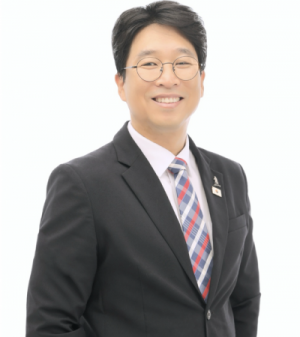
Cha explained that previous discussions about a new Gwangsan District Office had repeatedly failed due to difficulties in securing land, the heavy financial burden, and concerns about undermining existing commercial districts. He said, "Utilizing the 2.48 million pyeong (approximately 8.2 million square meters) of the military airport site could significantly reduce land acquisition costs, and it is possible to create an urban growth model that connects the development effects from Songjeong Station to Gwangju Airport with existing commercial districts."
He also addressed the issue of the aging district office building. The current Gwangsan District Office was completed in 1988, making it nearly 40 years old. The population, which was 125,000 at the time, is expected to reach about 390,000 by the end of 2025. Over the same period, the number of public officials increased from 274 to around 1,600, but the size of the office building has remained largely unchanged.
Regarding the direction of the new office building, Cha emphasized, "This should not be a simple relocation of administrative space, but rather designed as an AI-integrated office complex that combines AI disaster safety integrated control and digital administrative services." He added, "The Gwangsan District Office can serve as the administrative hub for an AI-centered advanced startup and industrial ecosystem."
He continued, "Relocating the office can enhance administrative efficiency and form a central axis for urban functions, which could lead to population inflow and revitalization of the local economy." He further noted, "Ahead of the administrative integration of Gwangju and Jeonnam, it is important to gather citizens' opinions as Gwangsan District aims to become a core pillar of Gwangju."
Meanwhile, in December of last year, a six-party consultative body consisting of Gwangju City, Jeonnam Province, Muan County, the Ministry of National Defense, the Ministry of Economy and Finance, and the Ministry of Land, Infrastructure and Transport reached an agreement on the relocation of the military airport and the integration of the civilian airport. On January 7, the Integrated Airport Future City Headquarters was launched to oversee the relocation of the integrated civilian-military airport and the development of the former site, and is now promoting related projects in an integrated manner.
© The Asia Business Daily(www.asiae.co.kr). All rights reserved.
![Clutching a Stolen Dior Bag, Saying "I Hate Being Poor but Real"... The Grotesque Con of a "Human Knockoff" [Slate]](https://cwcontent.asiae.co.kr/asiaresize/183/2026021902243444107_1771435474.jpg)















