Transfer of Capital Gains, Corporate, and Value-Added Taxes...
Significant Expansion of Fiscal Authority for the Metropolitan Special City
If the Daejeon-Chungnam Administrative Integration Special Act passes the National Assembly in its original form, the Daejeon-Chungnam Special City will secure more than 9 trillion won in new annual financial resources.
This special provision, which directly transfers a portion of national taxes to local governments, is being evaluated as the starting point for a shift toward fiscal sovereignty, enabling local governments to independently design policies for industry, transportation, welfare, and disaster response.
It has been analyzed that if the Special Act for the Establishment of Daejeon-Chungnam Special City and the Creation of an Economic and Scientific Capital is enacted as originally proposed, Daejeon and Chungnam will be able to secure nearly 9.6 trillion won in additional annual resources.
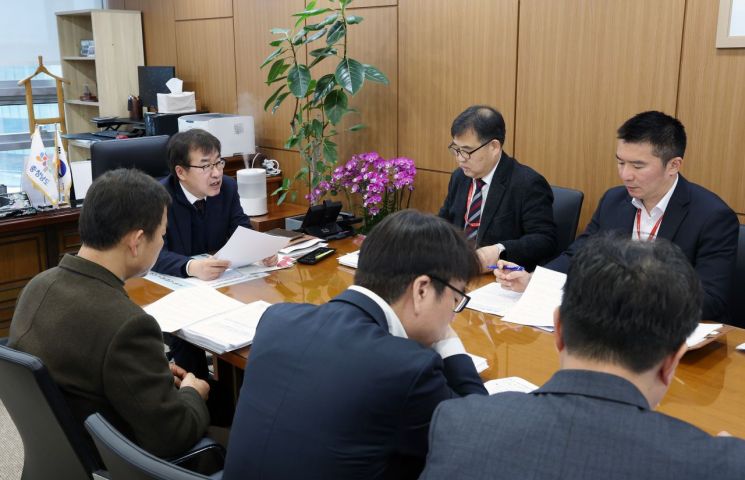
On January 15, the province held the first meeting of the "Task Force for Reflecting the Original Draft of the Administrative Integration Special Act Special Provisions" at the provincial government office, reviewing the scale of increased tax revenue and policy effects resulting from the fiscal special provisions. The meeting was attended by Vice Governor Jeon Hyung-sik and heads of departments responsible for fiscal special provisions.
Article 42 of the Special Act stipulates that a portion of national taxes will be directly allocated to the Daejeon-Chungnam Special City. The targeted taxes include: ▲ 100% of capital gains tax ▲ 50% of corporate tax ▲ 5% of the value-added tax, excluding the portion already distributed as local consumption tax.
The province maintains that, since capital gains tax is generated from real estate transactions within the region, it is appropriate for the entire amount to be transferred to the local government.
For corporate tax, the province argues that the local government should manage the tax base of companies that have grown thanks to its efforts to attract businesses and invest in infrastructure.
Additionally, it is explained that, considering the population share of Daejeon and Chungnam (about 7%) and the local consumption tax system, an additional 5% transfer of value-added tax is necessary.
If these special provisions are implemented as proposed, the Daejeon-Chungnam Special City will secure new annual tax revenues of ▲ 1.1534 trillion won in capital gains tax ▲ 1.7327 trillion won in corporate tax ▲ 3.6887 trillion won in value-added tax, totaling 6.5748 trillion won.
Furthermore, when including special provisions for the ordinary grant tax, adjustments to the weighting of local consumption tax distribution, and the establishment of a just transition fund following the closure of coal-fired power plants, the total additional resources secured will increase to 9.6274 trillion won.
The province plans to focus these resources on fostering high-tech industries such as artificial intelligence (AI), future mobility, semiconductors, bio-health, defense, displays, and energy, as well as attracting investment from domestic and international companies.
Additionally, the funds will be used to build wide-area transportation networks such as railways and roads, expand medical and educational infrastructure, strengthen disaster response capabilities, and increase investment in underdeveloped areas.
Moreover, for cities and counties expected to be impacted by the closure of coal-fired power plants, the province plans to establish renewable energy and advanced industrial infrastructure to create new growth foundations.
Vice Governor Jeon Hyung-sik stated, "With a centralized fiscal structure, local governments cannot independently plan for their future," emphasizing, "The core of administrative integration is the transfer of fiscal authority, and improving the ratio of national to local taxes is the starting point for changing the Seoul metropolitan area's dominance."
He added, "We will make every effort to ensure that not a single word of the special provisions is omitted so that this can become the first-ever integration of metropolitan local governments in Korea."
© The Asia Business Daily(www.asiae.co.kr). All rights reserved.

















