Policy Debate and Public Hearing Scheduled for the 20th
Clash of Opinions Between Hardliners and Moderates
Han Byungdo: "Principle of Separation Between Investigation and Indictment"
The Democratic Party of Korea is holding a policy debate regarding the direction of prosecution reform. Under the overarching principle of "No retreat on prosecution reform," the party plans to gather opinions both internally and externally. There is expected to be a clash between hardliners, who argue for strong reforms to "prevent the resurgence of prosecutorial power," and those who emphasize "checks on the police" and "the need to prevent unfair harm to the public."
On January 15, Han Byungdo, floor leader of the Democratic Party, stated at a policy coordination meeting, "There will be no retreat on prosecution reform in the Democratic Party under the Lee Jaemyung administration," adding, "The philosophy of the party, the administration, and the presidential office to achieve a complete separation of investigation and indictment through the establishment of the Serious Crimes Investigation Agency and the Prosecution Service is an unbreakable principle to return prosecutorial power to the people." He continued, "President Lee has called for sufficient discussion and deliberation on prosecution reform," and explained, "The Democratic Party plans to hold a policy caucus to thoroughly consider and fully debate the prosecution reform bills." Han also stated, "As instructed by Jeong Cheongrae, leader of the Democratic Party, we will complete prosecution reform in line with the public's expectations through a public hearing involving the people," and added, "We will approach this with utmost caution to design the most sophisticated and advanced judicial system."
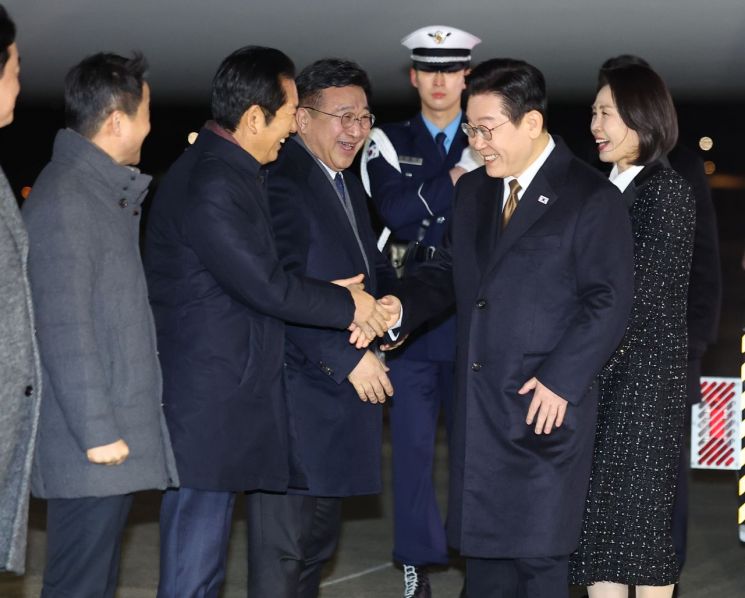 President Lee Jae-myung, returning from his visit to Japan, is greeting Jeong Cheong-rae, leader of the Democratic Party of Korea, at Seongnam Seoul Airport on the 14th. Photo by Yonhap News
On the afternoon of the same day, prior to the plenary session, the Democratic Party plans to gather lawmakers' opinions on overall prosecution reform, including the Serious Crimes Investigation Agency Act, during a general assembly. The party will then hold a policy debate on the Serious Crimes Investigation Agency Act and the Prosecution Service Act. Moon Geumjoo, the party's chief spokesperson, stated, "The Policy Committee plans to hold a policy debate combined with a public hearing on the Serious Crimes Investigation Agency Act and the Prosecution Service Act at 10:30 a.m. on the 20th," adding, "The public hearing will be open to the media." The policy debate will be conducted in the form of discussions among experts such as professors, rather than lawmakers. Moon explained, "If a consensus is reached after compiling the results of the general assembly and the policy debate, the party will submit its opinion to the government." However, when asked by reporters whether the government would participate in the debate, he replied, "As far as I know, it will not."
Within the Democratic Party, there are significant concerns regarding the direction and pace of prosecution reform.
Previously, the Prosecution Reform Promotion Team under the Prime Minister's Office released a draft of the Serious Crimes Investigation Agency Act, which would allow for exclusive investigations into the so-called "nine major serious crimes"-including corruption and economic crimes, as well as crimes involving public officials, elections, defense procurement, major disasters, drugs, national security such as insurrection and treason, and cybercrimes. The draft also proposes a dual personnel structure consisting of "investigative judicial officers" and "specialized investigators."
In this context, skepticism has been growing among Democratic Party members of the Legislation and Judiciary Committee regarding the intention behind the prosecution reform proposal. The concern is that there remains room for the revival of prosecutorial power. Accordingly, there are arguments against the dual structure of investigative judicial officers and specialized investigators, calls to exclude supplementary investigative authority, and demands to narrow the investigative scope of the Serious Crimes Investigation Agency.
However, there are also voices within the party other than those of the hardliners regarding prosecution reform.
It is known that President Lee Jaemyung's intentions are reflected in the government's original stance to retain some investigative powers for the prosecution, thereby maintaining mutual checks and balances between the prosecution and the police. On the previous day, Jeong Cheongrae, leader of the Democratic Party, revealed to reporters during a visit to South Chungcheong Province that, during his send-off for President Lee before his trip to Japan, the president shared his thoughts. According to Jeong, President Lee conveyed, "We must also consider how democratic oversight can be ensured if all power is concentrated in the police, just as unchecked prosecutorial power can lead to abuses." Jeong commented on this, saying, "Democratic oversight means checks, monitoring, and balance," and added, "We will carefully refine and review the bills with that in mind."
Notably, Jeong Cheongrae, who has previously advocated a hardline stance on prosecution reform, has also expressed a positive view regarding the "right to request supplementary investigations" for the Prosecution Service in relation to police investigations. He has repeatedly stated, "The right to request supplementary investigations is not the same as granting investigative power to prosecutors, so it is consistent with the principle of separating investigation and indictment, whereas granting investigative power would not be."
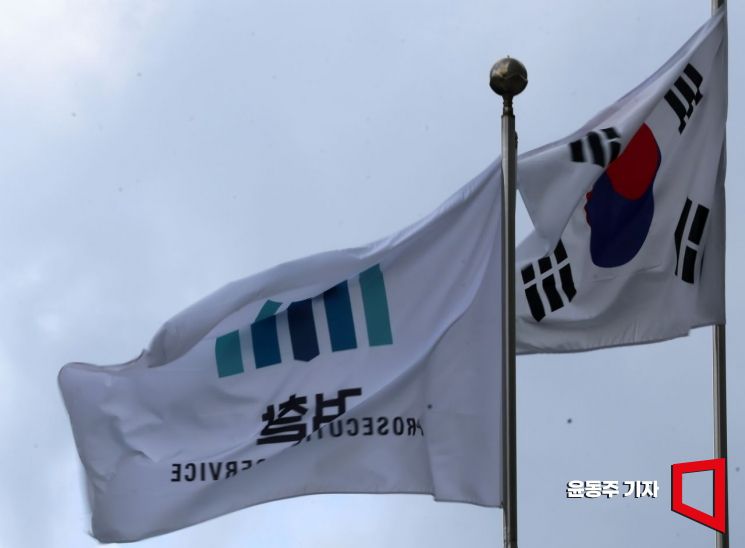
There are also arguments that the Serious Crimes Investigation Agency Act and related measures should be viewed within the broader framework of prosecution reform. Park Suhyeon, chief spokesperson of the Democratic Party, wrote on social media, "When carving a wooden puppet, you should leave the nose large," explaining, "If you make the nose too small from the beginning, you won't be able to add more later, so you should leave it generously at first and then shape it to fit the overall figure." He continued, "President Lee Jaemyung, who has suffered more than anyone from prosecutorial manipulation and abuse of power, surely has a clear vision for the reform he wants to carve out. However, as president, it is also clear that he cannot shape prosecution reform affecting the entire nation according to a single standard." He added, "From now on, the party, the National Assembly, and the people must become the sculptors. Instead of complaining about why the nose was left so large, let's carve it into the right shape and size for the 'prosecution reform' wooden puppet."
Kim Namhee, a Democratic Party lawmaker who had previously refrained from commenting on prosecution reform, also wrote on social media, "I believe the greatest goal of reforming criminal justice procedures is to ensure that the public does not suffer injustice or hardship," adding, "In order to guarantee the rights of criminal victims who are unfairly treated or lack financial resources, the design of criminal justice procedures must be extremely meticulous."
© The Asia Business Daily(www.asiae.co.kr). All rights reserved.


















